
It is 11:45 PM. The house is finally quiet. The toys are put away, the kitchen counters are wiped clean, and your children are fast asleep. You should be sleeping too, but instead, you are staring at the ceiling.
Your body is completely exhausted, yet your brain is running a marathon. You find yourself mentally cataloguing tomorrow’s school lunches, remembering a missed dentist appointment email, and questioning if you were too impatient during dinner.
You are not crying. You are not screaming. To anyone else looking in, you have everything completely under control.
But deep inside, you feel entirely frozen. This is not a classic dramatic meltdown. It is something far more common, yet rarely talked about. It is the heavy, slow-burning reality of silent stress in mothers.
As mothers, we are trained to believe that if we are not actively falling apart, we must be doing fine. We wear our high-functioning survival mode like a badge of honour. But your nervous system knows the truth.
Let us talk about what silent stress actually is, how it sneaks into your physical body, and how you can start reclaiming your quiet peace of mind.
The Quiet Epidemic
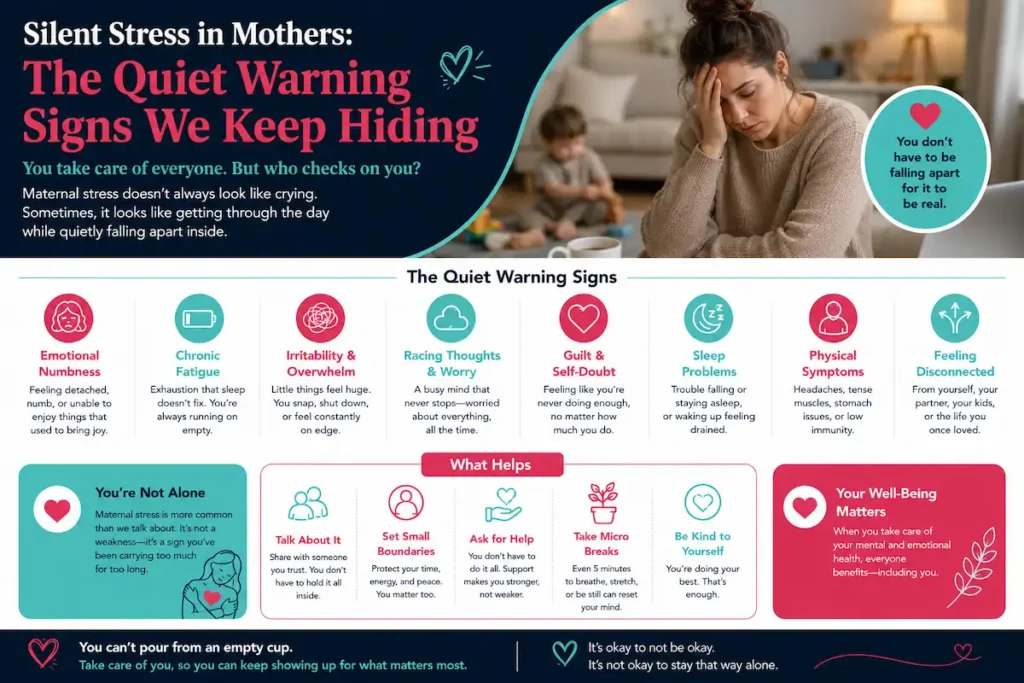
Silent stress is different from sudden panic. It is the background hum of constant responsibility that slowly drains your physical energy, dampens your joy, and alters your behaviour without your conscious awareness.
What Exactly Is Silent Stress?
We usually associate stress with visible outbursts. We picture crying in the car, yelling at the kids, or complaining loudly to friends.
But silent stress does not make a scene. It is internal. It is the steady, quiet accumulation of mental and emotional weight that you carry around while keeping up a perfect, calm exterior.
The Mental Load That Never Shuts Off
Think of your brain as a computer. Every task you manage is an open browser tab.
You have a tab open for your toddler’s developmental milestones. Another gift for your partner’s birthday. One for the empty milk carton in the fridge and yet another for the complex emotional climate of your home.
You might look like you are resting when you sit on the couch, but inside, your mental processor is running at full speed. This mental load is the primary driver of silent stress in mothers. It never truly takes a lunch break.
High-functioning stress is still stress. Your body does not care how good you are at pretending.
The Physical Signs of Silent Stress (The Body Keeps Score)
Because we are so good at ignoring our thoughts, our stress usually finds another way out. It speaks through our physical bodies.
Have you checked in on your muscles lately? Let us look at the subtle, physical warning signs that indicate your nervous system is operating in survival mode.
1. The Clenched Jaw and Sore Morning Face
Do you wake up with a dull headache or a tight jaw? Many mothers carry their daily frustrations in their mouth muscles.
Without realising it, you might be clenching your teeth while washing dishes, driving, or sleeping. Over time, this constant clenching can lead to TMJ pain, neck stiffness, and persistent tension headaches.
2. Shallow “On-Guard” Breathing
Pay attention to your breathing right now. Are you breathing deeply into your belly, or is your breath trapped high up in your chest?
When you live under silent stress, your body lives in a low-grade state of fight-or-flight. You start holding your breath or taking shallow, rapid breaths. It is a biological survival mechanism that prepares you to run from a threat, but it leaves you feeling chronically fatigued and lightheaded.
3. The Hidden Nest in Your Shoulders and Hips
Our bodies physically store trauma and tension. For women, the shoulders and hips are the primary storage lockers for unexpressed worry.
If your shoulders constantly feel like they are touching your ears, or your hips feel tightly locked, your body is physically bracing for impact. It is holding onto the emotional tension you refuse to speak aloud.
The Mental and Emotional Symptoms We Brush Off
Silent stress also changes how we interact with the world and ourselves. These symptoms are often mislabelled as personality flaws, laziness, or “just being a bad mum”. There are none of those things.
The Exhausting Cycle of Decision Fatigue
You stare at the grocery store shelf. You just need to pick a brand of tomato sauce.
But instead of choosing, you feel a wave of panic and want to leave the store. Why? Because you have already made a thousand decisions today.
From deciding what your family wears to managing schedules, your brain’s decision-making battery is completely drained. When silent stress takes over, even the smallest choices feel like climbing Mount Everest.
Scientific Insight: Decision fatigue is a real psychological state. The more choices you are forced to make throughout the day, the worse the quality of your choices becomes, leading to avoidance or sudden irritability.
Out-of-Character Snapping and Immediate Guilt
Your child spills a cup of water. It is a minor accident, but you instantly snap.
You raise your voice and then immediately feel a deep, crushing wave of guilt. You look at their startled face and wonder, “Why did I react like that?”
This reaction does not mean you are a bad mother. It means your internal pressure cooker has run out of space. When silent stress fills up your emotional capacity, even a tiny droplet of extra pressure causes an overflow.
The “Hyper-Vigilant” Rest Deficit
Have you ever sat down to watch a show, only to find yourself folding laundry at the same time? Or maybe you sat down but felt an uncomfortable, jittery sensation that you *should* be doing something else.
When your nervous system is chronically dysregulated, true rest feels unsafe to your body. You feel a constant, anxious need to stay productive just to keep the underlying worry at bay.
Interactive: Do You Have Silent Stress?
Take a moment to check the boxes that apply to your daily experience. Be completely honest with yourself—no one else is watching.
I regularly wake up with a tight jaw, sore teeth, or a dull morning headache.
I catch myself holding my breath or breathing very shallowly throughout the day.
Small daily decisions (like what to make for dinner) feel completely overwhelming.
I snap at my children or partner over tiny mistakes, then feel immense guilt.
Even when I have free time, I struggle to sit still and feel forced to stay busy.
I feel physically exhausted but struggle to fall or stay asleep at night.
I feel lonely even when surrounded by my family and friends.
Calculate My Score
Micro-Steps to Calm a Frazzled Nervous System
You cannot just quit your job as a mother. You cannot take a month-long vacation to an exotic island either.
We have to find ways to heal within the reality of our busy lives. The secret lies in micro-steps. These are tiny, daily adjustments that require zero extra time but signal safety to your nervous system.
The 5-Minute “Do Nothing” Rule
This sounds incredibly simple, but it is one of the hardest things for a stressed mother to do.
Find five minutes during the day—perhaps right after you park the car or right before you get out of bed. Sit there. Do not check your phone. Do not plan dinner. Just let your eyes rest on a single spot and let your shoulders drop.
By giving your brain a complete break from input, you are giving your nervous system a much-needed moment of quiet regulation.
Somatic Shaking (Shake Off the Energy)
Animals in the wild shake their bodies vigorously after escaping a predator. This physical shaking releases the built-up survival energy from their muscles.
We can do the same thing. Next time you feel a wave of silent frustration, go into the bathroom or your bedroom and shake your hands, arms, and legs for 30 seconds. It feels silly, but it physically releases accumulated muscular tension and resets your stress hormones.
Creating Clear Micro-Boundaries
You do not have to say yes to every volunteer opportunity, playdate, or family gathering. Saying no to extra tasks is saying yes to your own sanity.
Start small. Let the laundry sit in the basket for an extra day. Let the dishes rest in the sink overnight. Your peace of mind is worth far more than a perfect house.
Your Daily Nervous System Reset Blueprint
| Time of Day | Micro-Reset Action | Nervous System Impact |
| Morning | Three deep belly breaths before checking your phone. | Prevents immediate spikes in morning cortisol levels. |
| Midday | Somatic hand and arm shaking for 30 seconds. | Physically releases stored physical tension in the upper body. |
| Afternoon | 5 minutes of sitting in your car or room with zero digital input. | Calms sensory processing channels and stops decision fatigue. |
| Night | A gentle, warm jaw and neck massage while washing your face. | Signals physical safety to the brain, preparing you for restorative sleep. |
You cannot Pour From an Empty Cup
We have all heard this phrase, but we still try to do it anyway. We squeeze out every last drop of our energy for our homes, our partners, and our children.
But silent stress is a quiet warning. It is your body telling you that you deserve care, too. You are not a machine. You are a human being with emotional limits and physical needs.
Be gentle with yourself today. Start by taking one deep, slow breath right now. Drop your shoulders away from your ears. Unclench your jaw. You are doing a wonderful job, and it is entirely okay to rest.
Frequently Asked Questions
Medical Disclaimer: The information provided in this article is for educational and informational purposes only and is not intended as medical or psychiatric advice, diagnosis, or treatment. Always consult with a qualified healthcare professional or licensed therapist if you are struggling with severe burnout, chronic anxiety, or depressive symptoms.
Disclaimer: This article is for informational and educational purposes only and is not intended as medical, psychological, or nutritional advice, diagnosis, or treatment. Every child, body, and pregnancy is different — please consult your pediatrician, doctor, or a qualified healthcare provider for advice specific to your situation.