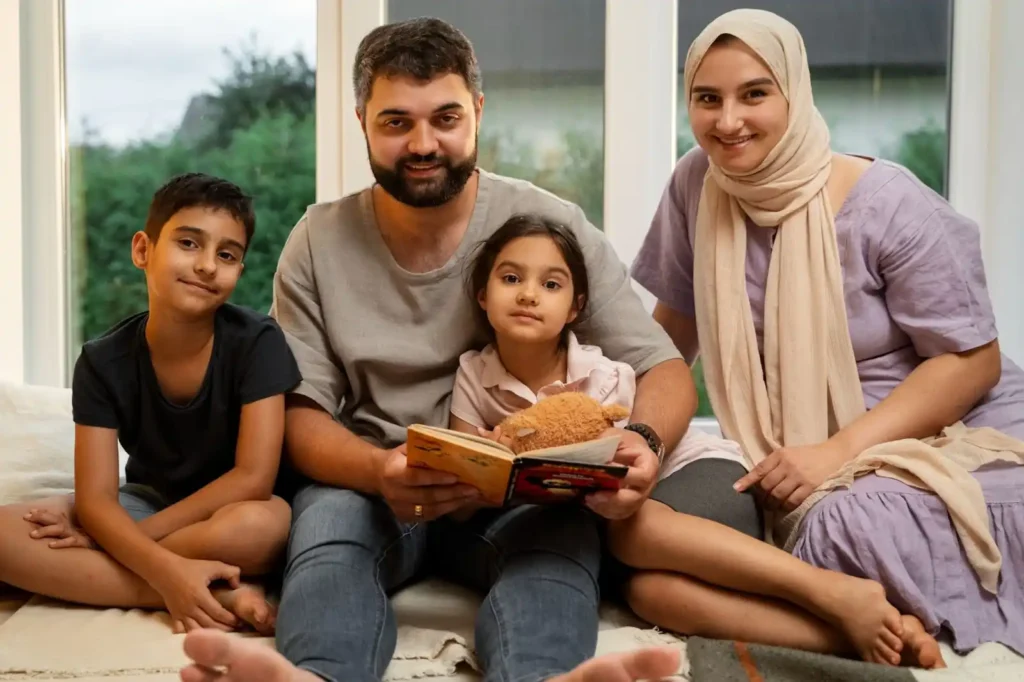
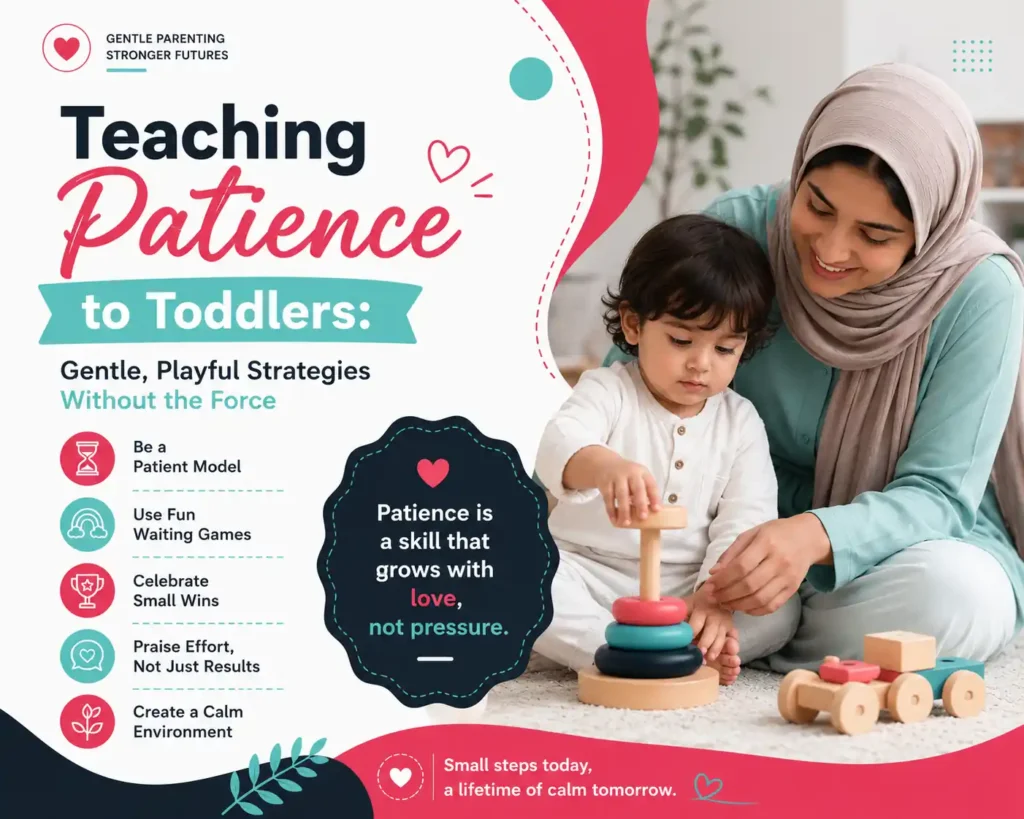
“Bas ek second, beta! Sabar karo!”
How many times a day do you find yourself saying that? If you are a mother in Pakistan, “sabar” is probably one of the very first words you try to plant in your child’s vocabulary.
Yet, the response we get is rarely quiet compliance. Instead, we are met with ear-piercing shrieks, a sudden collapse to the floor, or little hands pulling at our clothes while we try to pour boiling water into a teapot.
They want their juice box. They want it opened. And they wanted it exactly three seconds ago.
It is exhausting. Sometimes, it makes you want to pull your own hair out. When we are stretched thin, it is so easy to fall into the trap of forcing patience. We yell. We make threats: *”Agar khamosh nahi huay, toh cheez nahi milegi!”* We put them in strict time-outs.
But let us take a step back and look at this honestly. Does forcing a child to sit silently out of fear actually teach them the emotional regulation required for real patience? Or does it just teach them how to suppress their panic?
Let us cut through the traditional “scare them into behaving” mindset. We want to look at how we can actively guide our toddlers to develop genuine, lifelong patience through gentle, play-based strategies that actually respect their growing brains.
The Brain Reality Check
A toddler’s prefrontal cortex—the area of the brain responsible for impulse control and logical reasoning—is almost completely undeveloped. To a two-year-old, “five minutes” is an abstract, meaningless concept. When they wait, they aren’t being stubborn; their brains are literally struggling to comprehend time.
The Science of the Toddler Mind: Why Waiting Feels Like Physical Pain
Before we can change our parenting methods, we have to change how we see our children’s behaviour. A toddler lives purely in the present moment.
When a child asks for a snack, and you tell them to wait, their internal world experiences an immediate, tiny crisis. To them, “not right now” feels indistinguishable from “never”.
They lack the cognitive scaffolding to look ahead into the future and soothe themselves with the thought, *“Oh, Mama is busy right now. “Always feeds me, so I will be fine.”*
The prefrontal cortex is under construction.
Impulse control is not a behavioral choice; it is a neurological muscle. Expecting a two-year-old to wait quietly is like asking a newborn to run a marathon. The physical hardware is simply not built yet.
When we force compliance through fear, we trigger their amygdala—the flight-or-fight response center. They might stop crying, but their body is flooded with cortisol.
Our goal is to help them bridge this gap. We want to teach them that waiting is safe, predictable, and even a little bit fun.
Patience isn’t the absence of a meltdown; it is the presence of self-soothing skills.
5 Force-Free Strategies for Teaching Patience to Toddlers
How do we actually put this into practice on a random Tuesday when we are exhausted? Here are five gentle, highly actionable habits you can start building today.
1. Turn Abstract Time into Visual Reality
Stop saying, *”Wait two minutes!”* Instead, give your toddler a physical, visual indicator of time that their eyes can track.
You can use a simple, visual sand timer (the ones with brightly coloured sand) or use concrete milestones. Say, “When this song finishes, we will put on your shoes,”* or *”I need to fold three more shirts, and then we are going to the park.”*
By linking the passage of time to concrete actions they can see, you remove the terrifying mystery of waiting.
2. The “Polite Hand on the Shoulder” Hack
If your toddler is a chronic interrupter whenever you are talking to someone else, this habit is a lifesaver.
Teach them that if they want your attention, they can walk up and place their hand gently on your arm or shoulder. In return, you immediately place your hand over theirs.
This physical touch acts as a silent contract. It tells them: *“I feel you, I know you need me, and I will answer you the very second this sentence is finished.”* It allows them to feel connected while practising a brief pause.
3. Sing “The Waiting Song” Together
Toddlers naturally struggle to sit quietly with their own anxious thoughts. Giving them an active, playful task to do *while* waiting makes a massive difference.
Make up a short, silly song with simple hand gestures. Keep it light: *”We are waiting, waiting, waiting… first we stretch up high, then we wiggle our fingers, then we count to five!”*
This diverts their focus from the agony of waiting to the joy of performing the silly actions. It transforms a boring transition into a connecting game.
| The Toddler Patience Strategy Finder & Play-TimerPick a common, stressful waiting scenario below. We will give you a gentle, game-based delay strategy and a visual timer you can show your toddler on your phone to practise waiting together right now. Making Tea / CookingHot stove, high danger, high fuss On an Important CallNeed 1-2 minutes of silenceOpening a New Toy/SnackIntense excitement, high anxiety |
Handling the Impatient Meltdown: A Real-World Script
What happens when the strategies fail? Because let’s face it: some days, they will. Your toddler is tired, hungry, or teething, and the visual timer is met with a flat-out scream.
In these high-stress moments, your goal is not to lecture them about good manners. Their brain is offline. They cannot hear logic.
Instead of demanding calm, you must be their anchor of calm. Try using this simple three-step verbal script to co-regulate with them:
Step 1: Validate the Big Emotion
“I know, it is so hard to wait. You really, really want that toy right now. I hear you.”
Step 2: State the Clear boundary
“My hands are busy cutting these cucumbers. I cannot hold you safely until I am finished.”
Step 3: Offer a Safe Out or Choice
“You can cry if you feel sad, or we can look out the window together until the timer goes beep.”
By validating their pain instead of telling them they shouldn’t feel it, you disarm their panic. You teach them that having big feelings is completely safe, but limits still exist.
Common Pitfalls: What to Avoid When Teaching Toddlers to Wait
Sometimes, our own stress makes us fall back on bad habits. Here are three common approaches that actually make toddler impatience worse:
- Giving in to tantrums: If you say *”Wait”* but hand over the biscuit the moment they scream, they learn that screaming is a magic key that unlocks anything instantly. Be firm but gentle with your boundaries.
- Using empty threats: Saying *”I’m going to throw this away if you don’t wait”* confuses their sense of safety. They know you won’t actually do it, which damages trust.
- Lying about time: Telling them *”We are going right now”* when you actually have 30 more minutes of work breeds anxiety and resentment. Always be honest, even if it hurts their feelings momentarily.
The Long-Term Gift of “Sabar”
At the end of the day, teaching patience to toddlers isn’t about getting your child to behave perfectly. It is about emotional development.
By avoiding physical force, shaming, or loud threats, you are helping them build a robust, healthy prefrontal cortex. You are teaching them that waiting is not a scary void—it is simply a pause in their day.
Be patient with yourself, too. You are building a brain, and that is a slow, messy, beautiful process. Next time they scream for that juice box, take a deep breath. You’ve got this, and so do they.
Frequently Asked Questions
Parenting Disclaimer: Every child is unique and develops on their own individual timeline. If your child struggles continuously with transitions, exhibits extreme meltdowns, or shows significant speech or sensory processing difficulties, please consult a developmental paediatrician for advice.
Disclaimer: This article is for informational and educational purposes only and is not intended as medical, psychological, or nutritional advice, diagnosis, or treatment. Every child, body, and pregnancy is different — please consult your pediatrician, doctor, or a qualified healthcare provider for advice specific to your situation.