Child Psychology

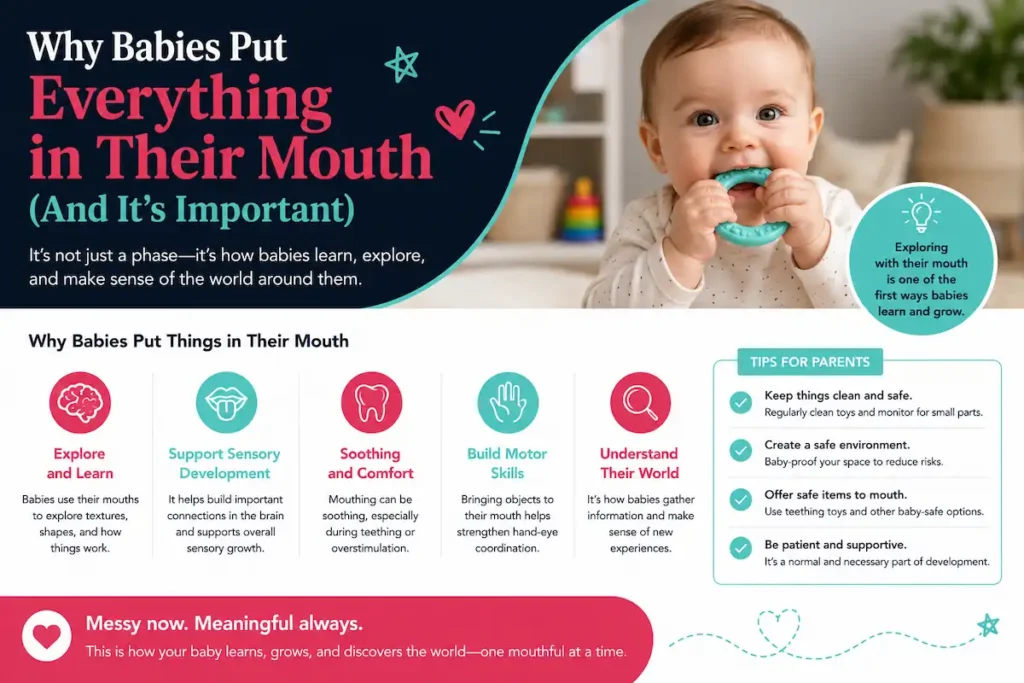
Why Babies Put Everything in Their Mouth (And It’s Important)

Baby chewing a teething toy while exploring with their mouth

You hand your baby a toy. Within two seconds, it’s in their mouth. You take it away and hand them a different toy. The same thing happens. A sock, a remote control, your finger, the corner of a board book — it all ends up exactly in the same place. At some point, almost every […]

Why Babies Put Everything in Their Mouth (And It’s Important) Read More »

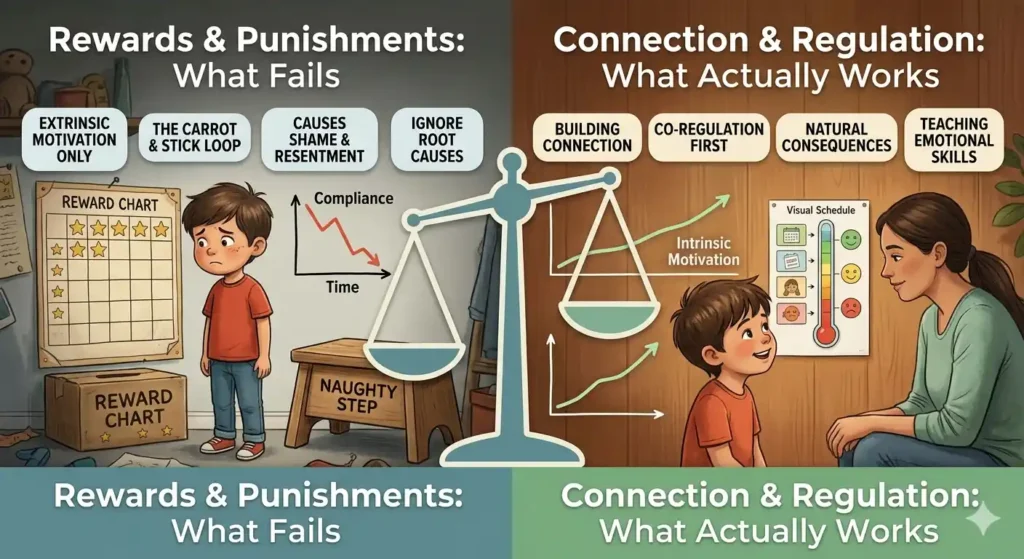
Why Rewards & Punishments Don’t Always Work (And What Actually Does)

Rewards and punishments vs connection and regulation parenting infographic

You’ve tried the sticker chart. You’ve tried taking away screen time. Maybe you’ve even tried bribing your kid with chocolate just to get through a grocery store trip without a meltdown. And for a while, it worked. Sort of. Then one day, it just… stopped. The sticker chart got ignored. The threats lost their bite.

Why Rewards & Punishments Don’t Always Work (And What Actually Does) Read More »

Children’s sleep problems: Why do some children wake up several times at night?

Exhausted mother comforting a crying baby awake at night in a dimly lit bedroom

11:47 PM You finally sit down after cleaning the kitchen, folding the laundry, and putting your baby to bed after a full hour of “just one more story.” Then suddenly… crying. You run to the living room, thinking maybe the blankets have slipped. You put them back in place. Thirty minutes later? Same thing. By

Children’s sleep problems: Why do some children wake up several times at night? Read More »

7 Gentle Ways to Ease Baby Stranger Anxiety Fast (2026)

Mother comforting a crying baby during a family gathering as relatives gently interact nearby.

Stranger anxiety is a completely normal developmental phase where babies and toddlers become fearful or upset around unfamiliar people. It typically begins around 6-9 months, peaks at 12-15 months, and usually fades by age 2-3. It is a sign of healthy bonding — not bad parenting. Table of Contents 1. The Scene Every Pakistani Family

7 Gentle Ways to Ease Baby Stranger Anxiety Fast (2026) Read More »

Why Babies Become Extra Attached Around 4–5 Months (And Why It’s Normal)

Mother holding her 5-month-old baby closely at home

Infants at the age of about 4 to 5 months tend to be more closely attached to their main caregivers, where they stick in during the moments of being awake and when being laid down even briefly, these babies cry and cry in opposition. Although this is a difficult period on the part of parents,

Why Babies Become Extra Attached Around 4–5 Months (And Why It’s Normal) Read More »

Big Emotions in Preschoolers: Helping Them Calm Down

Preschool-aged child experiencing strong emotions

Preschoolers are full of curiosity, energy and big feelings. From excitement to frustration children aged 3–5 years experience emotions intensely and sometimes it can feel overwhelming for parents. Preschooler emotions can be really strong. Sometimes it can feel like they are going to explode. Tantrums, meltdowns and sudden emotional outbursts are all part of development—but

Big Emotions in Preschoolers: Helping Them Calm Down Read More »

Newborn babies do these movements and they can be really confusing. What do these Newborn Reflexes really mean?

father holding a baby indoors.

Newborn Reflexes are like signals that Newborn Reflexes send to us. We should know what Newborn Reflexes are trying to tell us. When we see these movements in Newborn Reflexes we wonder what is going on. Newborn Reflexes are doing these things for a reason. We need to understand what these Newborn Reflexes mean. We

Newborn babies do these movements and they can be really confusing. What do these Newborn Reflexes really mean? Read More »