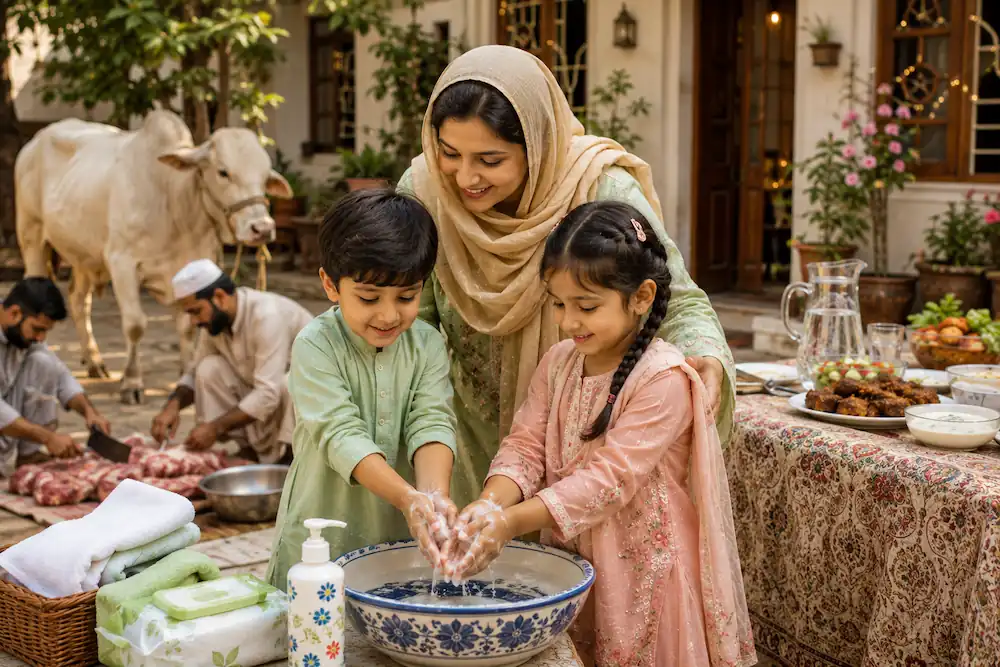
Picture this: your kids are dressed in their cutest Eid jora, running through the courtyard, laughing with cousins, hands all over the bakra that arrived this morning — and then heading straight to the dastarkhwan to eat without a second thought. Sound familiar? Every Pakistani mom knows this scene. Eid ul Adha is one of the most joyful times of year, but it is also one of the most hygiene-intensive — and keeping kids hygienic during Eid ul Adha requires a little planning and a lot of grace.
The combination of outdoor play in the summer heat, proximity to animals, back-to-back dawats at relatives’ houses, and heavy meat-based food creates the perfect storm for infections, stomach bugs, and skin rashes in little ones. The good news? A few simple, consistent habits can protect your kids without dampening the Eid spirit at all. This guide is your calm, practical companion — think of it as advice from your most organized mama friend who has Eid figured out.
Why Eid al-Adha Is a Unique Hygiene Challenge for Kids
Eid ul Adha is not just any holiday — it involves real animals, outdoor slaughter, raw meat handling, joint family gatherings, multiple visits to different homes, and, in cities like Karachi and Lahore, intense summer heat that can cross 40°C. Each of these factors, individually, would pose some hygiene challenge. Together, they create a uniquely high-risk environment for children’s health.
Children’s immune systems are still developing, especially in the 0–5-year age group. Their natural tendency to touch everything — animals, meat packaging, soil, other children — and then put their hands in their mouths makes them far more susceptible to bacterial and viral infections than adults. Common threats during Eid al-Adha include E. coli and Salmonella from raw meat contact, gastroenteritis from food left uncovered in the heat, skin infections from dust and sweat, and dehydration from outdoor play without enough water.
Did you know? According to WHO and UNICEF, handwashing with soap and water can reduce the risk of diarrhoea in children by up to 30% — making it one of the most powerful and affordable health tools available to any Pakistani family.
The Islamic Foundation of Cleanliness: Teaching Kids Taharah During Eid
One of the most beautiful things about Islam is that cleanliness is not just a health habit — it is an act of worship. The Prophet Muhammad (ﷺ) said: “Cleanliness is half of faith.” (Sahih Muslim). This concept of taharah (purification and cleanliness) is deeply woven into Islamic daily life — from wudu before prayer to washing hands before eating.
Eid al-Adha is the perfect moment to bring this lesson to life for your children in a meaningful way. When you tell your 6-year-old to wash their hands before eating the Eid meat, you are not just preventing infection — you are teaching them that cleanliness is something Allah loves. Frame it that way. “Allah loves it when we keep ourselves clean, especially during special days like Eid.” For older children, explain taharah more fully — the washing after touching raw meat, keeping the home clean after qurbani — all of it connects to a Muslim’s responsibility to maintain purity.
This approach transforms hygiene from a boring chore into a meaningful Islamic habit. And that is far more likely to stick for life.
Handwashing: The Single Most Important Hygiene Habit During Eid al-Adha
If there is one thing you focus on this Eid, let it be handwashing. Everything else flows from this. Handwashing with plain soap and water, done correctly, is the single most effective way to prevent the spread of infections — a fact confirmed by both WHO and UNICEF in their latest global hand hygiene guidelines.
When Kids MUST Wash Hands During Eid
Non-Negotiable Handwashing Moments
- After touching or being near any animal (bakra, cow)
- After touching raw or uncooked meat
- Before every meal and snack — yes, even at relatives’ houses
- After playing outside in the dust or soil
- After using the bathroom, at home or anywhere else
- After coughing, sneezing, or blowing the nose
- After touching shared surfaces like door handles and taps
How to Make Handwashing Fun for Toddlers and Young Kids
Getting toddlers to wash their hands consistently is a battle every Pakistani mama knows. The trick is to make it feel like part of the fun, not an interruption. Try singing a short song while washing — even humming “Happy Birthday” twice takes about the right amount of time to lather and scrub properly. Keep a little stool by the sink so smaller children can reach without help — independence makes them more willing. You can also get kids excited about their own travel-size soap or a fun character hand sanitizer just for Eid trips.
Soap, Sanitizer, or Both? Practical Advice for Pakistani Homes
The answer is: soap and water first, always — especially when hands are visibly dirty, which they will be during Eid. When soap and water are not immediately available (at a dawat, on the road between relatives’ houses), an alcohol-based hand sanitizer with at least 60% alcohol is an effective backup. Keep sanitizer in your bag at all times during Eid. But as soon as a washbasin is available, switch to proper soap and water. Baby wipes, as convenient as they are, do not kill germs effectively and should not replace handwashing.
Hygiene Around Qurbani: Keeping Kids Safe in the Moment
Should Young Children Be Near the Qurbani Area?
This is one of the most common questions Pakistani moms ask during Eid al-Adha. The guidance is straightforward: children under 5 should be kept away from the qurbani area entirely. They are at the highest risk of touching contaminated surfaces and then putting their hands in their mouths. Children aged 6 and above can observe from a safe distance if they wish, with an adult supervising closely. Keep a responsible family member specifically assigned to watch younger children while the qurbani is taking place, because when the adults are occupied, that is exactly when toddlers wander.
What to Do If Kids Touch Blood, Raw Meat, or Animal Waste
If a child does come into contact with blood or raw meat, do not panic — act quickly and calmly. Take the child immediately to a washbasin and wash the affected area thoroughly with soap and water for at least 20 seconds, making sure to clean under fingernails. Change their clothes if needed. If the child has a cut or open wound that came into contact with blood, clean it with soap and water and consult a doctor as a precaution. [Preventing stomach infections during Eid]
Clothing Tips for Qurbani Day
Here is a practical tip most moms do not think about until it is too late: do not dress young children in their best Eid jora on qurbani morning. Save the fancy outfit for Eid namaz and the evening dawat. On qurbani day morning, dress kids in comfortable, dark-colored, easy-to-change clothes. Pack a spare set for each child in a bag so you can switch them out after the Qur’an is done, and everything is cleaned up. This makes the day far less stressful.
Important: Keep children away from areas where meat is being stored or processed. Raw meat left on kitchen counters in Karachi and Lahore’s heat can develop bacteria quickly. Ensure meat goes into the freezer within 2 hours of qurbani.
Food Hygiene for Kids During Eid Gatherings
Eating at Multiple Houses — How to Manage Without Being Rude
Eid dawat culture in Pakistan is beautiful — and relentless. By the afternoon of Eid, your kids may have eaten at three or four different homes. The challenge is that you cannot control food preparation or storage standards at every house. A gentle approach: ensure your children eat small portions at each stop rather than loading up at every dawat. If you are concerned about food that has been sitting out in the heat, quietly redirect your child to a fresh dish or something you brought yourself. You do not have to make it obvious — a discreet “let’s try this instead” works perfectly.
Keeping Kids Away from Uncovered Food in the Heat
In Karachi and Lahore summers, food left uncovered at outdoor dawats can become unsafe within hours. Flies, dust, and heat are a dangerous combination. Teach your children not to eat from dishes that have been sitting uncovered outside, and always ensure their plate is freshly served. If you are hosting, cover dishes with net food covers between servings — it makes a real difference.
Safe Meat for Little Ones
Children under 2 should be given very small, well-cooked, soft pieces of meat — and in limited quantities, as their digestive systems are not built for the heavy Eid food load. For all children, meat must be thoroughly cooked through — no pink in the middle, no undercooked pieces. This is especially important in the first 24 hours after qurbani when meat is being freshly processed. Undercooked meat is one of the leading causes of food poisoning in children during Eid. [How to Explain Qurbani to Kids Gently]
Hydration in the Summer Heat
Between the excitement, outdoor play, and heavy food, children often forget to drink water during Eid. In Karachi’s summer heat, dehydration can set in quickly. Make it a habit to give your child plain water every hour, even if they say they are not thirsty. Juices and cold drinks are fine occasionally, but should not replace water — they are high in sugar and do not hydrate as effectively. For babies and toddlers, breast milk or formula remains the best source of hydration.
Bathing & Skin Care Routine During Eid Days
With all the excitement, the daily bath is often the first routine to go out the window during Eid. Do not let it. In Karachi and Lahore’s summer heat, a daily bath is not just about cleanliness — it actively prevents heat rash, skin infections, and the general discomfort that makes children cranky and more susceptible to illness.
Give every child a full bath at the end of each Eid day — even if they look clean. Invisible bacteria from animal contact, dust, sweat, and surfaces cling to skin and hair and need to be washed off. For babies, a gentle sponge bath if a full tub bath is not possible works fine.
Watch for heat rash, particularly in folds of skin — neck, armpits, and behind the knees. If you notice redness, apply a thin layer of calamine lotion or a gentle baby powder after bathing. For girls with long hair, keep hair tied or braided during outdoor play to reduce lice risk and keep it cleaner. And do not forget nails — trim children’s nails before Eid and check them daily. Bacteria love to hide under little fingernails, especially after a day of Eid play.
Oral Hygiene During Eid — Don’t Let It Slip
Eid ul Adha means mithai from every relative’s house, sugary sharbat, juice boxes, and heavy fatty food. This is a recipe for tooth decay if oral hygiene is neglected even for a day or two. Keep the brushing routine firm: twice a day, morning and night, without exception — even on Eid day when everyone is rushing around.
After eating sweets or drinking juice, encourage older children to rinse their mouths with plain water if brushing is not immediately possible. For toddlers who are teething or have just gotten their first teeth, use a soft, damp cloth or baby toothbrush to gently clean their gums and teeth after meals. The Eid chaos is real — but dental hygiene issues take months to fix and seconds to prevent.
Toilet Hygiene at Relatives’ Homes and Outdoor Spaces
When children are visiting multiple relatives’ homes and outdoor spaces during Eid, toilet hygiene becomes more complicated. Children should always be accompanied by an adult when using unfamiliar bathrooms. Teach them to always flush, always wash their hands with soap after using the toilet, and never to touch their face before washing.
Pack sanitizer wipes in your bag — they are invaluable for wiping down toilet seats in unfamiliar bathrooms, especially for toddlers who are toilet training. If you are at an outdoor event or garden area and bathrooms are not clean or nearby, a portable potty for toddlers is worth the bag space during Eid outings.
A Mom’s Eid Hygiene Kit: What to Pack
Consider this your Eid survival kit — everything that fits in a decent-sized tote bag and covers 90% of hygiene emergencies that arise during a full day of Eid visits. Put it together the night before and carry it everywhere.🧴
Hand Sanitizer (60%+ alcohol)🧻
Wet Wipes (antibacterial)
Spare Clothes (per child)
Small Soap Bar
ORS Sachets
Band-Aids
Child Sunscreen SPF 30+
Sanitizer Wipes
Small Clean Towel
Pro tip: Pack this kit the night before Eid and leave it by the front door. In the Eid morning rush, you will be so grateful that it is already ready to go.
Age-by-Age Hygiene Tips for Eid al-Adha
Babies (0–1 Year)
- Keep the baby completely away from the qurbani area and raw meat handling
- Change diapers frequently — heat increases rash risk significantly
- Maintain breastfeeding or formula schedule even in the Eid chaos — do not skip feeds
- Ensure bottles and feeding equipment are sterilized as usual
- Wipe hands and face with a clean, damp cloth after each outing
- Keep the baby in a shaded, cool area away from outdoor heat and dust
Toddlers (1–3 Years)
- Supervise constantly — toddlers touch everything and go straight to their mouths
- Wash your hands before every single meal, no exceptions
- If toilet training, don’t let the Eid schedule disrupt their routine — bring a portable potty
- Dress in dark, easy-to-change clothes on Qurbani day
- Keep sanitizer wipes handy for quick cleanups between handwashing opportunities
- Do not let them near the kitchen when meat is being processed
Kids (4–8 Years)
- Start building independence — teach them the 5-step handwashing method and let them do it themselves
- Make handwashing a game: who can wash hands the most thoroughly? The winner gets to pick the Eid dessert
- Teach them not to share cups, utensils, or food with other kids during dawats
- Remind them to drink water regularly, not just when thirsty
- Teach them to tell you immediately if they touch something they shouldn’t have
Older Kids (9–12 Years)
- Give them real responsibility: they can help watch younger siblings and remind them to wash their hands.
- Explain the why — bacteria, cross-contamination, how infections spread — they are old enough to understand
- Encourage them to role-model good habits for cousins and younger family members.
- Let them manage their own hygiene kit items (sanitizer, wipes) — ownership builds habit.s
- Connect hygiene to Islamic values: taharah, cleanliness as ibadah — this age group responds well to deeper meaning.
You Don’t Have to Be Perfect — Just Prepared
Eid al-Adha is meant to be joyful, messy, loud, and full of love. Your children will get dirty. They will eat too many mithais at Nani’s house. They will run around with cousins until their Eid clothes are no longer Eid-presentable. And that is completely okay.
Keeping kids hygienic during Eid al-Adha does not mean hovering anxiously or scrubbing them down every five minutes. It means building a few consistent, simple habits — handwashing at the right moments, a daily bath, thoughtful food choices, your Eid hygiene kit in your bag — and then letting them enjoy the holiday fully.
A little preparation goes a very long way. And the best part? When you teach your children that cleanliness is part of their faith, part of who they are as young Muslims — these habits go with them far beyond Eid. That is a gift worth giving.
Eid Mubarak from all of us at Momistan. May your Eid be full of barakah, laughter, and healthy, happy children.
Frequently Asked Questions
Disclaimer: This article is for informational and educational purposes only and is not intended as medical, psychological, or nutritional advice, diagnosis, or treatment. Every child, body, and pregnancy is different — please consult your pediatrician, doctor, or a qualified healthcare provider for advice specific to your situation.