You finally got a good pumping session in. Three ounces, maybe four — a small win on a day that’s been full of small wins and small losses in roughly equal measure.
And then you stand there holding the bottle, thinking, ‘Okay, now what? ‘
Does this go in the fridge or straight to the freezer? How long is it actually good for? Can you mix it with the milk from this morning? Is that storage bag you got as a hospital freebie even safe to use?
These aren’t silly questions. The rules around storing breast milk seem oddly specific and a little intimidating the first few times you have to deal with them – and the consequences of getting them wrong (spoiled milk, wasted effort, or, worse, an unsafe feed) understandably make people cautious.
This is your simple manual to the whole shebang: how long milk lingers at room temperature, in the fridge, and in the freezer, what containers actually work, how to thaw and reheat without destroying nutrients, and a few mistakes that are far more common than people realise.
Why Storage Rules Matter (in Practice)
Breast milk isn’t like a carton of regular milk sitting in a grocery store. It’s a living fluid — it contains antibodies, white blood cells, and enzymes that actively work to protect your baby from infection.
Here’s something that surprises a lot of new parents: those protective properties don’t just sit there forever doing nothing. They actually help slow down bacterial growth in the milk itself, which is part of why breast milk has a longer safe shelf life than you’d expect compared to formula or regular milk.
That said, “longer than expected” doesn’t mean “indefinite”. Bacteria can still grow; fat content can separate and degrade; and certain vitamins — vitamin C in particular — break down the longer milk sits in storage, whether refrigerated or frozen.
Getting storage right isn’t about being paranoid. It’s about making sure all that effort you put into pumping doesn’t go to waste — and that your baby gets milk that’s both safe and nutritionally solid.
How Long Breast Milk Actually Lasts
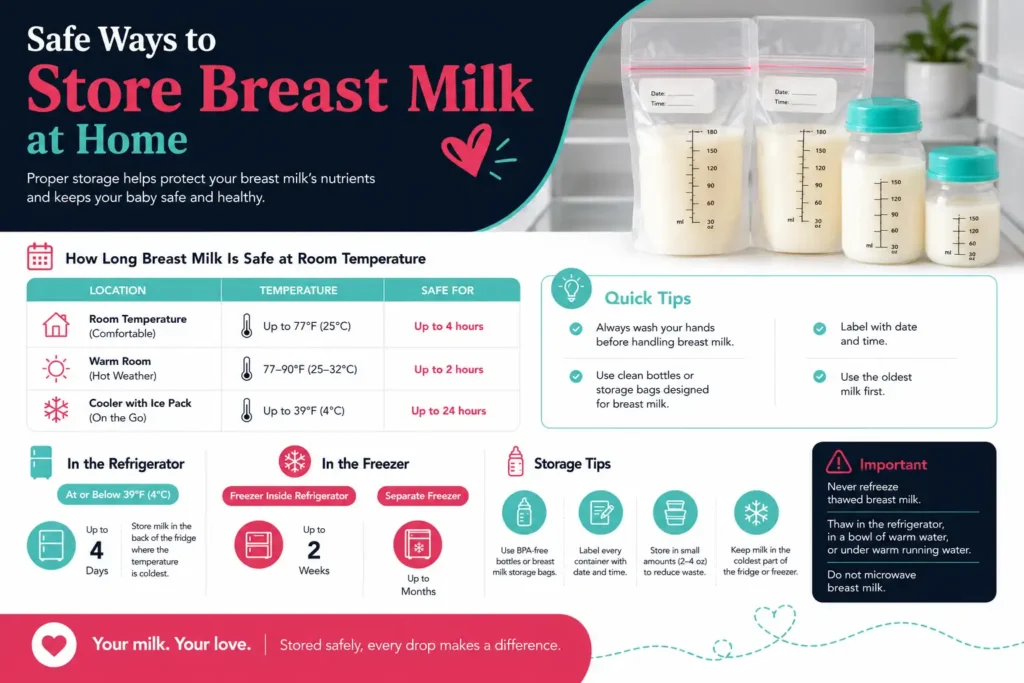
This is the part everyone wants a straight answer to, so here it is — based on current CDC guidelines.
The Quick Reference Table
| Storage Location | Temperature | Freshly Pumped Milk | Thawed Milk |
| Countertop / Room Temp | 77°F (25°C) or lower | Up to 4 hours | 1–2 hours |
| Refrigerator | 40°F (4°C) or below | Up to 4 days | Up to 24 hours |
| Freezer (standard) | 0°F (-18°C) or colder | 6 months is best; up to 12 months is okay | Never refreeze |
| Insulated Cooler Bag | With ice packs | Up to 24 hours | — |
A simple way to remember the basics: the “4 and 4” rule. Up to 4 hours at room temperature, up to 4 days in the fridge. Beyond that, it needs to be frozen or needs to go.
⚠ About Those “Best Quality” vs “Acceptable” Numbers
You’ll notice freezer storage has two numbers — 6 months and 12 months. That’s not a typo or inconsistency. Six months is when the milk is at its best quality. Up to 12 months is still considered safe, just with a gradual decline in some nutrients. Neither timeframe means the milk becomes unsafe overnight — think of it as a quality curve, not a cliff.
Picking the Right Storage Container
Not every container is created equal here, and this is a spot where a lot of well-meaning parents accidentally make a mistake.
What Actually Works
- Hard plastic (BPA-free) or glass containers with tight-fitting lids — reusable, easy to label, and reliable
- Breast milk storage bags specifically designed for this purpose — they’re sterile, pre-measured, and freezer-safe
- Bottles with sealed caps — convenient if you’re storing milk you’ll use within a day or two
What to Avoid
Disposable bottle liners and generic kitchen plastic bags are the two big ones to steer clear of. They weren’t designed to hold liquid securely over time; they’re more prone to leaking or tearing — especially once frozen — and they’re not built to maintain the milk’s integrity the way purpose-made storage bags are.
There’s also a smaller but real concern worth knowing about: some research has looked into microplastic release from certain storage bags over repeated freeze-thaw cycles. It’s not a reason to panic, but it’s part of why sticking with reputable, purpose-made storage products is worth the slightly higher cost.
Practical Tip
Store milk in small portions – 2 to 4 ounces at a time, or even smaller 1 to 2 ounce portions for those “just in case” situations. It’s a lot less frustrating to thaw exactly what you need than to defrost a big batch and end up tossing the leftovers.
Where to Actually Put It in the Fridge or Freezer
This part gets skipped in a lot of guides, but it genuinely matters.
Skip the Door
The door of your fridge or freezer is the warmest, least stable part of the appliance — it’s exposed to temperature swings every single time someone opens the door for literally anything else. Store breast milk toward the back, where the temperature stays the most consistent.
Label Everything
Date of expression, and if the milk is heading to daycare, your baby’s name as well. This isn’t just for organisation — it’s what makes the “use the oldest first” system actually work. Without dates, you’re just guessing, and guessing is exactly how milk ends up sitting too long.
Don’t Mix Warm Milk With Cold or Frozen Milk
If you’re combining milk from different pumping sessions, cool the freshly expressed batch in the fridge first before adding it to milk that’s already cold or frozen. Adding warm milk directly to frozen milk can partially thaw it, which isn’t great for either quality or safety.
Thawing and Reheating Without Ruining It
This is where a lot of otherwise careful storage gets undone in about thirty seconds — usually because of one specific kitchen appliance.
Never Microwave Breast Milk
This one’s non-negotiable, and not just because it can damage nutrients.
Microwaves heat unevenly, creating hot spots that can scald your baby’s mouth even when the bottle feels fine to the touch from the outside. It’s a genuine burn risk, not just a “loses some vitamins” inconvenience. Skip it entirely.
The Right Way to Thaw
The safest method is moving frozen milk to the refrigerator the night before you need it. Slow and steady, no rush, no risk.
If you need it faster, place the sealed container under warm — not hot — running water, or set it in a bowl of warm water until it reaches the right temperature. Always thaw the oldest milk in your stash first.
Warming for Feeding
Here’s something a lot of parents don’t realise: breast milk doesn’t actually need to be warmed at all. Plenty of babies are perfectly happy taking it cold or at room temperature, straight from the fridge.
If you do want to warm it, keep the container sealed and place it in a bowl of warm water or hold it under warm running water for a few minutes. Test a few drops on your wrist before feeding — it should feel neutral, not hot.
And once it’s warmed or brought to room temperature? Use it within 2 hours. After that window, if your baby didn’t finish it, it’s time to let it go rather than save it for next time.
Quick Do’s and Don’ts
✅ Do
- Wash your hands before expressing or handling milk
- Label every container with the date
- Store toward the back of the fridge/freezer
- Use the oldest milk first
- Cool fresh milk before combining with stored milk
- Swirl milk gently before feeding – fat separation is normal
- Freeze in small portions to reduce waste
❌ Don’t
- Microwave breast milk, ever
- Store milk in the fridge/freezer door
- Refreeze milk once it’s fully thawed
- Mix warm milk directly into frozen milk
- Use random plastic bags, not made for milk storage
- Keep leftover milk from a feed past 2 hours
- Reheat the same milk more than once
A Real-World Example
Picture a mom who pumps three times a day at work, comes home, and adds the day’s milk to a bag already in the freezer from the day before.
One evening, in a hurry, she pours the still-slightly-warm afternoon pump directly into a frozen bag from two days ago. The frozen milk softens slightly at the edges before going back into the freezer.
Nothing dramatic happens — but technically, that bag’s safety window has now shifted because part of it briefly warmed above freezing temperature. Most guidance would say it’s safer to treat that bag as needing to be used sooner rather than trusting the original 6-month freezer window.
The fix going forward is simple: she starts popping the day’s fresh milk into the fridge for an hour or two before adding it to the freezer stash. One extra small step, and the problem disappears entirely.
It’s a small detail, but it’s exactly the kind of thing that trips people up – not from lack of care, but from not knowing the “why” behind a rule that seems oddly specific until you understand it.
Conclusion
Breast milk storage isn’t complicated once the logic clicks — it’s really just a handful of consistent principles: keep it cold, keep it labelled, keep it away from temperature swings, and don’t refreeze what’s already thawed.
The “4 and 4” rule covers most everyday situations. The freezer timeline gives you flexibility for building up a stash without panic. And skipping the microwave, mixing warm with frozen, or using random plastic bags avoids almost every common mistake people make.
None of this needs to be perfect. A missed label here, a slightly too-warm bottle there — these things happen, and one imperfect moment doesn’t undo all your effort. The goal is simply building habits that make safe storage the default, so you’re not standing at the fridge every single time wondering if you’re doing it right.
FAQs
Disclaimer: This article is for informational and educational purposes only and is not intended as medical, psychological, or nutritional advice, diagnosis, or treatment. Every child, body, and pregnancy is different — please consult your pediatrician, doctor, or a qualified healthcare provider for advice specific to your situation.