
Between the prenatal vitamins, the food cravings, the doctor appointments and the constant Googling of “Is this normal?”, water tends to fall off the radar.
It’s not pretty. No one writes excited blog posts about how exciting their water bottle is. “Drink enough fluids” is not a registry item.
But here’s the thing — hydration in pregnancy does a lot more heavy lifting than most people realise. It’s not just about not having a dry mouth or being a little thirsty. It can affect things like your energy levels, your baby’s development, your mood, and even how your body handles labour down the road.
This article explains why hydration in pregnancy is far more important than most of us realise, what really goes on in your body when you don’t drink enough, and some practical tips for developing better habits without making it another thing to stress over.
The reason why you suddenly need so much more water
Before pregnancy, your fluid needs were already pretty significant. Once you’re pregnant, though, your body kicks things up several notches.
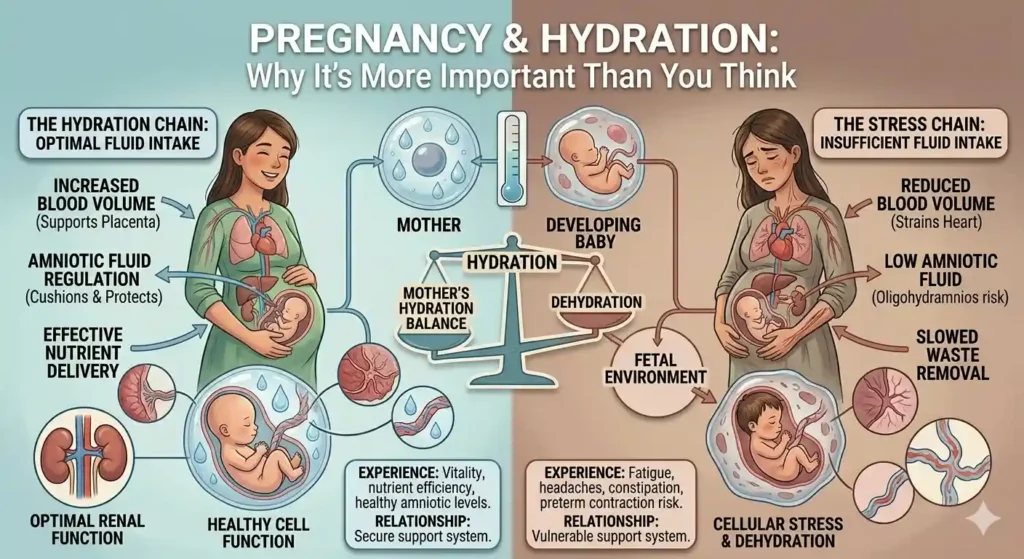
Your blood volume increases by roughly 50% over the course of pregnancy. That’s not a small adjustment — that’s your circulatory system essentially expanding to support an entirely new person.
On top of that, you’re building amniotic fluid, supporting your kidneys (which are now filtering for two), and dealing with increased sweating thanks to your higher metabolic rate. Pregnancy basically turns your body into a 24/7 construction site, and water is one of the main materials being used.
What “Enough” Actually Looks Like
Most healthcare providers suggest somewhere around 8 to 12 cups of fluids a day during pregnancy, though this can shift depending on your activity level, the climate you live in, and your individual needs.
That sounds like a lot when you say it out loud. But spread across a full day – meals, snacks, and the constant cups of water you’re already sipping – it’s more achievable than it seems.
A simple way to check in with yourself? Look at your urine colour. Pale yellow generally means you’re doing fine. Dark yellow is your body waving a little flag at you.
What Happens When You’re Not Drinking Enough
This is where things get more interesting — and a little more serious.
- Higher Risk of Dehydration-Related Complications
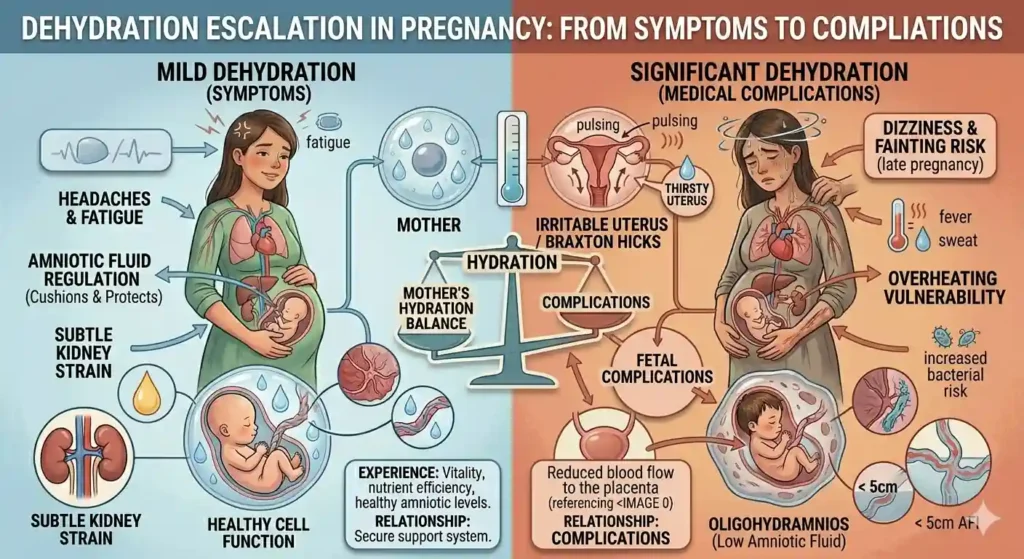
- Mild dehydration may only make you feel fatigued or have a headache. Annoying, but bearable.
- But more significant dehydration can contribute to problems like the following:
- Braxton Hicks contractions (your uterus being “irritable” when you’re thirsty)
- Low amniotic fluid
- Increased likelihood of urinary tract infections
- Dizziness or fainting, more so in late pregnancy
- Overheating – something you’re already more likely to do during pregnancy
Some studies have even linked chronic dehydration during pregnancy to a higher likelihood of preterm labour. The exact mechanisms are still being studied, but the pattern shows up often enough that it’s worth paying attention to.
The Fatigue Connection Nobody Talks About
Here’s something that doesn’t get discussed enough: a huge amount of pregnancy fatigue that gets blamed on “just being pregnant” is actually partly dehydration.
Dehydration reduces blood volume, which means your heart has to work harder to pump blood around — including to your brain and muscles. The result? You feel sluggish, foggy, and exhausted, even if you got enough sleep.
I’m not saying hydration is some magic energy fix. Pregnancy fatigue is real and multi-layered. But for a lot of people, drinking more water genuinely takes the edge off some of that heaviness.
Hydration’s Role in Your Baby’s Development
This part tends to surprise people the most.
Amniotic Fluid Is Mostly… Water
Amniotic fluid — the cushion your baby floats around in — is primarily made up of water, along with electrolytes, proteins, and other compounds. Your hydration levels directly influence how much amniotic fluid your body produces.
Low amniotic fluid (called oligohydramnios) can sometimes be linked to dehydration, although there are other causes too. It’s one of the reasons doctors sometimes recommend “drink more water and come back for a follow-up scan” when fluid levels are on the lower end.
Nutrient and Oxygen Delivery
Your increased blood volume isn’t just for you — it’s the delivery system for oxygen and nutrients reaching your baby through the placenta.
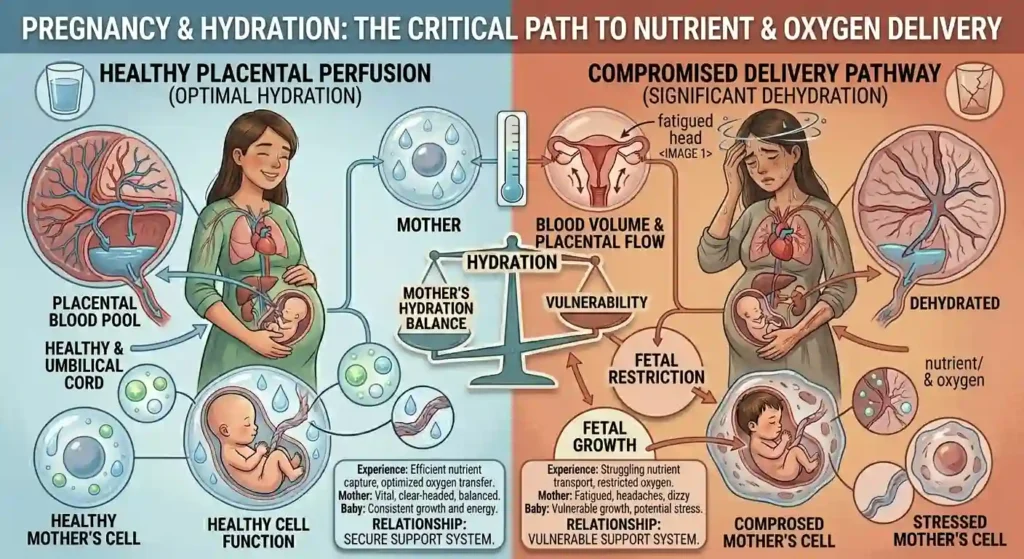
When you’re dehydrated, blood volume drops slightly, and that delivery system doesn’t run as efficiently. Your baby is incredibly resilient, and your body prioritises them in almost every way, but giving that system what it needs to function well just makes sense.
Practical Ways to Actually Drink More Water
Knowing you should drink more water and actually doing it consistently are two very different things. Especially when nausea makes the idea of drinking a giant glass of water feel like a personal attack.
Make It Boring and Automatic
The best hydration habits aren’t exciting — they’re boring and repetitive, which is exactly why they work.
Try pairing water with things you already do. Drink a glass when you wake up. Drink a glass before each meal. Keep a water bottle by your bed, your desk, your couch — basically, wherever you spend the most time.
Eat Your Water
Fruits and vegetables with high water content can genuinely contribute to your hydration totals. Watermelon, cucumber, oranges, strawberries, and soups all count.
This is especially helpful during first-trimester nausea, when chugging plain water feels impossible, but a few slices of cold watermelon might actually sound appealing.
Flavor It Without the Sugar Overload
If plain water feels boring or even nauseating, add something to it. A few slices of lemon, cucumber, or mint can make a big difference without adding much sugar.
Some people find that room-temperature water is easier to tolerate than ice-cold water during certain trimesters, while others find the opposite. There’s no universal rule here — experiment a bit and notice what your body responds to.
Set Realistic, Visual Reminders
Marked water bottles — the ones with time stamps printed on the side — work well for some people because they remove the guesswork. You’re not trying to remember how much you’ve had; the bottle tells you.
If that feels too gimmicky, even something as simple as a sticky note on your bathroom mirror reminding you to drink a glass before bed can help build the habit.
A Real-World Example
Let’s say someone is in their second trimester and constantly feeling tired by mid-afternoon. They assume it’s just “pregnancy brain” and normal exhaustion, so they push through with coffee.
After mentioning the fatigue at a prenatal appointment, the provider asks a simple question: “How much water are you actually drinking on an average day?”
The honest answer turns out to be… not much. Maybe two or three glasses, mostly because mornings are nauseous and afternoons are busy.
The provider suggests a basic experiment — aim for a glass of water every couple of hours, even small amounts, for one week. Nothing dramatic. No big lifestyle overhaul.
By day four, the afternoon fatigue is noticeably less intense. Not gone completely — pregnancy is tiring, full stop — but less of that “hit a wall” feeling.
This isn’t a magic fix for everyone. But it’s a good example of how something this simple can have a real, noticeable effect.
Conclusion
Hydration in pregnancy isn’t flashy. It won’t show up on a registry, and nobody’s going to throw you a baby shower themed around water intake.
But it quietly supports nearly everything happening in your body during these nine months — your energy, your baby’s environment, your circulation, and even how your body prepares for labour.
The good news is that improving your hydration doesn’t require a complete lifestyle overhaul. Small, boring, repeatable habits — a glass here, a slice of watermelon there — add up faster than you’d think.
If there’s one thing to take from this article, the next time you’re feeling unusually tired, foggy, or “off” during pregnancy, check in with how much water you actually had that day before assuming it’s just part of the deal?