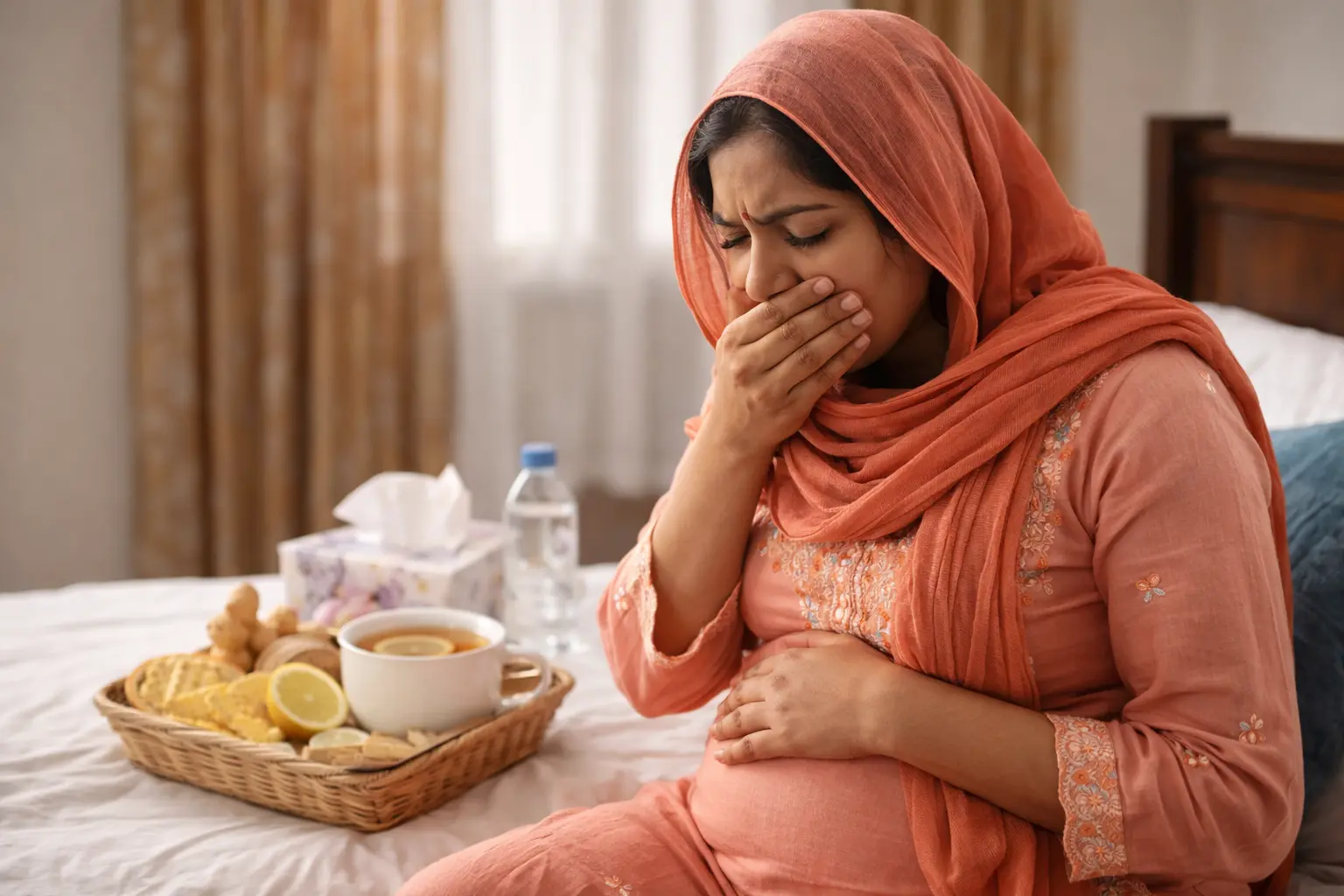
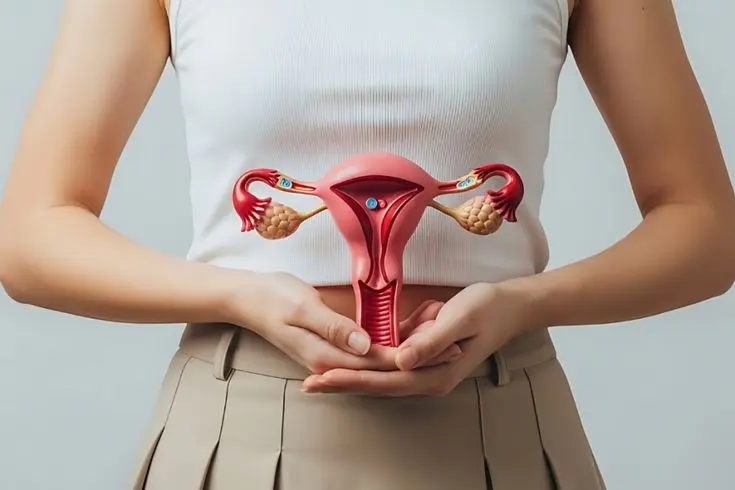
Your body starts sending signals weeks before a pregnancy test confirms anything — most women dismiss them as something else entirely.
Quick Answer — For Voice Search & AI Overviews
What are the early pregnancy signs most women ignore? The most overlooked early pregnancy signs include implantation bleeding (mistaken for an early period), extreme fatigue (dismissed as stress or heat), frequent urination (blamed on chai), metallic taste in the mouth, heightened sense of smell, breast tenderness, and mild cramping without a period. These signs can appear as early as 6–12 days after conception, before a missed period and before a pregnancy test turns positive.
Thakaan ho rahi thi. Pet thoda bloated tha. And that one moment in the kitchen — the smell of someone frying onions made you want to run out of the room. Aap ne socha: “Shayad mujhe neend nahi aayi raat ko. Ya maybe it was something I ate.” So you carried on with your day.
Four weeks later, a pregnancy test changed everything.
This is the story of almost every Pakistani mom we have ever spoken to. Early pregnancy signs are subtle, easy to explain away, and almost always mistaken for something completely ordinary — stress, heat, acidity, PMS, or just “life.” This article names all 11 of the signs your body sends in those first weeks — and explains exactly why they are so easy to miss.
6–12
Days after conception,, when implantation occurs, and the first signs may appear
25–30%
Pregnant women who experience implantation bleeding
70%
Women who have pregnancy symptoms by week 6 of pregnancy
2 wks
How early some women notice signs — before any missed period
Why Early Pregnancy Signs Get Ignored
It is not carelessness. It is biology. The earliest pregnancy symptoms are driven by rising progesterone and hCG (human chorionic gonadotropin) — hormones that produce effects that are almost identical to what your body does before a period, during stress, or after a bad meal.
There are three main reasons women dismiss early signs:
- They overlap entirely with PMS. Bloating, breast tenderness, mood changes, fatigue — these are the hallmarks of both PMS and early pregnancy. Without knowing which one is happening, most women default to the more familiar explanation.
- They are too subtle to feel “medical.” A metallic taste in your mouth, feeling a little more tired than usual, needing the bathroom more often — none of these feels significant enough to trigger a pregnancy test.
- The timing is confusing. Many women track their cycle but don’t realise that pregnancy symptoms can appear before a missed period — before the body gives the “classic” signal most people wait for.
Important to Know
hCG — the hormone pregnancy tests detect — starts being produced right after implantation (days 6–12 after conception). It doubles every 48–72 hours in early pregnancy. By the time your period is late, hCG levels are usually high enough to be detected. But the symptoms it causes begin before the test can confirm anything.
When Do Early Pregnancy Symptoms Actually Start?
Most people think pregnancy symptoms start “when you miss your period.” But your body begins changing almost immediately after conception. Here is the real timeline:
Days 1–5 after conception
Fertilisation & travel to the uterus
No symptoms yet. The fertilised egg is travelling through the fallopian tube toward the uterus. Nothing is detectable.
Days 6–12 after conception
Implantation — first signs possible
The embryo implants into the uterine wall. Implantation bleeding, mild cramping, and breast tenderness may begin. hCG production starts.
Weeks 2–3 (before missed period)
hCG rising — subtle symptoms increase
Fatigue, nausea, heightened smell, frequent urination, and mood changes may begin. Still too early for most urine tests to detect.
Week 4 (around missed period)
The test can now confirm
hCG levels are high enough to be detected on home pregnancy tests. Symptoms intensify. Most women realise something is different at this point.
Weeks 5–8
Classic symptoms peak
Morning sickness, extreme fatigue, food aversions, and breast changes become unmistakable for most women.
11 Early Pregnancy Signs Most Women Ignore
These are the signs that get explained away, dismissed, and forgotten — until a positive test makes you look back and think, “Oh. That’s what that was.”
1 Implantation Bleeding
⚠️ Mistaken for: early or light period
Light pink or brown spotting lasting 1–3 days, appearing around 6–12 days after conception. It is lighter than a period, has no clots, and does not progress into a full flow. Many women see this and assume their period came early — period aa gayi, aur early aa gayi — and the thought of pregnancy never crosses their mind. Key difference: it stays light and stops on its own within 1–3 days.
2 Extreme, Unusual Fatigue
⚠️ Mistaken for: stress, heat, poor sleep
Not regular tiredness — a bone-deep exhaustion that hits suddenly and does not improve with rest. In the first weeks of pregnancy, progesterone rises sharply, and your body is redirecting enormous amounts of energy to build the placenta. In Pakistan’s heat and busy joint family households, this fatigue gets blamed on everything except pregnancy. If you are sleeping 8 hours and still feel like you have been hit by a truck — note it.
3 Heightened or Changed Sense of Smell
⚠️ Mistaken for: sensitivity, mood, random reaction
Suddenly, the smell of cooking oil, your husband’s cologne, or petrol makes you feel physically ill. This is called hyperosmia, and it is one of the earliest and most distinctive early pregnancy signs, driven by rising estrogen. Pata nahi kyun aaj khane ki khushbu se ulti aa rahi hai — this is not random. It is your body signalling a major hormonal shift.
4 Metallic Taste in the Mouth
⚠️ Mistaken for: acidity, medication side effect, dental issue
A persistent metallic, sour, or iron-like taste that makes food taste strange and lingers through the day. Called dysgeusia, this is caused by surging estrogen, altering taste perception in early pregnancy. It is one of the lesser-known signs but extremely common — and almost always blamed on something else. If your chai starts tasting like coins, this is worth noting.
5 Frequent Urination
⚠️ Mistaken for: too much chai, UTI, weak bladder
Needing to urinate more often than usual — even before the uterus is large enough to press on the bladder. In early pregnancy, hCG increases blood flow to the kidneys, making them more efficient and producing more urine. Many Pakistani women blame this on chai intake. If it is new, consistent, and not explained by fluid intake, it is worth paying attention to.
6 Breast Tenderness or Heaviness
⚠️ Mistaken for: PMS, bra fit, muscle soreness
Breasts feel sore, tender, heavier, or more sensitive than usual — especially around the nipples. Rising hCG and progesterone are already preparing the breast tissue for feeding. The difference from PMS tenderness: pregnancy breast tenderness is more intense, more concentrated around the nipple area, and does not ease when a period would normally start.
7 Mild Cramping Without a Period
⚠️ Mistaken for: PMS cramps, gas pain, stomach issues
Light, period-like cramping in the lower abdomen around implantation time that is not followed by a period. Many women feel this and stock up on pads — and then the period never comes. Implantation cramping is milder than period cramps, does not worsen over time, and lasts only 1–3 days. Paired with light spotting, it is one of the clearest early signals.
8 Bloating and Digestive Changes
⚠️ Mistaken for: heavy food, acidity, IBS
Progesterone relaxes smooth muscle throughout the body, including the digestive tract. This slows digestion, causes bloating, gas, and sometimes constipation as early as the first 1–2 weeks after conception. Khaana hazam nahi ho raha — and the biryani gets the blame. If digestive sluggishness is new and persistent alongside other signs, it is worth noting.
9 Mood Swings and Emotional Sensitivity
⚠️ Mistaken for: stress, PMS, tiredness
Crying at an advertisement. Feeling irritable for no reason. Getting overwhelmed by small things. Rapidly fluctuating hormones in early pregnancy affect the brain’s emotional regulation centres. Many women write this off as stress — especially in Pakistani households where emotional load is high. If the intensity feels unusual for you, it may not just be tension.
10 Food Aversions or Sudden Cravings
⚠️ Mistaken for: picky eating, mood, random preferences
Suddenly not being able to stand a food you normally love — or intensely craving something specific at odd hours. Food aversions can appear before nausea does and are caused by the same hormonal shifts driving smell sensitivity. Pehle to daal chawal bohot pasand thi — aaj dekhke hi ulti aa rahi hai. If this is new and sudden, it is a flag worth noticing.
11 Dizziness or Light-Headedness
⚠️ Mistaken for: low blood pressure, heat, hunger
Feeling dizzy when standing up quickly, or having a general light-headedness throughout the day. In early pregnancy, progesterone causes blood vessels to dilate, causing blood pressure to drop slightly. In Pakistan’s climate, this is almost always attributed to the heat or not eating enough, which is why it goes unnoticed as a pregnancy sign.
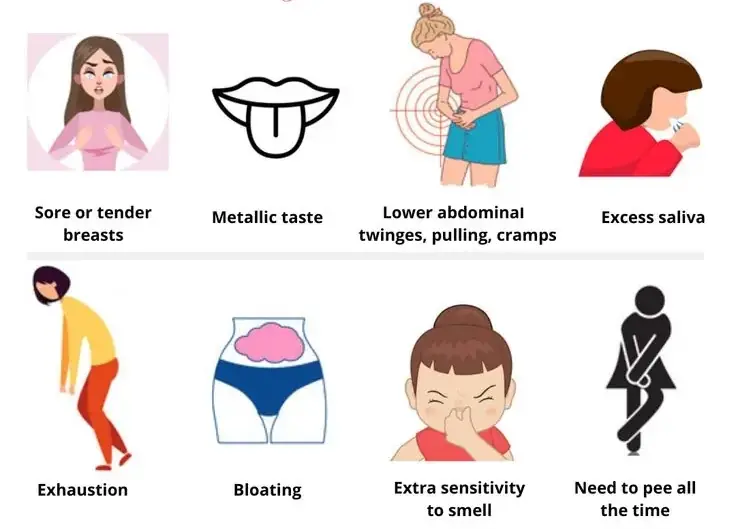
PMS vs Early Pregnancy: Side-by-Side Comparison
This is the comparison every woman needs — because the overlap is real and the differences are specific:
| Symptom | PMS | Early Pregnancy |
| Breast tenderness | Mild, whole breast, eases with period | More intense, nipple-focused, does not ease |
| Cramping | Worsens before period, follows a pattern | Mild, 1–3 days only, not followed by a full period |
| Spotting | No spotting before period (usually) | Light pink/brown spotting, 1–3 days only |
| Fatigue | Moderate, improves with period | Extreme, does not improve, worsens over weeks |
| Nausea | Rare | Common, may begin a missed period before |
| Smell sensitivity | Rare or mild | Strong, sudden, can be overwhelming |
| Metallic taste | Not typical | Common, persistent |
| Frequent urination | Not typical | Common from week 2–3 onwards |
| Mood changes | Irritability resolves with a period | Emotional sensitivity that continues and intensifies |
| Bloating | Common before period, resolves quickly | Persistent, does not resolve with a period |
| Period arrives? | ✓ Yes — symptoms resolve | ✗ No period, symptoms continue |
✓ The Clearest Signal
The single most reliable differentiator: PMS symptoms resolve when your period arrives. Pregnancy symptoms do not. If your period is late and the symptoms are continuing or intensifying, take a test.
🇵🇰Why Pakistani Women Specifically Tend to Miss Early Signs
There are cultural and lifestyle factors specific to Pakistan that make early pregnancy signs even easier to overlook:
The Chai Factor
Pakistan mein chai culture itni strong hai ke frequent urination, acidity, bloating, aur nausea sab chai ko blame ho jaata hai. “Zyada chai pi li” is the explanation for a remarkable range of symptoms that might actually be early pregnancy. If the symptoms are new, unusual, or more intense than before, chai is not always the answer.
The Heat Excuse
Dizziness, fatigue, headaches, and nausea in Pakistan from April through October are immediately attributed to garmi. “Garmi lag gayi hogi” covers a lot of ground. In a climate where heat genuinely does cause these symptoms, it is completely understandable to dismiss them — until they persist into cooler hours and cooler days.
The Nazar and Telling Too Early Culture
Many Pakistani women prefer not to acknowledge a pregnancy too early due to concerns about nazar or cultural tradition. This means that even when a woman suspects pregnancy, she sometimes delays testing, which delays prenatal care. Early confirmation, even if kept private, allows you to begin folic acid, avoid harmful substances, and schedule your first appointment.
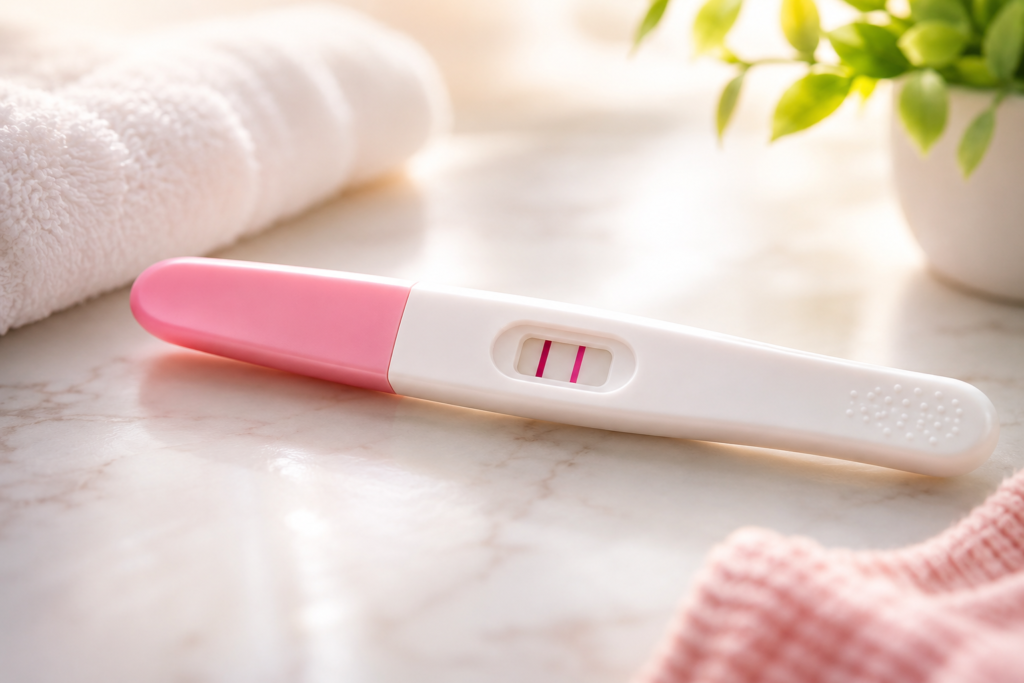
When and How To Take a Pregnancy Test
| Timing | Accuracy | Recommendation |
| 5–6 days before missed period | ~60–70% | ⚠ Possible but unreliable |
| 1–2 days before missed period | ~80–90% | ⚠ Better, still may miss some |
| Day of missed period | ~97–99% | ✓ Most reliable time |
| 1 week after the missed period | ~99%+ | ✓ Most accurate result |
| Blood test (doctor) | ~99%+ | ✓ Detects pregnancy earlier than a urine test |
How To Get the Most Accurate Result
- Use the first morning urine — hCG is most concentrated after sleeping
- Read within the time window — most tests require reading within 3–5 minutes
- Do not drink excessive water before testing — it dilutes urine and can cause a false negative
- Test again if negative, but symptoms continue — hCG doubles every 48–72 hours
- Check expiry date — expired tests give unreliable results
⚠ False Negatives Are Common When Testing Early
If you test before your missed period and get a negative result, but your period does not arrive, test again. Many early negatives are simply a matter of timing. A blood hCG test from your doctor can detect pregnancy earlier and more reliably than any home urine test.
When To See a Doctor
| Symptom | What It Could Mean | Action |
| Heavy bleeding with clots (not implantation spotting) | Possible miscarriage or ectopic pregnancy | 🚨 Emergency — go immediately |
| Severe one-sided pain in the abdomen | Possible ectopic (tubal) pregnancy | 🚨 Emergency — go immediately |
| Shoulder tip pain with dizziness | Possible ruptured ectopic pregnancy | 🚨 Emergency — go immediately |
| Unable to keep any food or water down | Hyperemesis gravidarum | ⚠ See a doctor the same day |
| High fever with pregnancy symptoms | Infection requiring treatment | ⚠ See a doctor the same day |
| Positive test — no other concerns | Normal early pregnancy | ✓ Book first appointment within 8 weeks |
✓ Start These Immediately After a Positive Test
Begin folic acid 400 mcg daily — critical for neural tube development in the first weeks. Stop smoking, alcohol, and any medications not approved for pregnancy. Book your first prenatal appointment. And drink more water — your hydration needs just increased significantly.
Frequently Asked Questions
Your Body Was Talking — Now You Know How to Listen
Early pregnancy signs are easy to miss, easy to explain away, and easy to blame on chai, garmi, or a long week. But now you have the full picture. If something feels different — not wrong, just different — it is worth paying attention to. Apna khayal rakho. Take the test. Book the appointment. You deserve to know.
Explore All Pregnancy Guides →
Disclaimer: This article is for informational purposes only and does not constitute medical advice. If you suspect you may be pregnant or are experiencing unusual symptoms, please consult a qualified healthcare provider. Sources include ACOG Early Pregnancy Guidelines 2024, WHO Reproductive Health Data 2023, and American Journal of Obstetrics and Gynecology.
Disclaimer: This article is for informational and educational purposes only and is not intended as medical, psychological, or nutritional advice, diagnosis, or treatment. Every child, body, and pregnancy is different — please consult your pediatrician, doctor, or a qualified healthcare provider for advice specific to your situation.