

Picture this: It’s 6 PM, and your peaceful newborn has suddenly transformed into what feels like an insatiable little feeding machine. They’ve nursed three times in the past two hours, and despite seeming satisfied after each session, they’re rooting for more. Your arms are tired, your confidence is shaking, and you’re wondering if something is wrong with your milk supply or your baby’s health.
Take a deep breath. What you’re experiencing is likely cluster feeding—one of the most normal yet exhausting aspects of newborn care that catches many parents completely off guard.
What Exactly Is Cluster Feeding?
Cluster feeding is a completely natural feeding pattern where babies want to nurse or bottle-feed much more frequently than usual—often every 30 to 60 minutes over several hours. Instead of following the typical every-three-hour feeding schedule many parents expect, cluster-feeding babies seem to want constant nourishment in short, frequent bursts.
Key characteristics of cluster feeding include:
- Multiple short feeding sessions (10-30 minutes each) are grouped.
- Brief rest periods between feeds (sometimes as short as 30 minutes)
- Babies pulling on and off the breast or bottle.
- Increased fussiness between feeding sessions
- Most commonly occurring in late afternoon or early evening hours.
Research shows that cluster feeding typically happens in the first few weeks of life but can recur during growth spurts throughout the first six months. What makes this behavior particularly challenging for parents is its unpredictable nature and the way it disrupts expected routines.
The Science Behind Why Babies Cluster Feed
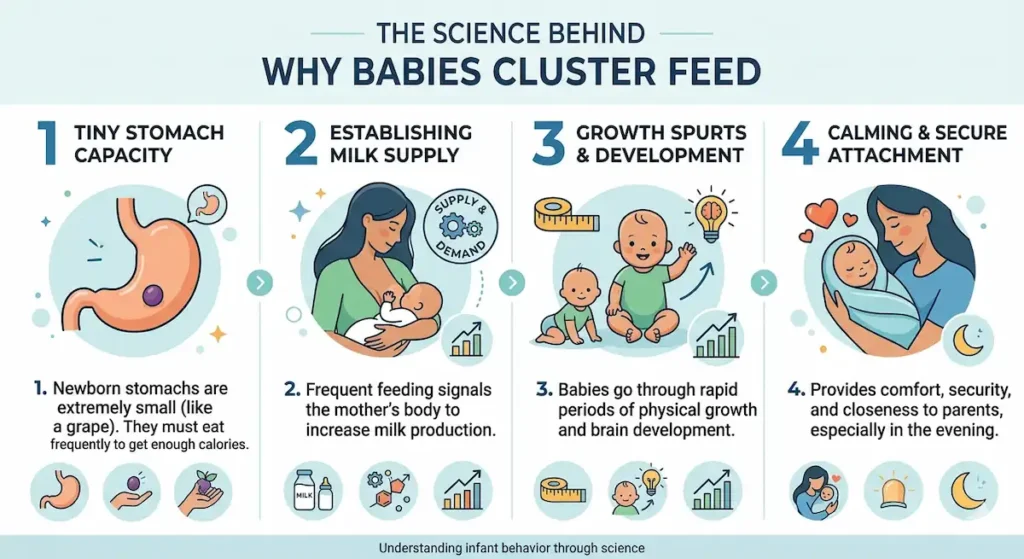
Understanding the biological mechanisms behind cluster feeding can provide tremendous reassurance for worried parents. Medical experts have identified several scientifically backed reasons why this behavior occurs:
1. Tiny Stomach Capacity
Newborns are born with remarkably small stomachs. In the first 24 hours of life, a baby’s stomach can only hold 2-10 milliliters of milk per feeding—less than a teaspoon. By day three, this capacity triples to about one ounce, and by the end of the first week, babies can hold 1-2 ounces per feeding.
This biological reality means that frequent feeding isn’t a choice—it’s a necessity for adequate nutrition. Cluster feeding allows babies to maximize their caloric intake despite their limited stomach capacity.
2. Natural Hormonal Fluctuations
Prolactin, the hormone responsible for milk production in breastfeeding mothers, naturally fluctuates throughout the day. Research indicates that prolactin levels typically decrease in the evening hours, resulting in a corresponding decrease in milk supply. This biological rhythm explains why many babies cluster feed in the late afternoon and evening—they’re compensating for slightly less available milk per feeding session.
3. Growth Spurts and Developmental Needs
Clinical studies consistently show that cluster feeding often coincides with periods of rapid growth and brain development. During these critical windows, babies’ caloric needs increase dramatically. The developing brain alone consumes about 20% of a baby’s daily energy expenditure, making frequent feeding essential for proper neurological development.
4. Establishing Milk Supply
For breastfeeding mothers, cluster feeding serves a crucial biological function: it triggers increased milk production through the supply-and-demand mechanism. The frequent stimulation signals the mother’s body to ramp up milk production to meet the baby’s growing needs.
When Does Cluster Feeding Typically Occur?
Understanding the timeline of cluster feeding can help parents prepare for and normalize these intensive feeding periods:
Immediate Newborn Period (Days 1-7)
Cluster feeding often begins as early as day one or two of life, with intensity typically peaking between days 2-5. During this period, babies may want to feed every hour around the clock as they:
- Adjust to life outside the womb.
- Work to regain their birth weight (babies naturally lose up to 10% of birth weight in the first five days)
- Help establish maternal milk supply.
Common Cluster Feeding Ages
Research identifies several predictable windows when cluster feeding commonly resurfaces:
- 2-3 weeks: Often, the first major growth spurt occurs outside the newborn period
- 6 weeks: Another significant developmental milestone requiring increased nutrition
- 3 months (12 weeks): Coincides with increased awareness of surroundings and potential feeding distractions during the day
- 6 months (24 weeks): Often occurs alongside major motor development milestones like sitting up
Daily Timing Patterns
Most cluster feeding occurs during specific times of day, with evening hours (typically 4-11 PM) being the most common window. This timing isn’t coincidental—it often coincides with:
- Natural drops in maternal prolactin levels
- Baby’s preparation for longer nighttime sleep stretches.
- End-of-day overstimulation and need for comfort.
- Parents’ fatigue and stress levels, which babies can sense
Recognizing the Signs: Is Your Baby Cluster Feeding?
Identifying cluster feeding can be challenging, especially for new parents still learning their baby’s cues. Here are the clinically recognized signs to watch for:
Primary Indicators:
- Wanting to feed every 30-60 minutes over several hours
- Short feeding sessions with brief breaks between
- Contentment during feeding, but restlessness afterward
- Normal wet and dirty diaper output (at least 6 wet diapers per day after day 5 of life)
- Continued weight gain within normal parameters
Behavioral Signs:
- Rooting and hunger cues shortly after feeding
- Fussiness that’s soothed by nursing or bottle-feeding
- On-and-off feeding patterns during sessions
- Difficulty settling between feeds
- Strong desire to be held constantly
What Cluster Feeding Is NOT:
It’s crucial to distinguish cluster feeding from other conditions:
- Not colic: Colicky babies cry for extended periods and cannot be consistently soothed by feeding
- Not inadequate milk supply: If the baby has appropriate diaper output and weight gain, the supply is likely adequate
- Not overfeeding: Babies have natural mechanisms to regulate intake and rarely overfeed when following hunger cues.
Common Parental Concerns and Evidence-Based Reassurance
Cluster feeding triggers numerous anxieties for parents. Let’s address the most common concerns with scientific clarity:
“Am I producing enough milk?”
This is perhaps the most frequent worry among breastfeeding mothers. However, research consistently shows that cluster feeding typically indicates appropriate milk supply function, not inadequacy. The Cleveland Clinic emphasizes that breasts are never empty—they continuously produce milk throughout the day.
Signs your baby IS getting enough milk:
- At least 6 wet diapers per day after day 5 of life
- Regular bowel movements
- Steady weight gain (approximately 1 ounce per day after the first week)
- Contentment during and immediately after feeding sessions
“Is something wrong with my baby?”
Cluster feeding is a normal developmental behavior, not a medical concern. The American Academy of Pediatrics recognizes cluster feeding as a typical newborn behavior that serves important biological and developmental functions.
“Will this ever end?”
Yes, absolutely. Most cluster feeding phases last only 2-7 days before babies return to more predictable feeding patterns. The most intensive period typically occurs in the first 2-3 weeks of life, with subsequent episodes becoming shorter and less frequent.
Practical Management Strategies
Surviving cluster feeding requires both physical and emotional preparation. Here are evidence-based strategies to help families navigate these challenging periods:
Physical Preparation:
- Create a comfortable feeding station: Set up a dedicated area with water, healthy snacks, phone chargers, and entertainment.
- Maintain nutrition and hydration: Breastfeeding mothers need an additional 450-500 calories daily.
- Practice various feeding positions: Changing positions regularly can prevent soreness and improve comfort.
- Consider safe babywearing: This allows mobility while keeping the baby close for frequent feeding access.
Emotional and Practical Support:
- Adjust expectations: Accept that evening routines may be disrupted for several days.
- Prepare meals in advance: Simple, one-handed foods become invaluable during cluster feeding periods.
- Utilize support networks: Ask partners, family, or friends to handle household tasks.
- Rest when possible: Sleep during any available windows, even brief ones
For Formula-Feeding Families:
- Offer smaller, more frequent bottles during cluster feeding periods.
- Practice paced feeding to prevent overfeeding.
- Ensure adequate burping between sessions.
- Consider a ready-to-feed formula for convenience during intensive periods.
When to Seek Professional Help
While cluster feeding is normal, certain signs warrant professional evaluation:
Contact your pediatrician if:
- Baby has fewer than 6 wet diapers per day after day 5 of life.
- Poor weight gain or weight loss after the newborn period
- Cluster feeding continues all day, every day, for more than a week.
- Baby seems consistently unsatisfied or frantic after feeding sessions.
- Signs of dehydration or lethargy
Consider lactation consultation for:
- Persistent nipple pain or damage
- Concerns about milk supply or transfer
- Difficulty with latch or positioning
- Questions about pumping or mixed feeding approaches
The Bigger Picture: Why This Phase Matters
Cluster feeding, while exhausting, serves crucial developmental purposes that benefit both babies and breastfeeding mothers:
For Babies:
- Ensures adequate nutrition during rapid growth periods
- Supports optimal brain development during critical windows
- Provides comfort and security during adjustment to life outside the womb
- Helps establish healthy circadian rhythms
For Breastfeeding Mothers:
- Establishes and maintains an adequate milk supply
- Supports the natural hormonal processes of lactation
- Creates bonding opportunities during intensive caregiving periods
- Builds confidence in responsive feeding practices
Moving Forward with Confidence
Understanding cluster feeding transforms what feels like an overwhelming challenge into a manageable, temporary phase of normal infant development. This behavior, while demanding, represents your baby’s biological wisdom in action—their innate ability to regulate their nutrition and development needs.
Remember these key takeaways:
- Cluster feeding is normal, temporary, and serves important biological functions.
- Most episodes last only a few days before patterns normalize.
- Adequate diaper output and weight gain indicate successful feeding, regardless of frequency.
- Professional support is available when concerns arise.
- This phase will pass, and you’re doing an excellent job meeting your baby’s needs.
Conclusion
Cluster feeding represents one of parenthood’s most intense but temporary challenges. By understanding the science behind this behavior, recognizing normal patterns, and implementing practical management strategies, families can navigate these periods with greater confidence and less anxiety.
Your baby’s sudden need to feed frequently isn’t a sign of inadequate milk supply, medical problems, or parental failure—it’s a testament to their healthy development and your responsive caregiving. Trust in your baby’s cues, trust in your body’s ability to provide, and trust that this demanding phase will give way to more predictable patterns as your little one continues to grow and develop.
The sleepless evenings, the constant feeding sessions, and the uncertainty will pass. What remains will be the foundation of a strong feeding relationship and the confidence that comes from successfully supporting your baby through their earliest and most crucial developmental needs.
Remember: When in doubt, trust your instincts and don’t hesitate to reach out to your healthcare provider or a lactation consultant. You’re not alone in this journey, and support is always available when you need it.
Frequently Asked Questions About Cluster Feeding
Sources Link
https://www.healthline.com/health/parenting/cluster-feeding#takeaway
https://huckleberrycare.com/blog/cluster-feeding-schedule-newborn
https://www.babycenter.com/baby/breastfeeding/cluster-feeding_40009890
https://my.clevelandclinic.org/health/articles/cluster-feeding
https://www.thebump.com/a/cluster-feeding
Disclaimer: This article is for informational and educational purposes only and is not intended as medical, psychological, or nutritional advice, diagnosis, or treatment. Every child, body, and pregnancy is different — please consult your pediatrician, doctor, or a qualified healthcare provider for advice specific to your situation.