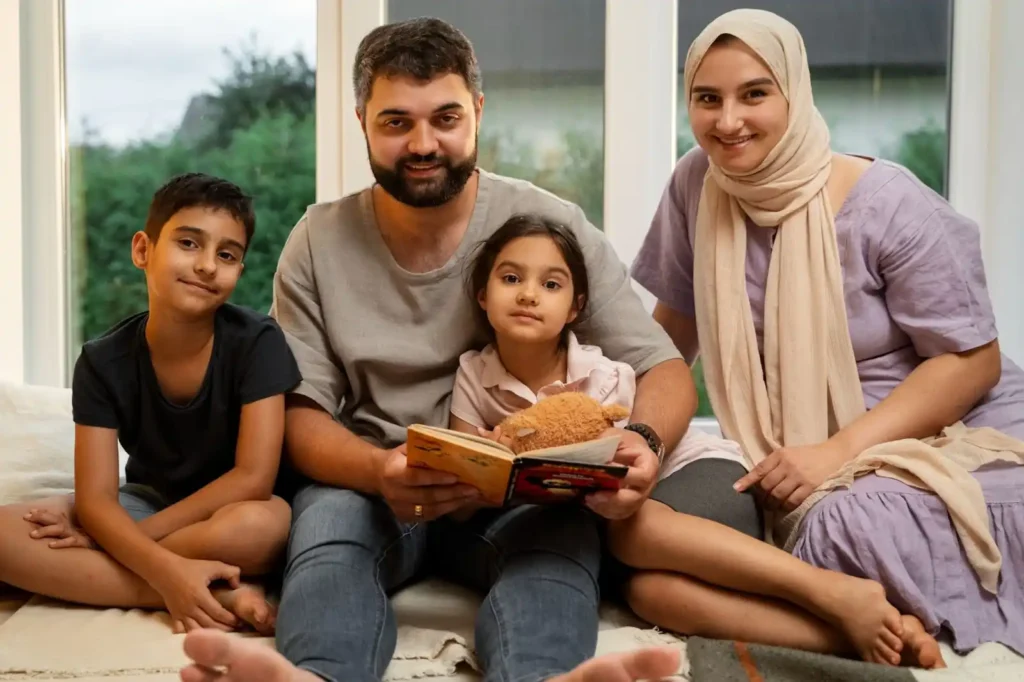

Helping children cope with a grandparent’s death comes with a special kind of helplessness. The person telling the news is grieving deeply and must also find words for a situation that is still hard to understand. Should the message use “passed away” or “died”? Should the person take the child to the funeral? What if the child asks a question that has no answer?
Helping children cope with a grandparent’s death is never simple. Still, there are ways to approach this that truly help the child, and some common instincts that, even though they come from good intentions, can create more confusion.
A note before we start: this article provides general information to help the reader feel informed. It is not a diagnosis or a replacement for a doctor’s advice. If any part of this article causes concern, please contact a healthcare professional.
Start With Honest Simple Language
The instinct to soften the news is completely understandable. Saying “Nana went to sleep” or “we lost Dada” feels gentler than using the word “died”. For children, especially young ones, these phrases can cause real confusion or even fear. A child who hears “went to sleep” may begin to worry about their bedtime.
It is usually better to use direct words. For example, say, “Nani was very sick, and her body stopped working. She died. That means we will not see her again, and it is okay to feel sad about that.” The sentence may seem blunt on paper. When spoken gently, it gives the child a clear truth to hold onto instead of a confusing mystery to work out later.
Match the Explanation to Their Age
A three-year-old does not need the explanation as a ten-year-old. Younger children usually do better with concrete statements that are repeated calmly, because they often ask the same question many times. This is not because they did not listen, because the idea of death is a very hard concept to take in. Older children can normally handle detail and may want to know the “why”, especially if the death followed an illness.
Expect Reactions That Don’t Look Like Grief
One of the unsettling experiences for parents is watching a child hear devastating news and then return to playing after only a few minutes. It can feel almost dismissive, especially when the parent is also trying to keep composure.
This is not a lack of feeling. Children, young ones, process big emotions in smaller doses than adults. A child might cry hard for two minutes, ask for a snack, then bring the subject up again an hour later out of nowhere. This back-and-forth pattern is completely normal. Is not a sign that the child does not understand or does not care.
Grief Can Also Show Up as Behavior, not words.
Some children will not talk about the loss a lot. Instead, the child may show clinginess, trouble sleeping, irritability, or a return to behaviours that were outgrown, such as thumb-sucking or bedwetting. These are ways that grief shows up in children who do not yet have words to say “I am sad” or “I am scared”.
Should Kids Attend the Funeral?
This is one of the common questions parents ask, and there is no single right answer for every family or every age. Many child psychologists suggest that attending a funeral, when the child is prepared for what to expect and is given the choice rather than forced, can help the child process the loss as something real instead of something mysterious that happened “somewhere else”.
If the parent decides to bring the child, it helps to explain what the child will see and hear. People crying, prayers being recited, possibly an open casket depending on the family’s customs. So nothing surprises the child. It is also fine to let the child opt out or leave partway through if the situation becomes too overwhelming.
If You Decide Not to Bring Them
That is also a choice, especially for very young children or in situations where the funeral itself might be chaotic or emotionally intense for the adults. What matters more than attendance is making sure the child is not left feeling excluded from the family’s grieving process. A simple ritual at home. Lighting a candle, looking at photos, and saying a prayer together. Can provide a way for the child to participate in their own way.
An Example: The Bedtime Questions
A relative of mine lost her father a year ago, and her six-year-old son kept asking the same question every night at bedtime: “But where did Nana actually go?” The relative said it was exhausting to answer again, especially while she was grieving too. However, she kept the answer consistent each time, calm, instead of getting frustrated or changing the explanation.
Eventually the questions slowed down on their own. Children often need to hear the explanation repeated before it settles into something that can really be processed, not because the child is being difficult, but because that is genuinely how understanding builds at that age.
Answering the Hard Questions
Children ask questions that can catch the parent off guard. “Will you die too?” “Am I going to die?” “Why did God let this happen?” There is no script, but a few principles help.
- Answer honestly at a level that matches the child’s age rather than avoiding the question entirely.
- It is okay to say “I do not know” for questions that do not have an answer.
- Reassure the child about their safety without making promises that cannot be kept, such as “I will never die.” Instead, say something like “Most people live a long time, and right now we are all healthy and safe together.” This feels honest and comforting.
- If the question involves faith or religious beliefs that the family holds, it is fine to answer from that perspective, because it can truly bring comfort.
Helping Kids Hold On to Memories
Grief is not about processing sadness. It is also about finding ways to keep a connection to the person who died. Many families find it helpful to create rituals. Looking through old photos together, telling stories about the grandparent, keeping a small object that belonged to them, or marking their birthday each year with a simple tradition.
These moments do not need to be elaborate. A child who can talk about the grandparent openly, without feeling that the topic is off-limits, usually processes the loss more comfortably over time.
Taking Care of Yourself While Supporting Your Child
It is worth saying that the parent does not have to hide their own grief from the child to be a good parent in this moment. When the child sees the parent cry, and then recover and carry on, it actually teaches the child that sadness can be survived. What matters more than staying composed is making sure the child does not feel responsible for managing the parent’s emotions or that the child needs to hide their feelings to protect the parent.
If the parent finds it hard to function day to day, or if the child’s distress does not ease over the weeks, it can help to talk to a paediatrician, a school counsellor, or a grief counsellor together. There is no shame in getting support for something this hard.
Conclusion
There is no way to walk a child through the loss of a grandparent, and most parents find the way imperfectly, one honest conversation at a time. What helps the most is not having the right words ready in advance. It is staying present, answering honestly, and letting the child know that whatever the child is feeling, however long it takes, the parent is right there with the child.
Children do not need a parent with answers about death. They need a parent who’s willing to sit with them during the hard questions.
Frequently Asked Questions
Disclaimer: This article is for informational and educational purposes only and is not intended as medical, psychological, or nutritional advice, diagnosis, or treatment. Every child, body, and pregnancy is different — please consult your pediatrician, doctor, or a qualified healthcare provider for advice specific to your situation.