
A quick note before we start: this article shares general information to help you feel informed — it isn’t a diagnosis or a substitute for your doctor’s advice. If something here concerns you, please reach out to a healthcare professional.
If you have been scouring the internet for fertility advice, you have likely run into the dreaded “egg age” conversation. It can feel incredibly disempowering. We are told we are born with all the eggs we will ever have, and that after thirty-five, things head downhill fast.
But here is the exciting truth that medical textbooks often gloss over: while you cannot change the total quantity of your eggs, you can absolutely influence their quality.
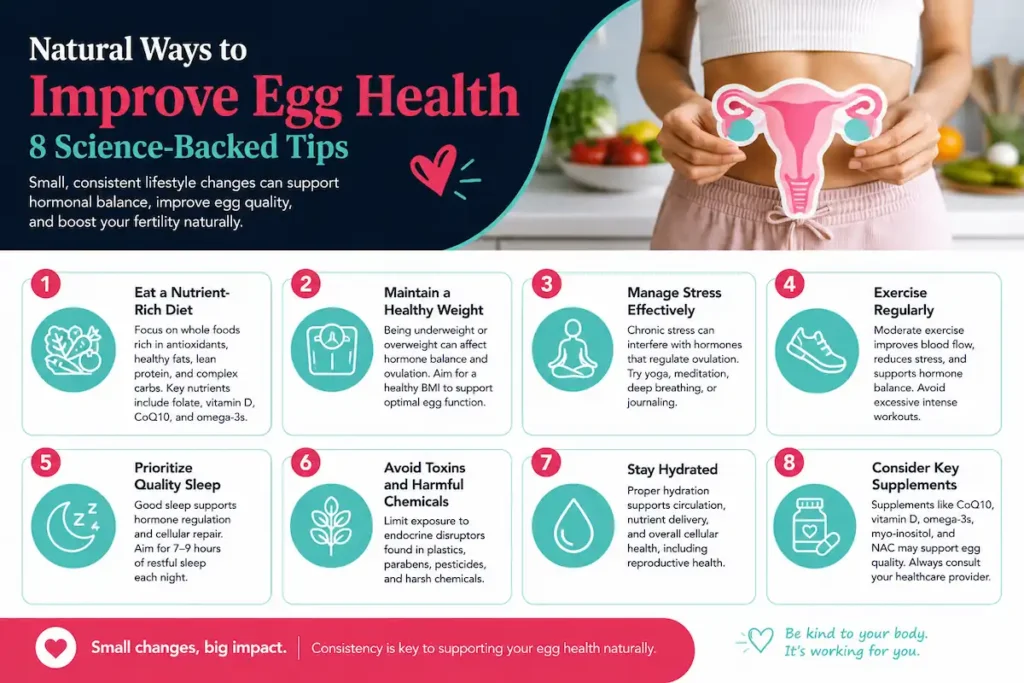
How? Because of how eggs mature. An egg takes about ninety days to prepare for ovulation. During this critical window, the egg is highly sensitive to its environment. What you eat, how you move, and how you manage stress can alter the health of that egg before it is ever released.
If you want to know how to improve egg quality naturally, you are in the right place. Let’s break down the science of the ninety-day window and explore practical, everyday steps you can start taking today.
| The Quick Takeaway The quality of your eggs is not entirely set in stone. Because a developing egg takes roughly three months to mature before ovulation, you have a crucial window of opportunity to optimise its health using strategic nutrition, targeted supplementation, and lifestyle modifications. |
The 90-Day Magic Window: Why Time Is Your Best Friend
To understand how to impact your fertility, we need to take a quick trip to your ovaries. The journey of an egg does not begin on day one of your menstrual cycle. It starts months earlier.
The Life Cycle of an Egg
Inside your ovaries, immature eggs sleep in tiny fluid-filled sacs called follicles. Every month, a small group of these sleeping eggs is woken up. They begin a long, slow journey of maturation that takes roughly ninety days.
During this three-month sprint, the eggs grow, replicate their DNA, and consume massive amounts of cellular energy. They are incredibly active. They are also highly vulnerable to oxidative stress and cellular damage.
This is where you come in. Because this process takes ninety days, the choices you make today will affect the egg you ovulate three months from now. It is a biological delay, but it is also an incredible window of opportunity.
Your eggs are not static. They are dynamic cells responsive to their environment.
Feed Your Fertility: What to Eat for Optimal Egg Quality
We have all heard the saying, “You are what you eat.” When it comes to fertility, your developing oocytes are literally built from the nutrients you consume.
Fill Up on Healthy Fats
Your egg cells are wrapped in a protective outer layer called the cell membrane. This membrane is largely made up of fats. To keep this membrane fluid, healthy, and receptive, you need high-quality dietary fats.
Focus on wild-caught salmon, avocados, extra virgin olive oil, walnuts, and pumpkin seeds. These foods are packed with omega-3 fatty acids. Omega-3s help reduce systemic inflammation, which is a major enemy of delicate egg structures.
Ditch the Sugar Rollercoaster
Here is a hard truth: sugar damages eggs. When you eat refined carbohydrates and sugary treats, your blood sugar spikes. Your pancreas responds by pumping out insulin.
Over time, frequent insulin spikes can lead to insulin resistance. This hormonal imbalance directly disrupts the delicate environment of your ovaries. High insulin levels can cause the ovaries to produce too much testosterone, which impairs egg development and can even halt ovulation entirely.
Try pairing carbohydrates with fibre, healthy fats, and clean protein to keep your blood sugar stable. Swap the morning pastry for eggs, avocado, and a side of berries. Your ovaries will thank you.
Power Up with Antioxidants
Think of antioxidants as a biological shield. As eggs mature, they produce waste products called reactive oxygen species (ROS). If these build up, they cause oxidative stress, which can damage the egg’s delicate DNA structure.
Antioxidants neutralise these harmful molecules. To get a wide array of antioxidants, aim for a vibrant, Mediterranean-style diet. Fill your plate with leafy greens, deep red berries, purple sweet potatoes, and bright orange carrots.
Smart Supplementation: The Heavy Hitters
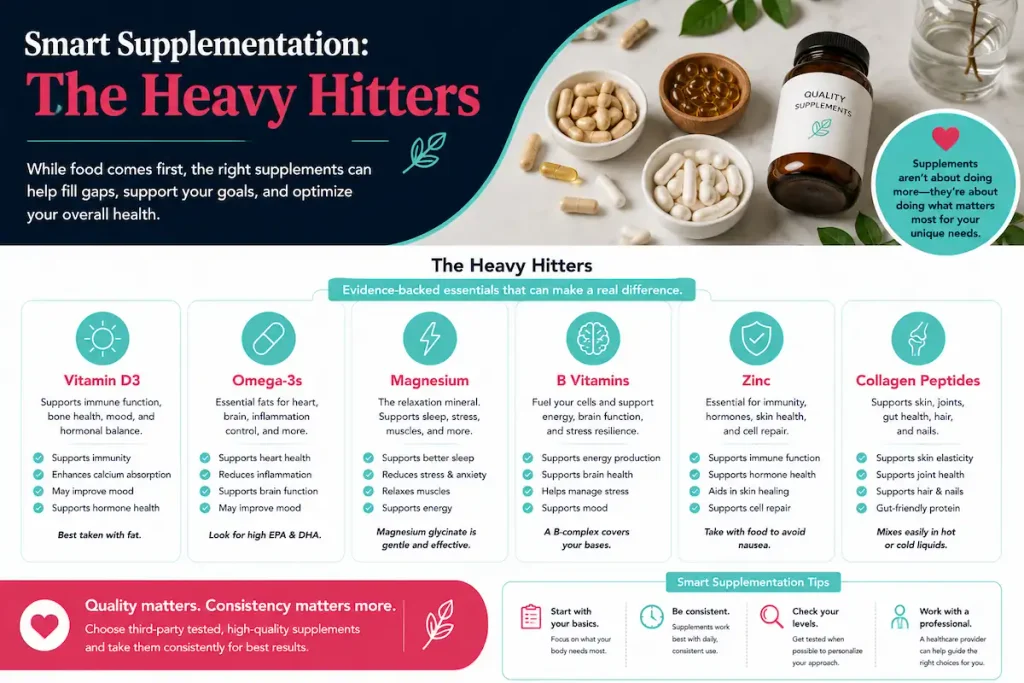
While a nutrient-dense diet is your foundation, sometimes food alone is not enough to get therapeutic doses of specific nutrients directly to your ovaries. This is where strategic supplementation comes into play.
Coenzyme Q10 ($CoQ_{10}$)
If there is one supplement you should know about, it is $CoQ_{10}$. Your eggs are the largest cells in the human body. Because they are so large and have so much work to do, they require an enormous amount of energy.
This energy is produced by tiny power plants inside the cell called mitochondria. A mature egg cell contains over $100,000$ mitochondria—far more than any other cell in your body. $CoQ_{10}$ is the essential fuel that keeps these cellular powerplants running.
As we age, our natural production of $CoQ_{10}$ declines. This decline is one of the primary reasons egg quality drops over time. Supplementing with the active form of $CoQ_{10}$, known as ubiquinol, can help restore energy production inside your developing eggs.
| Scientific Insight: Studies show that $CoQ_{10}$ supplementation can improve mitochondrial function and help support normal chromosomal division during maturation, reducing the risk of chromosomal abnormalities. |
Vitamin $D_3$
Vitamin $D_3$ is not just a vitamin; it acts as a pre-hormone in the body. Receptors for Vitamin $D_3$ are found throughout your entire reproductive tract, including your ovaries and your uterine lining.
Low levels of vitamin $D_3$ are regularly linked to poorer IVF outcomes and ovulation struggles. If you have not had your levels checked recently, ask your doctor for a simple $25$-hydroxyvitamin D blood test. Aiming for an optimal range rather than just “sufficient” can make a significant difference.
Lifestyle Tweaks That Actually Move the Needle
You cannot supplement your way out of a high-stress, sleep-deprived lifestyle. Your ovaries are highly sensitive to your overall state of health.
Master Your Stress
We have all been told to “just relax”, which is incredibly frustrating when you are trying to conceive. But there is a real physiological reason behind this advice.
When you are chronically stressed, your body perceives danger. It reacts by pumping out cortisol and adrenaline. Your body does not know the difference between a high-stakes work deadline and a physical threat to your life.
In survival mode, your brain prioritises heart, lung, and brain function. Reproductive organs are temporarily deprioritised. Cortisol can directly inhibit the release of GnRH (gonadotropin-releasing hormone), which throws your entire cycle out of rhythm.
Find something that brings your nervous system back to safety. It could be daily five-minute deep breathing exercises, walking in nature without your phone, or sitting quietly with a warm cup of herbal tea.
Prioritize Sleep
Sleep is when your body repairs cellular damage. It is also when you produce melatonin. While you might think of melatonin purely as a sleep aid, it is actually a powerful antioxidant that is highly concentrated in your follicular fluid.
Melatonin directly protects your developing eggs from oxidative damage while you sleep. Aim for seven to eight hours of high-quality, undisturbed sleep in a cool, dark room.
Watch the Toxins
Our modern lives are filled with synthetic chemicals. Many of these chemicals are endocrine disruptors, meaning they mimic or block our natural hormones.
BPA (bisphenol A) and phthalates are two common culprits. They are often found in plastic food containers, canned food linings, and synthetic fragrances. Try swapping plastic containers for glass or stainless steel, and transition to unscented household and personal care products where possible.
Blood Flow Matters: Getting Oxygen to Your Ovaries
Your ovaries need a steady supply of oxygen-rich, nutrient-dense blood to nourish developing follicles. If your circulation is sluggish, your ovaries might not receive the fuel they need.
Move Your Body Gently
Regular, moderate physical activity is fantastic for blood flow. Think brisk walking, fertility yoga, swimming, or light cycling.
Avoid extreme, high-intensity workouts that leave you completely exhausted. Overtraining can raise cortisol levels and signal to your body that it is not a safe time to support a pregnancy. Balance is key here.
Castor Oil Packs & Abdominal Massage
Many holistic practitioners recommend gentle abdominal massage or castor oil packs placed over the lower abdomen during the follicular phase (the time between your period and ovulation).
This simple, relaxing ritual helps stimulate lymphatic drainage and promotes healthy circulation to the pelvic organs. Just remember to avoid castor oil packs once you have ovulated if you are actively trying to conceive.
Your Daily Egg Health Blueprint
| Time of Day | Action Step | Why It Works |
| Morning | High-protein breakfast with healthy fats (e.g., eggs + avocado). | Stabilises blood sugar and prevents early-morning insulin spikes. |
| Midday | Take your $CoQ_{10}$ supplement with a fat-containing meal. | Ubiquinol is fat-soluble and fuels mitochondrial energy in egg cells. |
| Afternoon | Go for a brisk 20-minute walk outside without your phone. | Improves pelvic blood circulation while lowering cortisol levels. |
| Night | Turn off screens 1 hour before bed; sleep in a pitch-dark room. | Maximises natural melatonin production to protect eggs from oxidative stress. |
Taking Your Next Steps
Figuring out your fertility journey is overwhelming, but remember that progress is better than perfection. You do not need to overhaul your entire life overnight.
Pick one or two small habits today. Maybe you start by swapping out plastic storage containers or committing to a regular bedtime. Give yourself grace, trust your body, and remember that those little daily choices compound over ninety days to make a massive difference.
Frequently Asked Questions
Disclaimer: This article is for informational and educational purposes only and is not intended as medical, psychological, or nutritional advice, diagnosis, or treatment. Every child, body, and pregnancy is different — please consult your pediatrician, doctor, or a qualified healthcare provider for advice specific to your situation.