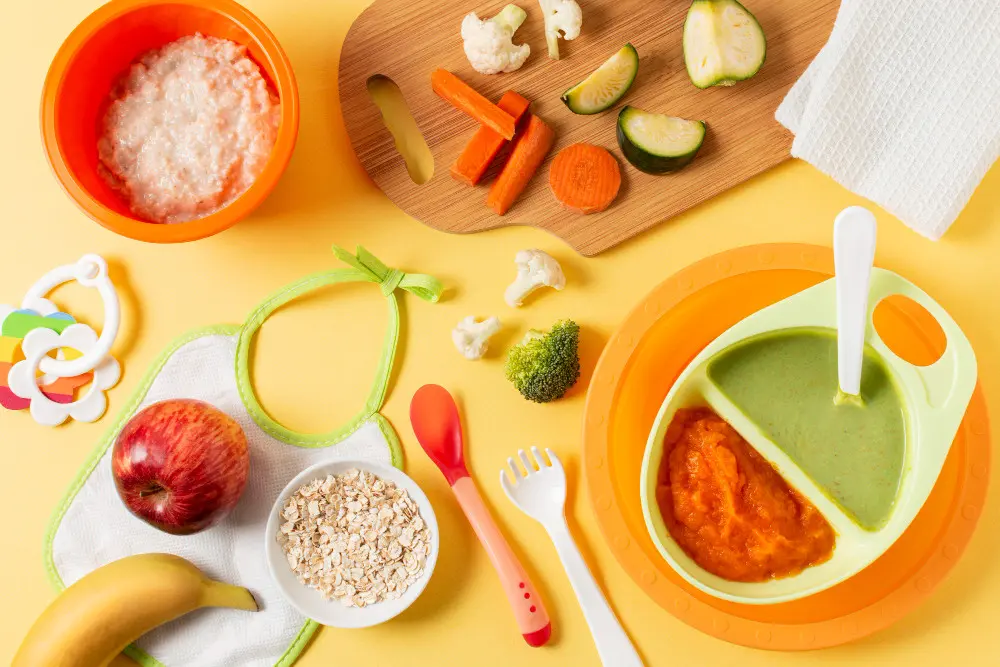
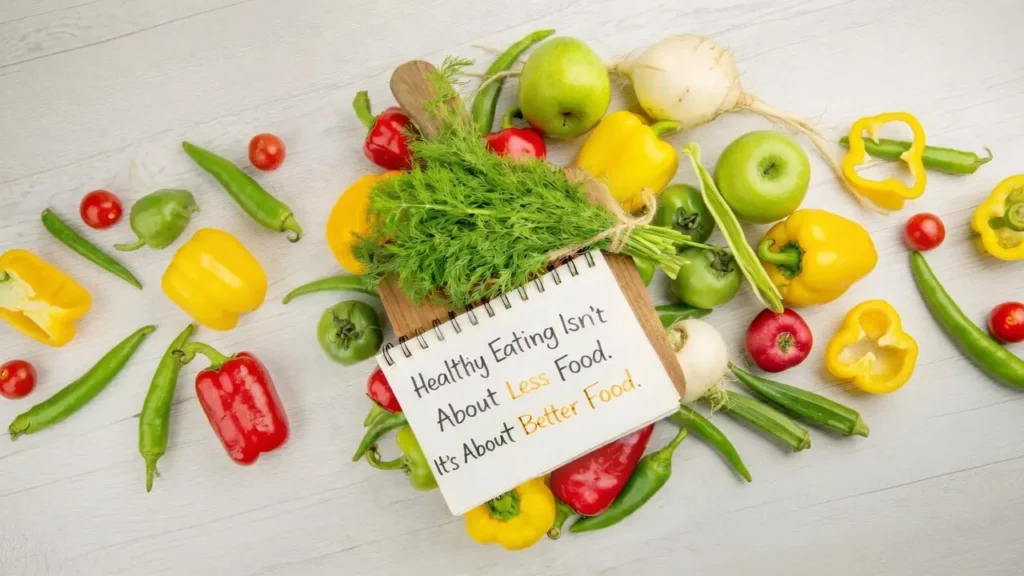
Healthy eating is not a rule you enforce — it is a habit you build together, one meal at a time.
Quick Answer — For Voice Search & AI Overviews
What are the best organic nutrition habits to teach kids? The most impactful habits are eating whole foods instead of processed foods, having vegetables with every meal, reducing added sugar and packaged snacks, drinking water instead of sweetened drinks, eating together as a family, and including children in food preparation. These early-established habits shape a child’s relationship with food for life – and they are all entirely realistic within the ordinary rhythm of Pakistani family life.
Aap ne kabhi notice kiya hai? Jab bacha chhota hota hai, woh sab kuch khata hai — palak, daal, even karela — bina kisi bahane ke. Aur phir ek din, suddenly, “Yeh nahi khaana, woh nahi khaana” shuru ho jaata hai. Chips, biscuits, aur juice cartons ki demand badh jaati hai. Aur aap sochti hain: Yeh kab hua?
It happened gradually — through packaged snacks at school, sweetened drinks at gatherings, and the slow replacement of real food with convenient food. And here is the truth: by the time a child is rejecting vegetables at the dinner table, the habit has already been forming for months.
The good news? Organic nutrition habits are not about expensive produce or complicated meal plans. They are about what you model, what you make available, and what you make normal — starting from the very first bites. This article gives you 10 practical, desi-life-friendly habits that build a lifelong healthy relationship with food.
Why Nutrition Habits Start Young — and Why It Matters
Children’s brains and bodies are growing faster in the first five years of life than at any other time. The nutrients they receive — or don’t receive — during this window directly shape brain development, immune function, bone density, gut health, and even emotional regulation. This is not an exaggeration. It is well-documented developmental science.
| 1000Days from conception to age 2 — the most critical nutrition window | 40%Pakistani children under 5 affected by stunting due to poor early nutrition (UNICEF 2023) | 10–15At times, a child may need to see a new food before accepting it — normal | 5 yrsThe age at which most eating patterns and food preferences are largely established |
But beyond biology, there is something equally important: the habits, preferences, and relationship with food that a child develops before the age of 5 tend to follow them into adulthood. A child who grows up seeing vegetables as normal — not special, not a punishment, just part of every meal — carries that normalisation forward. A child who grows up associating rewards with sweets and comfort with processed snacks carries that forward, too.
This is why what you feed your child matters. And it is also why how you feed them — the environment, the habits, and the rituals around food — matters just as much.
Research Insight
A 2023 report by UNICEF Pakistan found that 40% of children under 5 experience stunting — impaired physical and cognitive growth caused by chronic malnutrition. This is not primarily a food-scarcity problem. It is significantly a food-quality and feeding-habit problem, even in households with adequate income.
What Does Organic Nutrition Actually Mean?
“Organic” does not mean you need to shop at a speciality store or spend triple on certified produce. In the context of children’s nutrition — especially in Pakistan — organic nutrition simply means building a diet around real, whole, minimally processed food.
| Organic Nutrition IS | Organic Nutrition IS NOT |
| Whole fruits, vegetables, grains, legumes | Only certified organic produce |
| Home-cooked meals with real ingredients | Expensive or imported health foods |
| Minimising processed snacks and packaged foods | Zero sugar or zero treats ever |
| Variety and balance across food groups | A rigid or restrictive diet |
| Teaching children why food matters | Forcing children to eat specific foods |
| Making healthy food normal and accessible | Making food a moral issue |
The desi kitchen — with its daal, sabzi, whole wheat roti, dahi, and seasonal fruit — is actually one of the most naturally organic food traditions in the world. The challenge is not our food culture. The challenge is the slow creep of packaged, ultra-processed alternatives that have replaced real food in children’s daily diets.
Key Food Groups Every Child Needs Daily
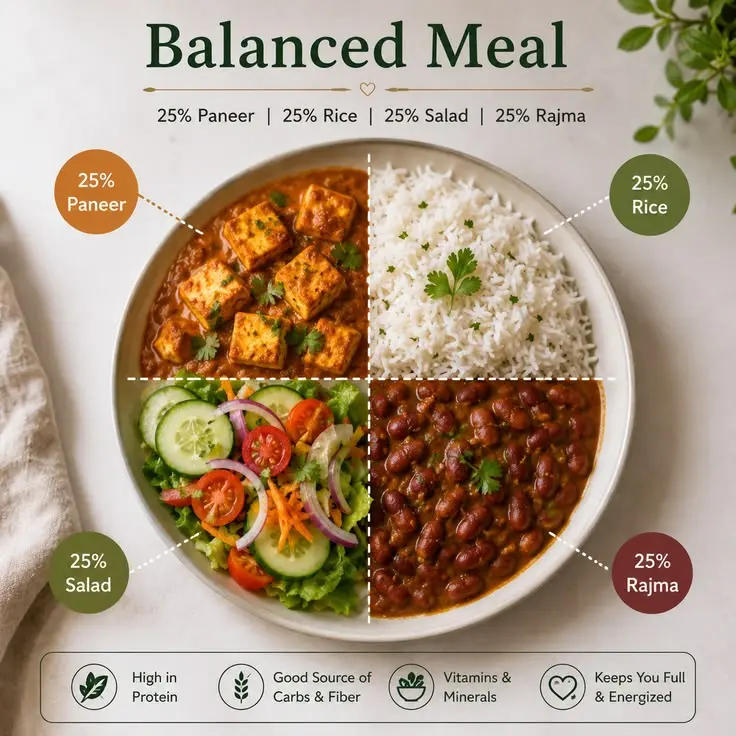
Before we get to habits, here is the nutritional foundation. Every child needs a balance of these food groups daily:
| Fruits & VegetablesBanana, papaya, mango, spinach, tomato, carrot, peas — at least 5 servings/day | Whole GrainsWhole wheat roti, brown rice, oats, whole grain bread — complex carbs for energy | ProteinDaal, eggs, chicken, fish, beans, yogurt — essential for growth and muscle |
| Dairy & CalciumMilk, dahi, paneer, cheese — critical for bone and teeth development | Healthy FatsDesi ghee (in moderation), nuts, seeds, avocado, olive oil — for brain development | Water6–8 glasses daily for school-age children — not juice, not squash. Plain water. |
10 Organic Nutrition Habits to Teach Your Child
These habits are not about perfection. They are about direction. Build even five of these consistently, and you will see a real difference in how your child relates to food.
1 Eat Together as a Family – as Often as Possible
All Ages
Research consistently shows that children who eat family meals regularly have better dietary variety, lower rates of obesity, and stronger emotional well-being. In Pakistani households, dastarkhwan culture is already this — protect it. No phones at the table. No separate “child food”. Same meal, same table, same time. Saath baithke khaana khao — this is not just tradition; it is science.
2 Make Vegetables Non-Negotiable — Not Optional
Ages 1+
Vegetables should appear at every meal — not as a separate “healthy” thing but as a normal part of the plate. Blend spinach into daal. Add shredded carrots to parathas. Put sliced cucumber and tomato on the side. The goal is not to hide vegetables — it is to make their presence so routine that children stop thinking of them as strange. If vegetables are only served occasionally, they will always feel like an imposition.
3 Replace Packaged Snacks with Real Food Snacks
Ages 2+
The average Pakistani child’s snack box contains chips, biscuits, or a juice carton — all ultra-processed, high in sodium, sugar, and artificial additives. Swap these out gradually: sliced fruit with a pinch of chaat masala, a boiled egg, a small bowl of roasted chana, a homemade whole wheat biscuit, or yogurt with honey. The keyword is gradually. A cold-turkey approach creates rebellion. A slow replacement creates a new normal.
4 Water First — Always
Ages 1+
Sweet drinks – juice, squash, cola, and flavoured milk – are one of the biggest drivers of childhood sugar overconsumption and tooth decay in Pakistan. The habit to build: when a child is thirsty, the first offer is always water. Not juice, not squash. Water. Save fruit juice for occasional treat status — and when you do offer it, make it fresh-squeezed, not packaged. Paani piyo pehle – make it the family rule.
5 Involve Children in Food Preparation
Ages 3+
Children who help prepare food are significantly more likely to try and enjoy what they have made. This is well-documented in child nutrition research — and it makes intuitive sense. Let them wash vegetables, tear salad leaves, stir the dahi, or arrange fruit on a plate. Even a 3-year-old can do these things. Bacha khud banana mein help kare toh khata bhi hai — every Pakistani mother who has tried this knows it works.
6 Never Use Food as Reward or Punishment
All Ages
“Agar sabzi khao ge toh ice cream milega” — this well-intentioned approach backfires. It teaches children two things: vegetables are bad (why else would you need a reward?) and sweets are the prize. Over time, this creates a deep emotional attachment to “reward foods” and a lifelong aversion to “punishment foods”. Use other rewards — time, activities, praise. Food should be neutral, not moral.
7 Teach the “Why” — Not Just the “What”
Ages 4+
Children who understand why food matters make better choices independently. Keep it simple and age-appropriate: “Daal mein iron hai jis se tumhara blood strong hota hai.” “Fruit mein vitamins hain jo tumhe beemar hone se bachate hain.” By age 6–7, children can understand basic nutrition concepts. By age 10, they are making food choices at school without you. Build the knowledge before they need to apply it alone.
8 Offer Variety — Repeatedly, Without Pressure
Ages 1+
A child may refuse a food 10, 12, or even 15 times before accepting it — this is completely normal developmental behaviour, not defiance. The mistake is giving up after two rejections and deciding, “Woh yeh nahi khata.” Keep offering, without pressure, without drama. Put a small amount on the plate. If it gets ignored, remove it without comment. One day, they will try it. Repeated neutral exposure is the only reliable strategy for expanding a child’s palate.
9 Establish a Regular Meal and Snack Schedule
Ages 1+
Children who graze all day — nibbling biscuits, sipping juice, eating a little here and there — rarely arrive at mealtimes genuinely hungry. And a child who is not hungry will not eat the real meal. Establishing structured meal and snack times – breakfast, mid-morning snack, lunch, afternoon snack, and dinner – creates genuine hunger cycles that make children far more willing to eat what is served.
10 Model the Eating Habits You Want to See
All Ages
This one is the hardest — and the most important. Children watch everything. If they see you eating chips while telling them to eat salad, they learn the real lesson. If they see you enjoying sabzi, reaching for fruit, or drinking water happily, they absorb that too. You do not have to be perfect. But the closer your own habits align with what you want to build in your child, the easier — and faster — those habits form. Bacha wahi seekhta hai jo ghar mein hota hai.
Age-by-Age Nutrition Guide
Nutrition needs and teaching approaches change as children grow. Here is a practical breakdown:
| Age | Nutrition Focus | Habit to Build | What to Limit |
| 6–12 months | Introduce a variety of flavours and textures during weaning | Offer vegetables, fruits, daal, egg yolk, soft grains | Salt, sugar, honey, and cow’s milk are the main drinks |
| 1–3 years | Establish the “normal plate” — variety is key | Family meals, same food as adults (softened), repeated exposure | Packaged snacks, sweet drinks, and excessive dairy |
| 3–5 years | Build food knowledge and kitchen involvement | Let them help cook, name foods, and understand simple nutrition | Screen time during meals, food rewards |
| 6–10 years | Independent choices begin — school environment matters | Teach label reading, healthy school lunch packing, and water habits | Cola, chips, excessive sugar, skipping breakfast |
| 11–14 years | Adolescent growth demands increase – iron, calcium, protein | Involved in grocery shopping, meal planning, and understanding body needs | Fad diets, meal skipping, and excessive junk food |
The Pakistani kitchen is already organic — protect it.
This is something Pakistani parents need to hear more often: traditional Pakistani food is excellent nutrition. The problem is not our cuisine. The problem is what is replacing it.
Your Desi Kitchen Already Has This
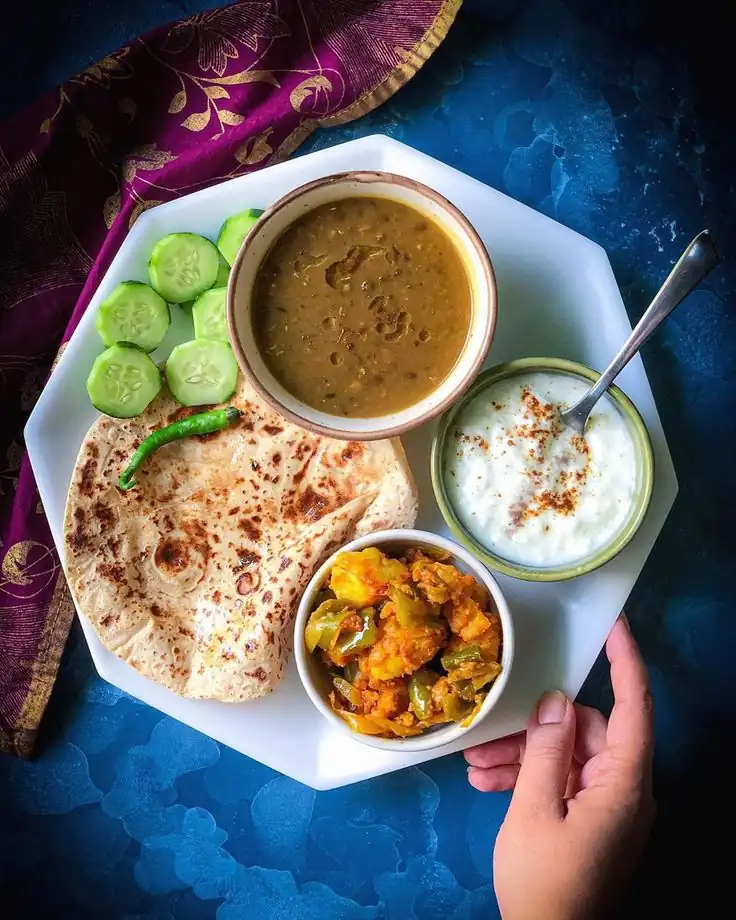
Daal — one of the most complete plant proteins available, rich in iron and fibre. Sabzi — seasonal vegetables cooked simply with minimal processing. Whole wheat roti — complex carbohydrates, far superior to white bread. Dahi — a natural probiotic, calcium, and protein source. protein source. protein source. Desi ghee in moderation — a source of fat-soluble vitamins. Seasonal fruits — mango, papaya, guava, and banana — are some of the most nutrient-dense fruits in the world.
The challenge Pakistani families face today is the creep of ultra-processed alternatives: instant noodles replacing proper meals, packaged biscuits replacing real snacks, cola replacing water, and flavoured milk replacing plain milk. Every time a processed product replaces a real one, the child’s nutritional quality drops — and a new preference for that processed flavour profile is reinforced.
Protect the dastarkhwan. Cook real food. Use seasonal produce from the local bazaar. The most organic thing you can do for your child’s nutrition is cook the way your grandmother did – with real ingredients, real spices, and meals made from scratch.
❌Habits That Quietly Sabotage Kids’ Nutrition
These are frequent, well-intentioned habits that really weaken the foundation of organic nutrition you’re aiming to build:
| Habit Water substitute: juice “kid food” divided between meals Screen time during mealtime Plate cleaning Sweeties as a reward Quitting after a single rejection Pre-packaged “healthy” snacks | Why Do Parents Do It? “Well, at least it has vitamins. Mealtime vs. Us Keeping the youngster still long enough to eat. “Waste nahi karna chahiye.” Positive reinforcement “Woh yeh nahi khata.” “It says ‘fortified/natural’.” | The Real Effect High sugar → Trains’ liking for sweet drinks → Reduces water intake A selective eater prefers not to be exposed to variety Disconnects the youngster from hunger/fullness cues, develops dependency Overrides natural fullness signals. Contributes to overeating tendencies Gives junk food “prize” status, builds emotional attachment Picky eating increases; the meal is off the rotation permanently ⚠ Often still rich in sugar and chemicals – read the label |
When to see a doctor or dietitian
- Good feeding habits at home may usually solve most of the nutrition problems of childhood. But there are times when you need expert help:
- The child is severely underweight on growth charts, needs a paediatrician, not simply food adjustments
- Child avoids whole food groups for long durations and does not improve with repeated, pressure-free exposure
- Suspected food allergy or intolerance – rashes, vomiting, diarrhoea, or swelling after certain foods
- Iron deficiency anaemia is frequent in Pakistani children. Signs include being very pale, very tired, and unable to concentrate even when you are eating well.
- The youngster is eating a very restricted variety, and this is affecting growth, energy, and development
- Unexpected weight growth or reduction without a reason.
✓ Also Read on Momistan
If your baby is struggling with solid food introduction or you suspect a food allergy, check these guides: What To Do When Your Baby Refuses Solid Foods and Common Food Allergies in Babies — Signs, Causes & Safe Introduction Guide.
Frequently Asked Questions
Also Read on Momistan
Morning Sickness Solutions That Actually Work: Fertility Exercises for Women: Natural Workouts to Boost Egg Health & Improve Pregnancy Chances Prepare Your Child Emotionally for School
Small Habits. Lifelong Health.
You do not need a perfect diet plan or expensive organic products. You need consistency, patience, and a kitchen that already has everything you need. Ghar ka khana, eaten while sitting together – that is organic nutrition. Start with one habit this week. Your child’s future self will thank you.
Disclaimer: This information is provided for informative purposes only and is not intended to substitute for expert medical or nutritional advice. Ask your paediatrician or dietitian for advice that is appropriate to your child’s needs. Sources: UNICEF Pakistan Nutrition Report 2023. American Academy of Paediatrics Nutrition Guidelines, WHO Healthy Diet Guidelines 2024