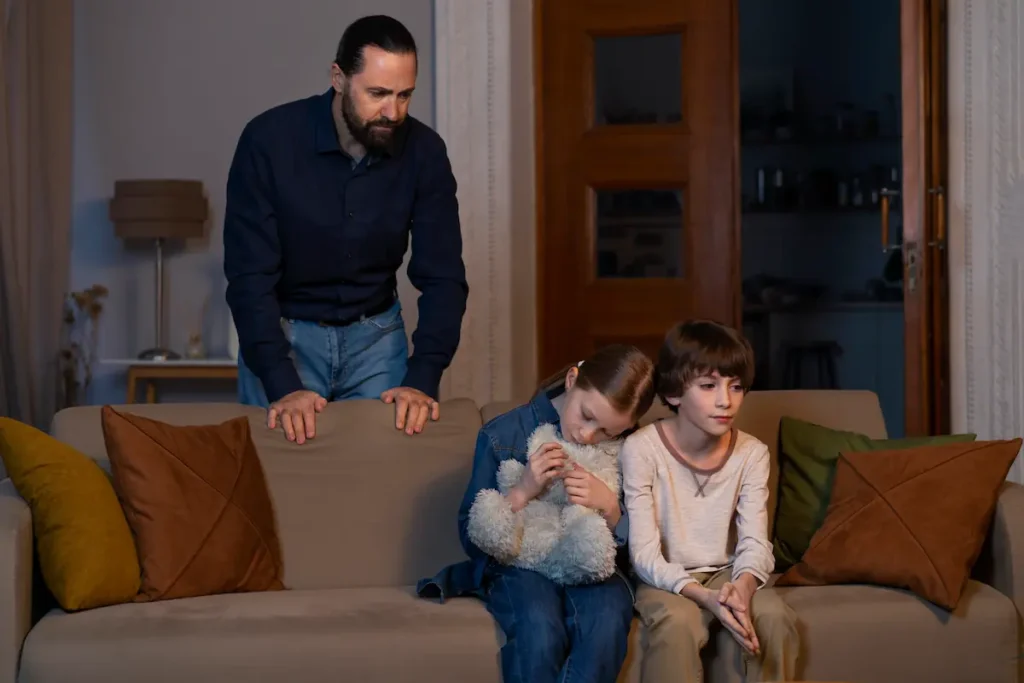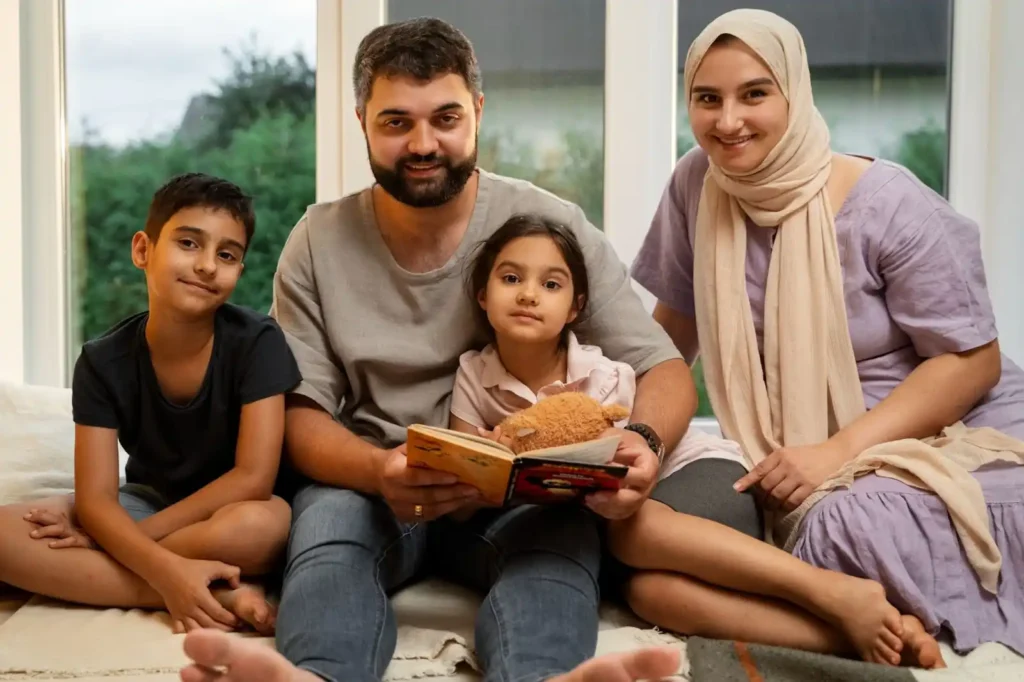
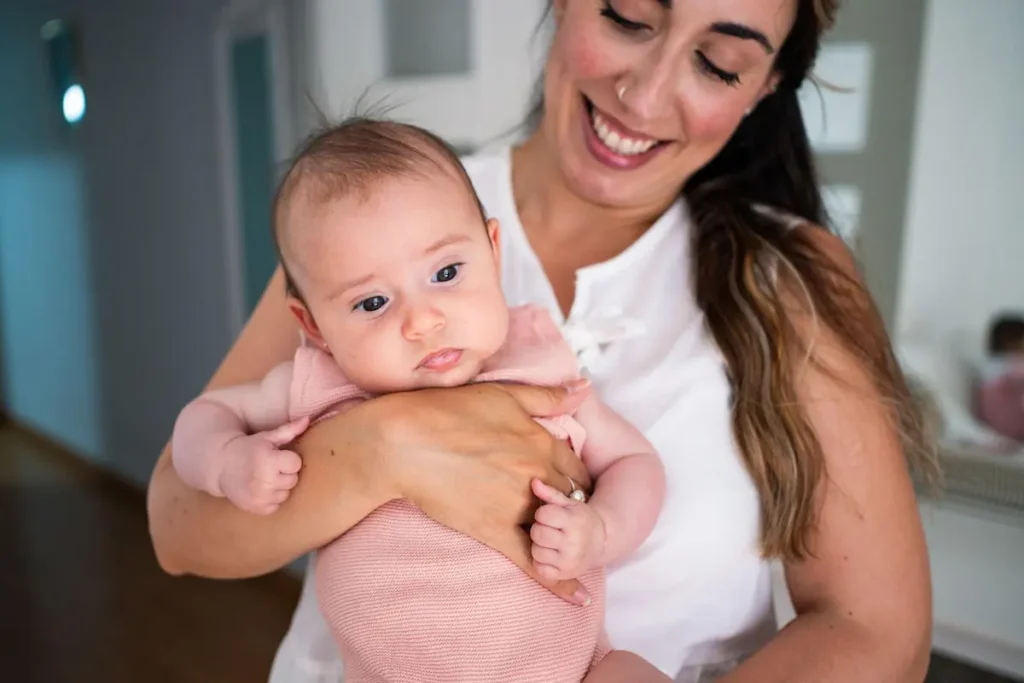
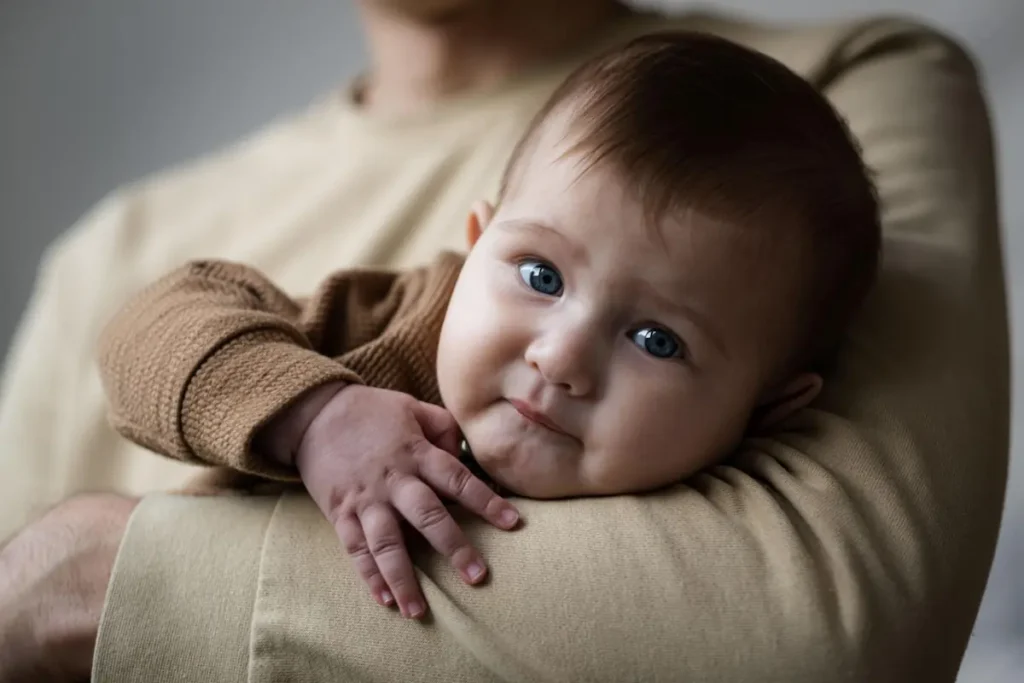
Infants at the age of about 4 to 5 months tend to be more closely attached to their main caregivers, where they stick in during the moments of being awake and when being laid down even briefly, these babies cry and cry in opposition. Although this is a difficult period on the part of parents, it is a very important and absolutely normal stage in development that is necessitated by the rapid brain development and changing social awareness.
Developmental Foundations
Improved attachment at 4-5 months is a result of radical neurological change. During the first few weeks, the newborns are working mostly on reflexes and are trying to find someone who will respond more to their cries by warmth, feeding or holding. At around 3 months, infants are, however, starting to distinguish familiar faces, voices and smells, against unfamiliar ones. This discrimination increases between 4 and 5 months whereby the prefrontal cortex matures and thus babies develop distinct preferences towards their primary caregivers- usually the parents or steady guardians.
A starring role is played by vision. Children have limited vision at birth, with only 8 to 12 inches in good focus and that is sufficient to make eye contact during feeds. Their visual acuity is dramatically increased by 4 months making it possible to recognise the features of parents in a different room. Smiles are discriminating: gummy grins now are only mostly for Mom or Dad, and have marked the beginning of specific attachment. This is not by coincidence, but rather a way of the brain to give importance to safety bonds in the face of the growing awareness of the world.
This attachment is exaggerated by motor milestones. At this age, babies begin to roll, pick up objects and bang at mobiles, which arouses curiosity and an urge to explore. However, this new mobility is accompanied by a primitive sense of object permanence the knowledge that objects (or people) do not disappear when they are not visible. The loss of their parents at any given moment can therefore lead to distress as the infant struggles with the question of Where did they go? This type of anxiety is evolutionary, and the defenseless babies are retained close to the protector.
This is best summed up by attachment theory which has been instrumental in the study of child psychology. He explained four phases; pre-attachment (birth to 6 weeks), attachment-in-the-making (6 weeks to 6-8 months), clear-cut attachment (6-8 months onwards), and goal-corrected partnership (around 3 years). The 4-to-5 months interval is in the second-stage where the babies discriminate actively and desire to be close to certain individuals and develop internal working models of reliability.
Indications of Increased Attachment.
It is often referred to by a parent as the Velcro baby-era. Some of the morbid acts are fussing or crying the moment that the baby is put in crib, bassinet or on the lap of parent making a phone call. Pick up will result in a moment of immediate serenity, and in most instances, the use of coos, kicked legs, or that full body wiggle of happiness you simply just cannot resist. When babies feel that they are going to be handed over to somebody, they may arch their backs or they may stick out their hands on an appeal.
Vocalizations evolve too.
Babbles at about 4 months also change to consonant-vowel blends such as ba-ba or raspberries, as they are bid in conversation to caregivers. Gaze fixation is longer, and infants reflect smiles, scowls, disturbed expressions on the faces of parents- happy face leads to smiles, scared face leads to worry. The sleeping routines can be interrupted, and the frequency of the awakenings increases to ensure that a caregiver is nearby.
Babies are not all clingy.
The temperament will determine the degree of preference: easy babies may exhibit weak preferences, whereas high needs babies will require close contact with their parents. Clinginess can be worsened by external stimuli such as becoming teether (around 4-6 months), growth spurt, or small time illnesses since the tendency to comfort increases.
The reason why this stage is healthy and normal.
Quite on the contrary, this attachment burst is a sign of a growing health. It has to do with the cognitive sophistication of a baby: when it realizes that it responds to patterns of responsive care (Mommy always feeds me when I cry) it will develop a feeling of security. Organizations such as Zero to Three studies prove that most infants have definite preferences of their caregiver by the age of 5 months, which is an early sign of complete stranger anxiety at 7-9 months.
Evolutionary biology puts the stress on its commonality. Because of large brains and bipedalism, human infants are born prematurely when compared to other primates, and they cannot survive without the extended proximity. Clinginess also guaranteed the ancient babies remained attached to hunter gatherer mothers when they were in the presence of predators. That finds resonance in modern neuroimaging: when you attach to a baby, the baby activates its reward centres which release oxytocin that is the cuddle hormone, and enhances the neural networks of trust and emotion control.
The Minnesota Study of Risk and Adaptation is a type of longitudinal research that associates positive outcomes with early specific attachments. These infants who develop these connections at the age of 4-5 months recover more easily to stress, develop more profoundly the capacity to solve problems at toddler age, and even improve their IQ scores later. Insecure attachments on the other hand are associated with withdrawal or aggression, however, responsive parenting at this level develops resilience.
Normality is enforced by cultural universality.
The joint family systems in Pakistan where the extended family share in the care of the babies also have babies still seeking primary figures at the age of 4-5 months although buffers are provided by aunts or grandparents. Japanese babies are also carried around but show better in social developments dispelling over-dependence anxieties.
Challenges and Reality of parents.
New parents are usually confused that they make things out of nothing and take cries as a sign of failure. “Is my baby spoiled? Will this last forever?” Such suspicions reach their highest in the evening, in witching hours, when exhausted infants will take no coaxing but that of their parents. A single mother may describe how she went into the kitchen to take 30 seconds only to have the wailing start and the problem is resolved as soon as she comes back- the typical secure-base response.
The partners can compete in the role: the mothers, the primary feeders, tend to suffer most, however, the playfulness of the fathers creates peculiar relationships. Sleep deprivation enhances fatigue and babies are more likely to nurse or rock. However, this intensity can normally subside at 6-7 months, as the separation tolerance increases.
Emotional tolls vary. There are those who enjoy the proximity, and love all the snuggles; while some wish to be showered without any disturbance. Without a support, burnout risks increase; therefore it is very prudent to tag-team with partners or family, particularly in the small communities in Lahore where grandmothers usually intervene with smooth transition.
Long-Term Advantages
The reward of negotiating this stage safely is enormous. Babies who are firmly secured have a better level of emotional intelligence: they settle down quicker, they visit playgrounds without any hesitations being with their parents as a home base, and they build their peer relationships by the time they start preschool. The stress hormone, Cortisol levels, stays balanced, which protects against anxiety disorders in the future. There is cognitive, attachment-based language explosions.
At 4-5 months, responsive interactions (responding to babbles) predict bigger vocabularies at age 2. Mirrored emotions were socially preconditioned; the empathetic frown of a baby towards the sad face of a parent is a predetermined compassionate adult. According to epidemiological information provided by American Academy of Pediatrics, there are correlations: The earlier the secure bond, the less risk of ADHD, the better academic achievement, and even physical health through improved immune reactions.
Rational Survival Tactics.
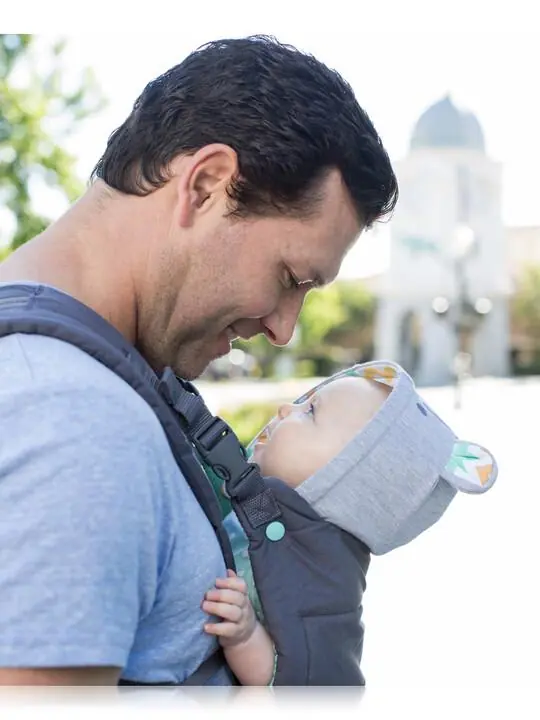
Never apologise to be responsive. Bare-chest holding (20-30 minutes every day) is a form of skin-to-skin contact that saturates the infant and the parent with oxytocin and calms down the fussy infant. Talk about what you are doing all the time: “Mommy is taking water, right away, making use of the nascent auditory memory of the baby. Babywearing shines here. The soft-structured carriers/slings will enable hands-free chores and will replicate the womb closeness; the heartbeat vibrations will provide magic. Local fabrics that have been used as a wrap have been used to provide cheap cultural fits in the local markets of Pakistan. Peek-a-boo games idealize divisions so pleasurably. Begin with faces right before your eyes, then escape with toys under blankets. This develops the permanence of objects playfully that within days change anxiety into giggles.
Routines anchor security.
Scheduled feeds, play and sleeps are indicative of all is well. Night wakings are chastised by evening wind-downs, dim lights, lullabies, etc. Involvement of partners serves as a way of diversifying bonds: The deeper voice of Dads calms in a unique way, and the play develops trust. Tummy time evolves with toys. Scatter soft rattles round, acclaims to help the self be less and less dependent. Short solo play (1-2 minutes visible at a distance) stretches gradually.
Debunking Persistent Myths
Myth one: They will ruin you by possessing too much. Without consistent soothing wires security, but not manipulation, infants do not have self-regulation circuits until 6 + months. Crying periods are reduced by half in long-term responsive care.
Myth two: Clinginess is an indicator of bad parenting. Biology conquers: Genetics, prenatal stress, or colic have as much influence as nurture. Attachment outside of 5 months may indicate problems, however, selective clinginess is a thrill to a paediatrician.
Myth three: “It never ends.” Peaks go in line with milestones- peaking at 8 months and diminishing at 18-24. Babies can be easily transferred into daycare explorers.
Myth four: Myth now: Stranger danger starts now. The real apprehension comes afterward; 4-5 monthers become open to strangers and with parental approval. Cultural and Global Perspectives. Attachment transpires naturally in the webs of families in collectivist Pakistan. Intensity is softened by the tales of grandparents or the cuddles of a sibling which is a perfect example of the multiple attachments ideal that Bowby suggested. But the city nuclear families are a reflection of the Western hardships, with advantages of community health programs that encourage responsive care. The indigenous traditions of the African carrying or Scandinavian close parenting are globally assertive of universality. In a 10 culture Harvard study, 4-5 month preferences were found to be consistent with secure bond going beyond economics. In the case of Lahore parents weaving Islamic customs- supplication in case of feeds- gives spiritual dimensions to the experiences, which adds more emotional levels. Developmental scientists monitor through tests called Strange Situation where securely attached babies cry in slight protests and rejoice after the separation. This is what Mary Ainsworth expounds on Bowlby as specific attachment inception with 65 percent of U.S. infants secure-rates as high elsewhere with nurturing. Neuroscience supplements: Mirror neurons are activated on interaction, they empathy-wire. The amygdala fear is buffered by Oxytocin surges which are caused by cuddles.

Red Flags and When to Call.
In the majority of cases, harmless, but intolerable crying outside of feeds / gas / tethering, poor weight gain, or the complete lack of social smiles during the first 5 months of life is a reason to check children in paediatric clinics due to the possibility of a reflux, allergy, or some other neurological disorders. Follow up on well-visits using the apps or journals. Early intervention means that most of the issues are sorted out in a short time. Integrating into Daily Life Routine tasks that you do together: baby-in-carrier Cooking, laundry together. During transitions, there is distraction by music; soft nasheeds or mobiles.
Self-care eliminates resentment: Nap as baby sleeps, lean on spouses or doulas.
Partner swaps refresh: The one does baths, the other bedtime stories, and they model healthy dynamics. Looking Ahead At the age of 6-7 months, crawling calls to independence and 4-5 month foundations guarantee rebounds of stranger anxiety. Toddlers are strong, schoolchildren intent on–things-to-be-done-life long benefits of this additional interlude.
Breath Parents: This short-lived fierceness makes indissoluble trust. Praise the embrace it; it is the deepest I love you, the one in developing brains of your baby.
Conclusion:
Additional attachment at 4-5 months is a normal development of babies, which indicates safe attachment during the period when the brain is growing so fast. Be responsive towards it- it instills a lifetime of emotional strength, trust and confidence in exploration. This transitional period also creates indestructible bonds that transform cuddling, which was clingy, into a building block of success. Cherish every moment.
Frequently Asked Questions
Disclaimer: This article is for informational and educational purposes only and is not intended as medical, psychological, or nutritional advice, diagnosis, or treatment. Every child, body, and pregnancy is different — please consult your pediatrician, doctor, or a qualified healthcare provider for advice specific to your situation.