Breastfeeding a newborn can feel really overwhelming at first.. If you find the right position it can make a big difference. It can help reduce nipple pain, improve how well your baby latches on and help your baby feed properly.
In this guide you will learn the breastfeeding positions for newborns. You will also learn when to use each one and how to know if your baby is latched on properly.
Why Positioning Matters
positioning is really important. It can help:
* Prevent sore nipples
* Improve milk transfer
* Reduce gas and colic
* Make feeding more comfortable for you
* Support weight gain in your baby
Newborns need to feed 8-12 times a day. So it’s really important to be comfortable.
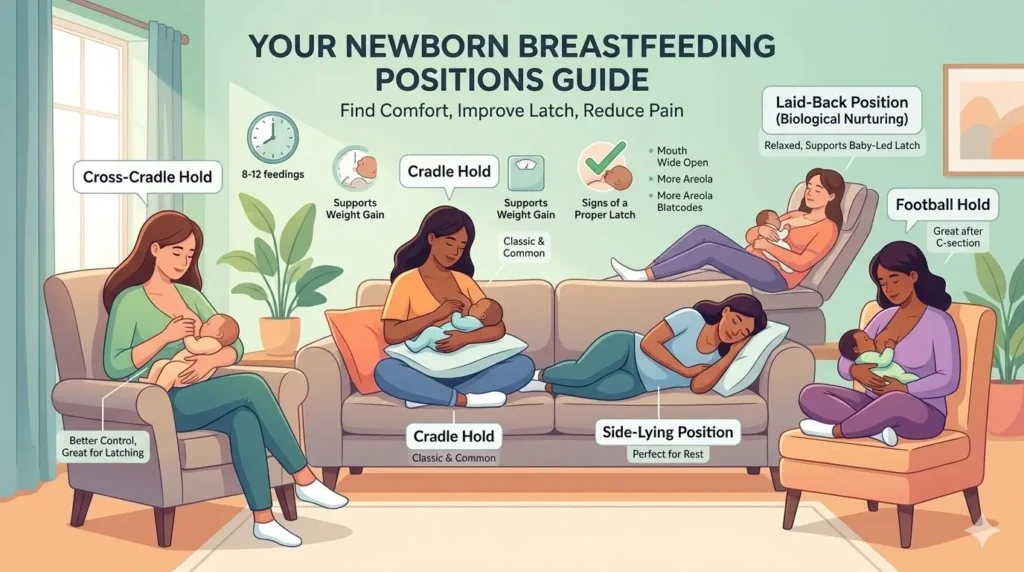
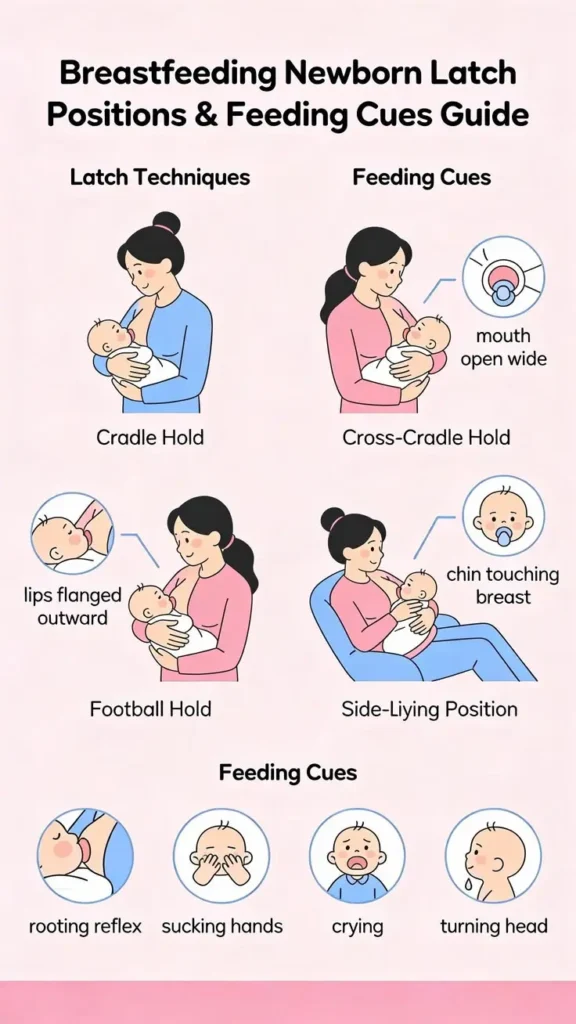
1. Cradle Hold (Classic Position)
This is the common position for breastfeeding.
How to Do It:
* Sit up with your back supported
* Hold your baby across your chest
* Your baby’s head should rest in the crook of your arm
* Your baby’s tummy should face your tummy
Best For:
* Newborns who have a good latch
* Moms who are comfortable with feeding
Tip: If you’re still learning how to latch your baby the cross-cradle position may give you better control.
2. Cross-Cradle Hold
Many lactation consultants recommend this position.
How to Do It:
* Support your baby’s head with the hand opposite the breast you’re feeding from
* Use your hand to shape your breast
* Guide your baby to latch on
Best For:
* Newborns who are learning to latch on
* Premature babies
* Moms with nipple pain
experts, including the World Health Organization stress the importance of proper latch technique. This can help prevent breastfeeding challenges.
3. Football Hold (Clutch Hold)
This position is great after a C-section or for babies.
How to Do It:
* Tuck your baby under your arm like you’re holding a football
* Your baby’s body should rest along your side
* Support your baby’s head with your hand
Best For:
* Recovery from a C-section
* breasts
* Twins
* visibility of the latch
This position gives you great control and keeps pressure off your abdomen.
4. Side-Lying Position
This position is perfect for feeding and rest.
How to Do It:
* Lie on your side
* Your baby should lie facing you
* Align your baby’s nose with your nipple
For:
* Nighttime feeding
* Exhausted moms
* Recovery after birth
Safety Tip: Make sure the surface you’re sleeping on is firm and free of pillows near your baby.
5. Laid-Back Position (Biological Nurturing)
This position is also called “reclined breastfeeding.”
How to Do It:
* Lean back
* Place your baby tummy-down on your chest
* Let your baby self-attach
Best For:
* Babies with reflux
* Fast milk flow
* Encouraging instincts
This relaxed position supports a baby-led latch.
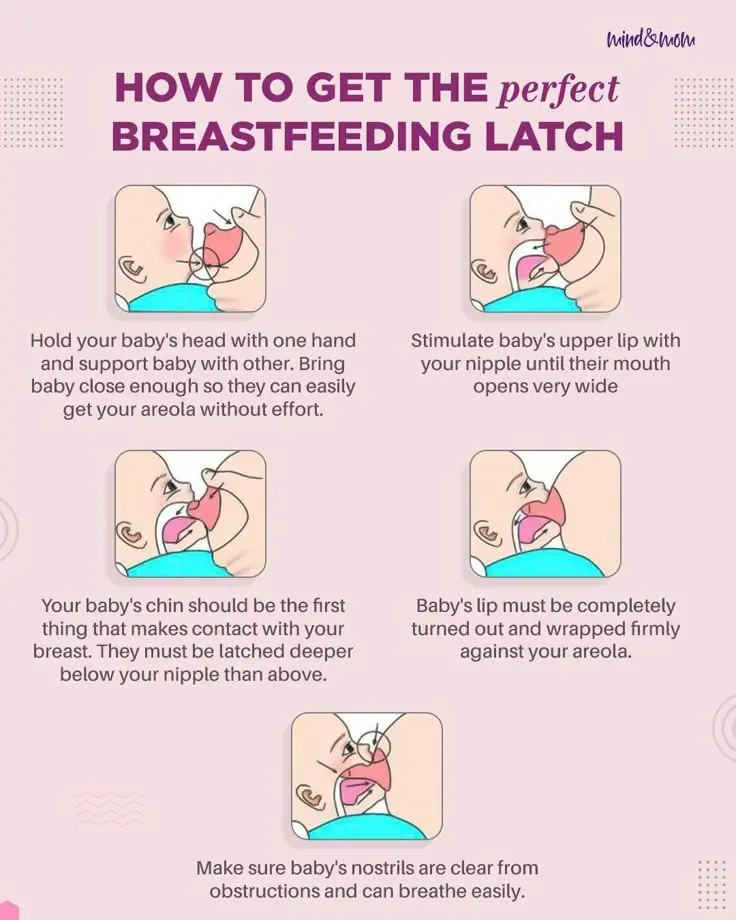
Signs Your Newborn Is Latched Properly
No matter the position check for:
* Your baby’s mouth wide open
* More areola visible above your baby’s lip
* Your baby’s chin touching your breast
* No clicking sounds
* No sharp nipple pain
If breastfeeding is painful beyond a few seconds, adjust your position.
Tips for Breastfeeding
* Use pillows to support your arms
* Bring your baby to your breast, not your breast to your baby
* Keep your baby’s ear, shoulder and hip aligned
* Relax your shoulders and back
Good hydration and nutrition also help maintain your milk supply.
When to Seek Help
Contact a lactation consultant if:
* Your baby isn’t gaining weight
* Your experience. Bleeding nipples
* Your baby seems hungry
* You suspect tongue-tie
Professional support can prevent breastfeeding challenges.
Final Thoughts
There is no best ” breastfeeding” position. It’s the one that works best for you and your baby. Try to stay patient and remember that breastfeeding is a learning process, for both of you. With the position and support it becomes easier every day.
FAQs: Best Breastfeeding Positions for Newborns
Disclaimer: This article is for informational and educational purposes only and is not intended as medical, psychological, or nutritional advice, diagnosis, or treatment. Every child, body, and pregnancy is different — please consult your pediatrician, doctor, or a qualified healthcare provider for advice specific to your situation.