
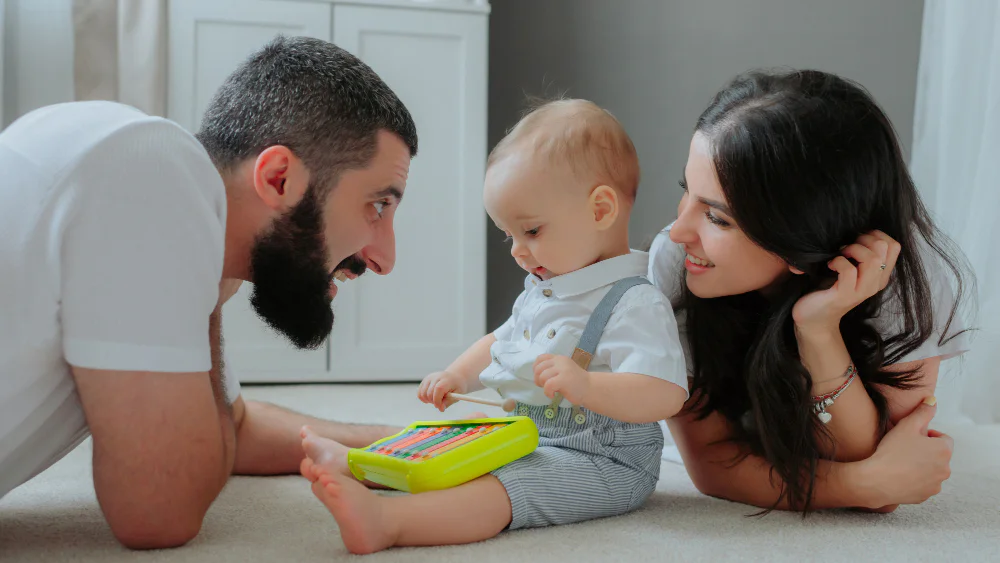
Be honest — have you ever talked to your baby and thought,
I am still trying to figure out if people really get what I am saying. Does it really make a difference what I think about this? People do not understand me yet. I wonder if it really matters what I say.
The truth is that it really does matter a lot more than you actually think. The truth is something that’s very important and it matters.
Long before babies say their first word, their brains are building the foundation for speech, emotional bonding, and social understanding. And the most powerful tool you already have?
Your voice.
In this guide we will explore how conversations help build early language development for kids, what the science says about this and how parents from Pakistan can support the language growth of their children naturally when they are at home, with them specifically Pakistani parents.
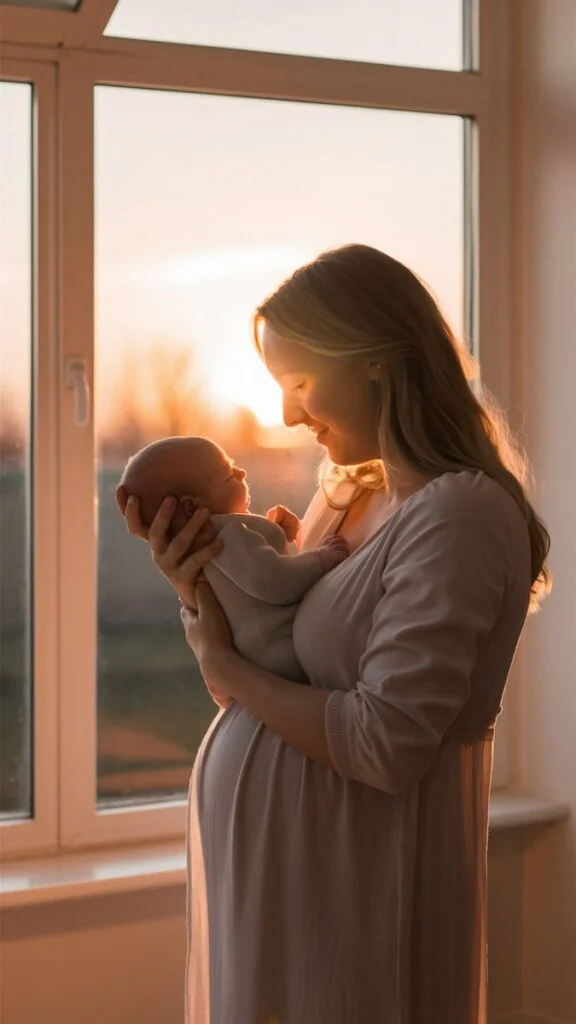
Why Talking to Your Baby Is So Important
From birth, a baby’s brain is forming millions of neural connections every second. Research from Harvard’s Center on the Developing Child shows that “serve and return” interactions — when a baby makes a sound and a caregiver responds — strengthen brain architecture.
When you talk to your baby you are doing something good for your baby. Your baby likes to hear your voice. It helps your baby learn about sounds and words. Talking to your baby is one of the things you can do for your baby. Your baby will start to understand what you are saying. It will help your baby talk too.
- You are helping your baby learn about language
- You are showing your baby that you care about them
- Your baby loves to hear you talk. It is good for your baby. Talking to your baby is very important for your baby.
Stimulating brain development
Supporting early communication skills
Strengthening emotional security
Building future vocabulary
Encouraging social confidence
Even if your baby cannot respond with words, they are listening, learning patterns, tone, rhythm, and emotional cues.
When Does Language Development Actually Begin?
Language development is a part of growing up. People often think that language development starts when a baby is born.. That is not the case. Language development actually begins before a baby is born. The baby can hear what is going on outside the womb. This means that language development for the baby begins when it is still in its mothers womb. Language development is a part of the baby’s life. The baby starts to learn language development from the voices it hears. Language development is something that the baby will use for the rest of its life. So when does language development actually begin? It begins before the baby is born. It keeps going as the baby grows up and learns more about language development.
Many parents assume language begins when babies start speaking around 12 months. But early language development starts from day one.
0–3 Months
Babies recognize familiar voices
People respond to the tone of your voice and the expressions on your face. The tone and facial expressions you use can really affect how people feel when they are talking to you. Facial expressions and tone are very important when you are communicating with people because they can change the way your message is received. Facial expressions and tone can make a difference in how people respond to what you are saying.
They begin cooing
4–6 Months
Babbling begins (“ba-ba,” “ma-ma”)
They respond to their name
They watch your mouth while you speak
6–12 Months
Understand simple words like “no” or “milk”
Use gestures like pointing
Try to imitate sounds
Talking daily supports these milestones naturally.
👉 You may also like: When Your Newborn Won’t Stop Crying — Hunger, Gas, or Just Needing You?
👉 Related: Those Tiny Movements Explained: What Newborn Reflexes Really Mean
What Happens in the Brain When You Talk to Your Baby?
Studies show that babies exposed to more words in early life develop:
Stronger vocabulary later
Better reading skills
Improved emotional regulation
Higher social intelligence
It’s not about “fancy words.” It’s about consistent interaction.
The more back-and-forth conversations (even one-sided at first), the stronger the brain pathways become.
Simple Ways to Talk to Your Baby Every Day
You don’t need special tools. Just everyday life.

Narrate What You’re Doing
“Now we are changing your diaper.”
“Ammi is making chai.”
“Look at the sunlight.”
This builds vocabulary naturally.
Respond to Their Sounds
If your baby says “ahhh,” respond with:
“Ohhh really? Tell me more!”
This teaches conversation flow.
Use Eye Contact and Expressions
Babies learn language by watching faces. Exaggerated expressions help them understand emotion and tone.
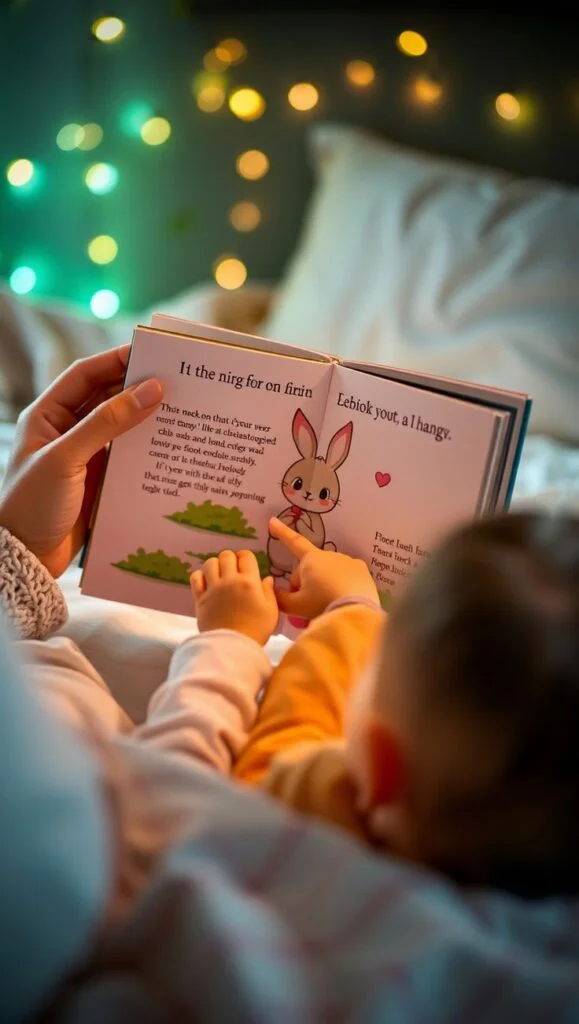
Read and Sing Daily
Nursery rhymes, dua’s, stories — repetition strengthens language memory.
In Pakistani homes, even daily dua’s and storytelling from grandparents contribute beautifully to early language exposure.
Common Myths About Talking to Babies
Myth 1: “They are too young to understand.”
Truth: Babies understand tone and emotion long before words.
Myth 2: “Background TV is enough.”
Truth: Passive listening does not build language the way real interaction does.
The American Academy of Pediatrics recommends limiting screen exposure in infancy because human interaction is far more effective.
How Pakistani Home Environments Influence Language
In joint family systems, babies may hear multiple voices, dialects, and languages (Urdu, English, Punjabi, Pashto, etc.).
This is not confusing — it can actually enhance cognitive flexibility.
However, excessive TV noise or lack of direct interaction may reduce meaningful communication time.
Quality matters more than quantity.
Signs Your Baby Is Building Language Well
Makes eye contact
Responds to sounds
Babbles by 6 months
Imitates tone
When you talk to someone they show interest in what you’re saying. They really listen to you. They want to hear more about the things you like. This person is very good at paying attention to the person who is speaking which’s you. They show that they care about what you have to say.
If by 9–12 months your baby does not respond to sound or make babbling sounds, consult a pediatrician for evaluation.
Emotional Benefits Beyond Words
Talking to your baby is not just about vocabulary.
It builds things for people to use and it makes the things that people need. It builds these things so that people can have them and use them. It builds them to last for a long time. The thing that it builds is very important to people because they use the things that it builds every day.
Emotional security
Trust
Attachment
Confidence
When you respond to your baby consistently your baby learns that you are always there for them. Your baby learns to trust you and the things you do. Your baby also learns that when they cry or make noise you will come and help them. This is a thing for your baby to learn. Your baby learns a lot from you when you respond to them consistently.
“My voice matters.”
I am being heard.
“I am safe.”
That foundation will really stay with you for your life. The foundation is something that will be there forever.
Final Thoughts for Parents
You don’t need to be perfect.
You do not need flashcards.
You do not need toys. Expensive toys are not necessary for people to have fun. People can have a lot of fun with things like expensive toys. Expensive toys will not make people happy on the run. What matters is what people do with the things they have, like toys.
Just talk.
While feeding.
While bathing.
While rocking to sleep.
The way you talk every day is really important for your baby. It helps shape your babys brain. Makes them feel more confident. The things you say to your baby now will also affect how well they can talk and communicate with others when they are older. Your everyday voice is actually helping your baby learn how to talk and express themselves.
And that is powerful.
Pingback: Understanding Why Babies Become Clingy at 4-5 Months