Parenting young children is often a set of moments that can feel exhausting, confusing, and even personal. A child who refuses to listen and insists on doing things their own way or calmly says “no” can leave parents wondering: Is this normal behavior, or is something wrong?
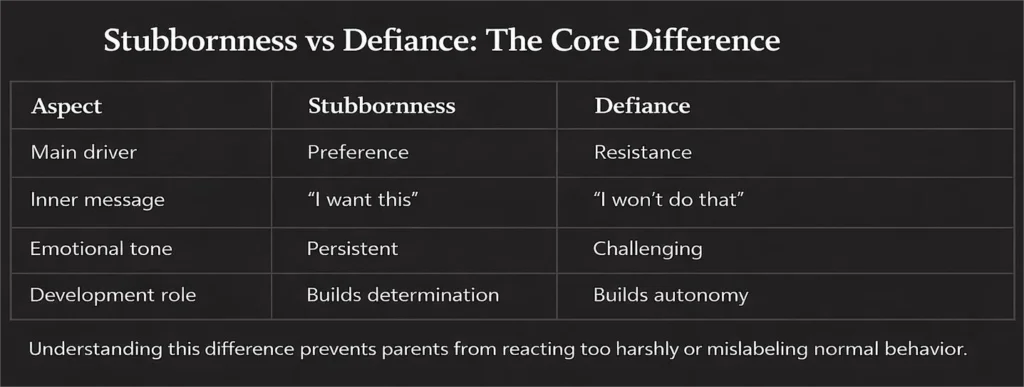
Stubbornness and defiance are two of the most misunderstood behaviors of childhood. While they may look similar from the outside, both reflect a different emotional need that the child wants to have met. They are based on different emotional needs and developmental stages.
Understanding the difference is the first step to responding calmly and effectively.
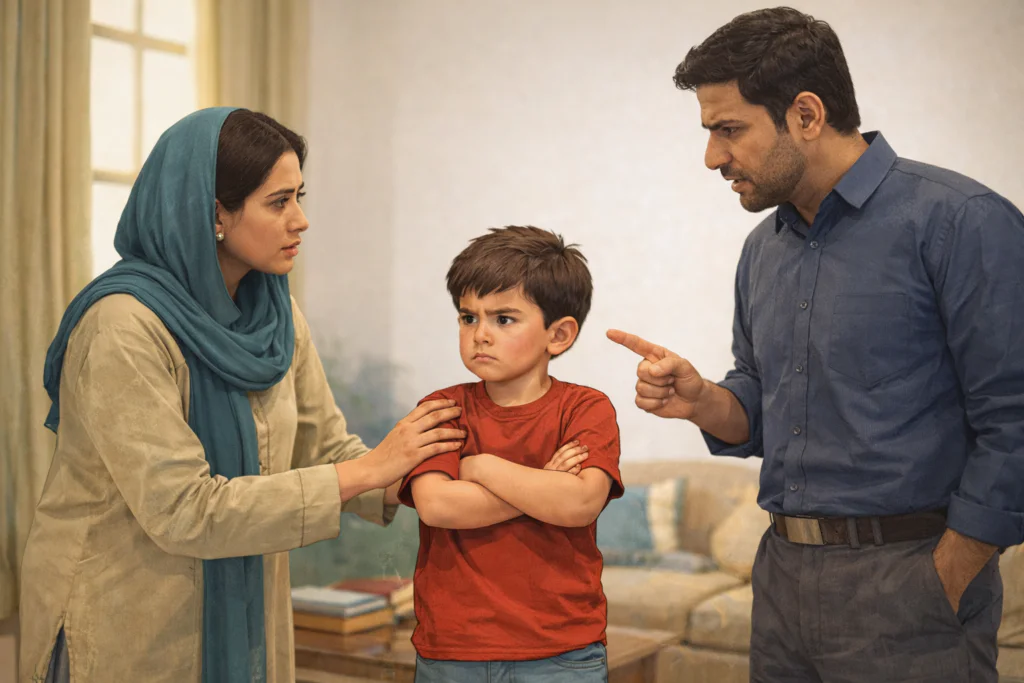
What Does Stubbornness in Children Look Like?
(“I want it my way” behavior)
Stubbornness is a trait in which a child strongly resists changing their preference, choice, or routine.
Key traits of stubbornness:
- Strong attachment to personal choice
- Repetition of the same demand
- Persistence, rather than aggression, emotionally
- Often associated with temperament and personality
Signs of stubborness
- “I want to do it my way.”
- Not trying to upset or challenge authority
- More about self-control and independence
- Often calm, quiet, or persistent
Psychology behind stubborness:
Stubbornness often comes from a need for autonomy, confidence, or certainty.In children, it’s a normal part of developing identity anhd decision-making.
Example:
A toddler wants to wear the same shirt every single day, even if it is dirty, or inappropriate for the weather.
This is not a matter of challenging authority. It is about control, comfort and predictability.
Why stubbornness is normal:
- It is a reflection of determination and willpower
- It is an indication of increasing decision-making skills
- It is common in strong willed or sensitive children
Stubborn children are not “difficult” by nature. Many grow to become focused and resilient adults if guided correctly.
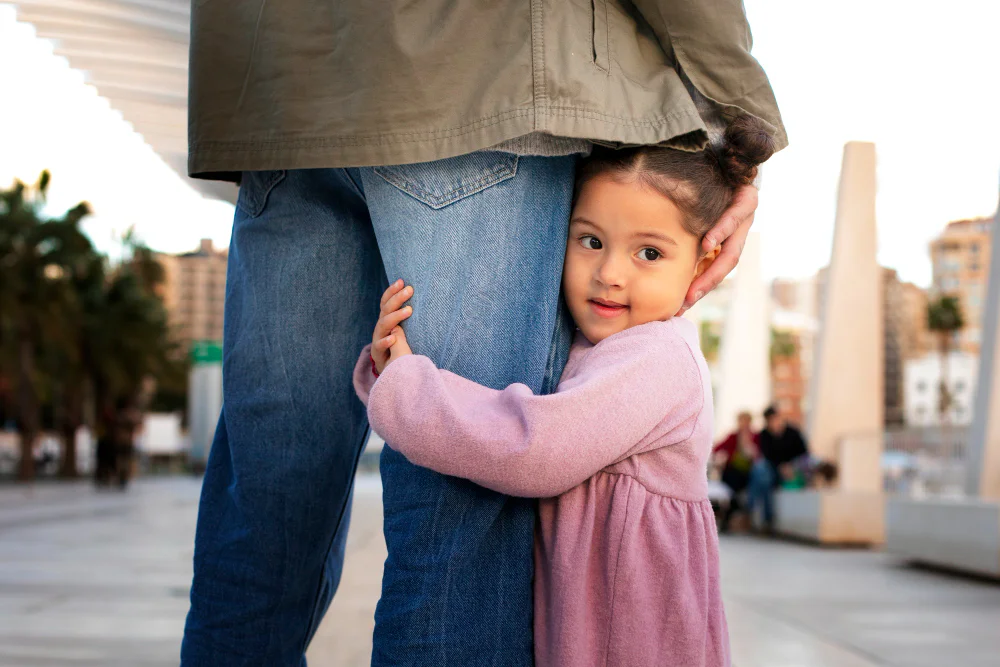
What Is Defiance in Children?
(“I won’t do it” behavior)
Defiance occurs when a child understands a rule or instruction but intentionally refuses to follow it.
Key traits of defiance:
- Explicit refusal (spoken or silent)
- Boundary testing
- May be calm or emotional
- Directed at independence or control
Signs of defiance
- “You can’t make me.”
- Intentionally opposing or refusing
- Emotionally charged (anger, frustration)
- Power struggle is involved
Psychology behind defiance:
Defiance is often linked to frustration, feeling controlled, emotional overwhelm, or unmet needs.
It can be situational or, if frequent and intense, may signal deeper emotional stress.
Example:
A child looks at a parent who asks him to pick up some toys and intentionally walks away or ignores the instruction.
Defiance is not so much about preferring something, but is more about testing limits and authority.
Why Do Children Show Stubbornness and Defiance?
Developing Independence
Children are learning that they are individual persons. Saying “no” is one of the first ways they assert autonomy.
Limited Emotional Regulation
Young children experience emotions strongly but they are not yet capable of dealing with frustration or disappointment or fatigue.
Need for Control
When children are powerless in other areas, they often resist in small ways in order to regain control.
Temperament
Some children are simply more persistent, intense, or sensitive to change by nature.
Attention and Connection
Defiant behavior can be a cry for attention, or reassurance, or emotional closeness, at times.
Calm Defiance vs Emotional Defiance: Why the Difference is Important
Calm Defiance
Calm defiance is when a child refuses without emotional outbursts.
How it Looks:
- Silent refusal
- Sitting still or not making eye contact
- Not protesting when instructions are ignored
- Appearing ‘well-behaved’ but non-compliant
Example:
A parent requests a child to come inside, and the child is playing calmly, and knows exactly what the parent has asked.
Why it occurs:
Calm defiance tends to reflect:
- Strong internal control
- Relatively strong emotional control for their developmental stage
- Belief in maintaining boundaries
- Testing whether rules are applied equally even when not being emotionally reacted to
Important insight:
Calm defiance is often overlooked as it does not seem disruptive. Nevertheless, it still needs to have clear boundaries and follow through, or else the children may learn that quiet refusal works.
Emotional Defiance
Emotional defiance is more visible and extreme.
How it looks:
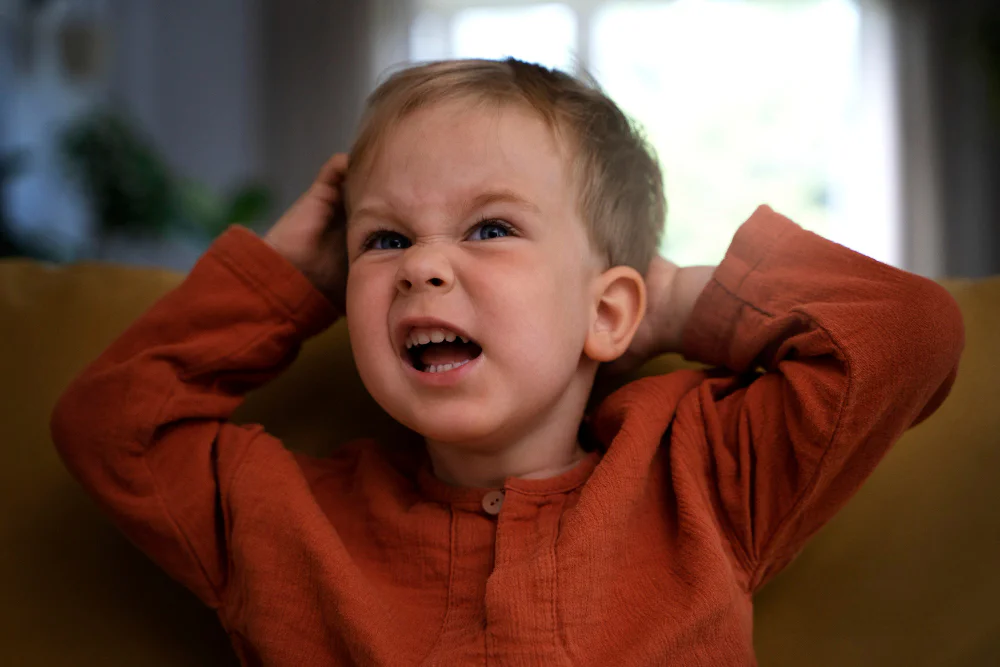
- Yelling, crying, tantrums
- Throwing objects
- Verbal refusal (“No!”)
- Emotional escalation
Example:
A child screams and falls to the floor when asked to leave the playground.
Why it occurs:
This type of defiance is generally motivated by:
- Overwhelm or fatigue
- Poor emotional control skills
- Difficulty in shifting from one activity to another
Key takeaway for parents
Both quiet and emotional defiance is normal. The goal is not to stop defiance altogether, but to learn how to respectfully negotiate boundaries and control one’s emotions over time.
How Stubbornness and Defiance Usually Looks at Different Ages
- Toddlers (1-3 years): Strong “no” stage, testing limits, asserting own identity
- Preschoolers (3 to 5 years): Power struggles, negotiation, selective listening
- School-age children: Rule questioning, issues of fairness, seeking independence
Most of these behaviors disappear with consistent, calm parenting.
How Parents Should Respond (What Actually Works)
Stay Calm and Consistent
Children learn how to regulate their emotions by watching adults. Calm responses help to reduce escalation.
Offer Limited Choices
Choices give children a feeling of control without removing boundaries.
Example: “You can clean up now or at the end of this song.”
Acknowledge Feelings Without Giving In
“I see you’re upset. I understand. The rule still stands.”
Avoid Power Struggles
Arguing makes the situation a competition. Short, firm answers are best.
Use Natural Consequences
Let consequences be logical and related to behavior rather than punishments.
When Is Defiance a Concern?
Sometimes defiance is normal. However, professional advice may be required if:
- Behavior is extreme and persistent for 6+ months
- It impacts family life, school, or safety
- The child demonstrates frequent aggression or hostility
This is rare, and is very different from everyday stubbornness.
The Bigger Picture for Parents
Stubbornness and defiance are not signs of bad parenting. They are signs of:
- Growing independence
- Emotional development
- Identity formation
When guided with patience and structure, these behaviors can often become strengths such as confidence, leadership, and resiliency.
Legal Disclaimer
This article is for informational and educational purposes only and does not replace professional medical, psychological, or developmental advice.