
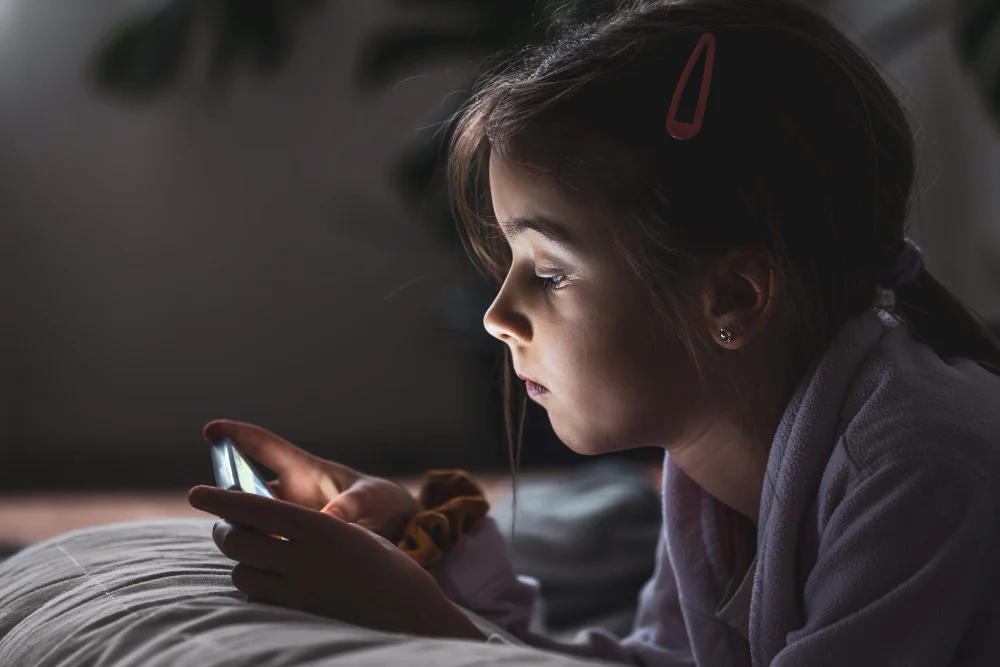
Introduction: The Digital Pacifier Dilemma
Imagine a scenario of a common Pakistani household: It’s lunchtime, and your two-year-old child doesn’t want to eat anything. You’ve tried it all, making airplane noises, singing poems, offering chocolate, even. Nothing works. Then someone comes and gives them the phone with Cocomelon playing, and quickly, like magic, they started to open their mouth for every bite.
Looks like you have seen this film before? You are not alone. In most cities, like Karachi, Lahore, Islamabad, and others, parents mostly use the “chup karwao tool” technique, or more precisely, the “digital pacifier”. But here’s what doesn’t let the child psychologists sleep.
According to the latest research, 25.5% of children have shown speech delay, with most of them being one-year-olds.
In the UAE, researchers have found that the reason for this speech delay is having the exposure of screen time more than 4 hours.
The distress is real. Go to any pediatrician’s clinic, and you’ll find the same worry: “Doctor, mera bacha sirf phone par hi focus karta hai” (My child only focuses on the phone). But the good news is, it can be prevented. The child’s brain has this ability to re-function itself. Let me show you.
The Science: How Screens Rewire a Toddler’s Brain
Let’s discuss what’s actually going on inside your child’s growing brain when they’re sitting in front of that glowing screen.
1. The Dopamine Trap
Think of dopamine as your brain’s “feel-good” chemical. Every time a child re-watches a colorful animation or sings along to a catchy song, their brain takes a hit of dopamine. It’s like the adults have an addiction to scrolling social media.
The issue? Real life can’t compete. Playing with blocks, listening to Dadi’s stories, or talking to Ammi is not going to give that immediate dopamine situation. So, children begin to be biased towards screens more than anything else.
2. Brain Structure Changes
A landmark National Institutes of Health (NIH) study found that the children who did more than two hours a day on screens had lower language and thinking test scores. Even more troubling is that too much screen time was associated with thinning of the brain’s cortex – the area that is associated with thought and reasoning.
3. The “Video Deficit Effect”
Here’s something very interesting: Children under the age of 2 learn less from a video than they do from a person.
This is the reason that your child can watch 100 Urdu alphabet videos, but still, he doesn’t speak. They’re entranced, but they’re not learning. Passive watching doesn’t teach – it just entertains and steals precious learning time.

Three Major Warning Signs Your Child Has “Screen Addiction.”
1. Speech Delay: When YouTube Replaces Conversation
This is the most common red flag Pakistani parents usually notice first.
• The Fact: Studies have shown that before a child’s first birthday, preschoolers who watched more than 2 hours of TV a day were six Times as likely to have a delay in learning language.
• The Desi Context: When Dada tells a story, he stops, makes eye contact, and changes voice. Such a back-and-forth conversation builds language. YouTube videos don’t wait. They don’t respond. They just keep playing.
2. Behavioral Issues: The Tantrum-Screen Connection
Does your child throw show bad temper when you take the phone away?
The correlation here is pretty clear: children who have hours of free time to spend on devices have not been taught how to cope with boredom or frustration in a natural way. They are expecting instant entertainment.
3. Vision & Sleep Problems: The Blue Light Impact
Ever wonder if kids aren’t crumpled up in their beds, collapsing weary at 11 PM?
Blue light inhibits the release of Melatonin (the sleep hormone).
• Pakistani Parent Tip: If your child watches cartoons before going to bed and takes forever to fall asleep, the blue light is literally telling his or her brain “it’s daytime!”.
Can You Oppose the Effects? (The Digital Detox). This is the question every concerned parent has: “Can I do anything to fix this?” The answer is YES.
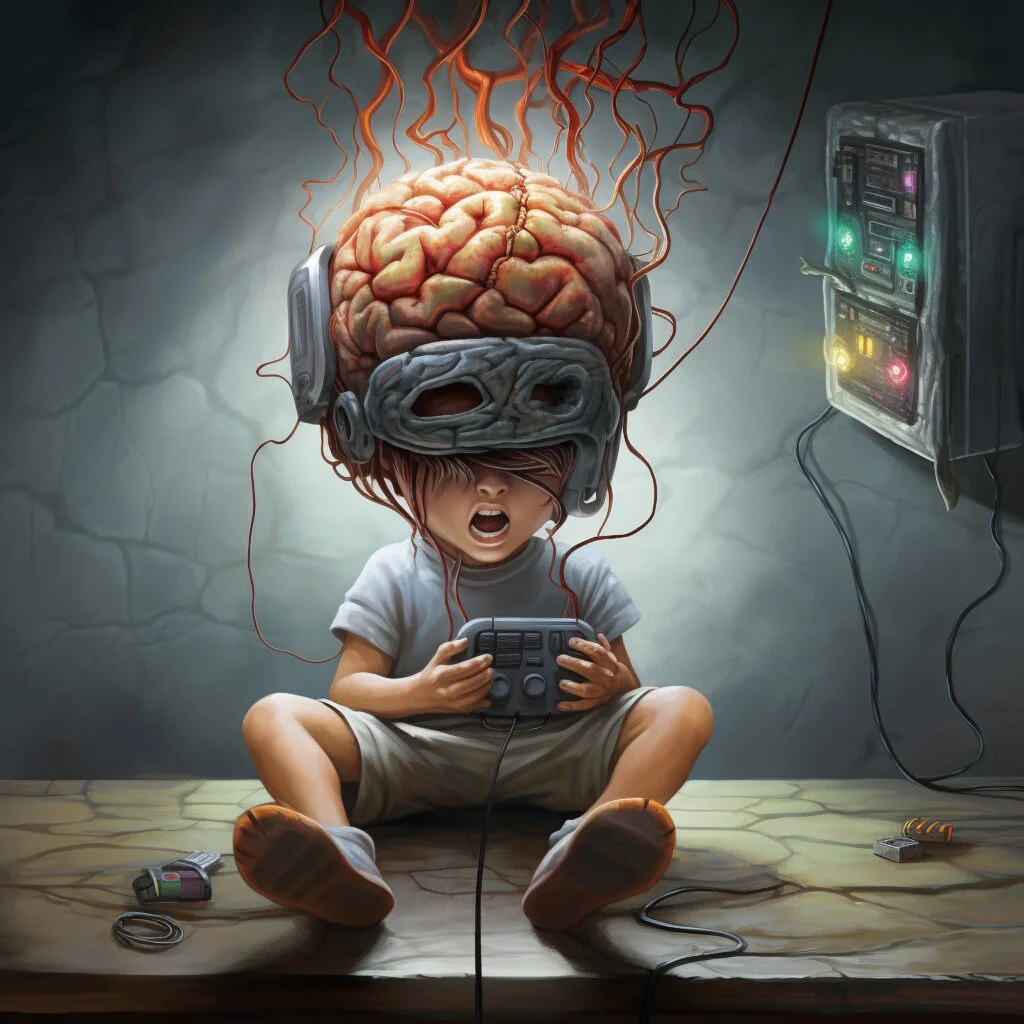
4. Neuroplasticity: The Superpower of Your Child
It means that your child’s brain can rewire itself depending on new experiences.
• If ‘highways’ of passive entertainment were made possible by screen time.
• New experiences (Play, Talk, Touch) may develop new highways for active learning.
The Pakistani Success Story
I worked with a family in Defense who had a child of 3 years of age who displayed a severe speech delay. After the implementation of a 4-week digital detox (from screen time to storytelling and outdoor play), the parents reported a 70% improvement in speech and total elimination of aggressive behaviors.
Practical Solutions Although “Just Stop It” for Desi Parents. I know what you are thinking, “Yeh sab theek hai, but HOW do I keep them busy without screens?”
a. The 3-6-9-12 Rule
This recommendation was formed by French psychiatrist Serge Tisseron:
• Before Age 3: NO screens.
• Before Age 6: NO game consoles.
• Before Age 9: NO unsupervised internet.
Pakistani Adaptation: In joint families, have a rule: ‘Screen time is only after homework and outdoor play.’
b. The “Zero-Screen Meal” Rule
When kids eat with a screen, they don’t get the chance to learn to recognize their hunger cues, and this has an effect on children’s weight and behavior.
New Rule: Keep meals at the table (Dastarkhawan). Talk about food: “Yeh aaloo ka taste kaisa hai? Soft hai ya hard?”
c. Desi Alternatives: What to Do Instead
• Instead of Cocomelon to Dadi ki Kahani: Storytelling builds vocabulary 10x faster
• Instead of iPad games → Aata Gundna (Playdough): Let them mix flour and water. It develops fine motor skills.
•Instead of iPad games: Aata Gundna (Playdough): Let them mix flour and water. It helps to develop fine motor skills.
•Instead of YouTube – Sorting Daals. Put different daals in a bowl and let them sort the daals by colour. This teaches concentration.
d. Dealing with the Fear of Autism vs Screens/Screen Time
Let me eat the elephant in the room: “Does screen time cause autism?”
The Answer: NO! Screen time does NOT cause autism
However, with too much screen time, it is possible to develop “Virtual Autism” – symptoms that resemble autism (tendencies to have poor eye contact, delayed speech, social withdrawal).
What to do?
If you see these signs, try out a Screen Fast (Detox) for 4 weeks.
• If symptoms disappear, that means it was just screen addiction.
• If symptoms remain, that means you need to consult a specialist.
Note: There is no harm in cutting down the screens, only advantages.
Conclusion: Choosing Connection & Not Content
Technology isn’t a bad thing. It is the timing and quantity that matter. Think of it like this; would you have your toddler eating Gol Gappay for breakfast every single day? No, because they require proper nutrition. The way in which their brains work is the same-they need the “nutrition” of the real human interaction and not the “junk food” of passive videos.
Your child needs YOU, and not YouTube. They require your voice reading out stories, your hands performing peek-a-boo, and your patience. These are developmental necessities that are no substitute for any app.
Have you noticed any screen effects on your toddler? Like, Comment and then Share your story in the comments to help other parents learn and adapt.