A quick note before we start: this article shares general information to help you feel informed — it isn’t a diagnosis or a substitute for your doctor’s advice. If something here concerns you, please reach out to a healthcare professional.
A Practical, Evidence-Based Guide for Expectant Mothers in Pakistan
A Morning Many Pakistani Families Know Too Well
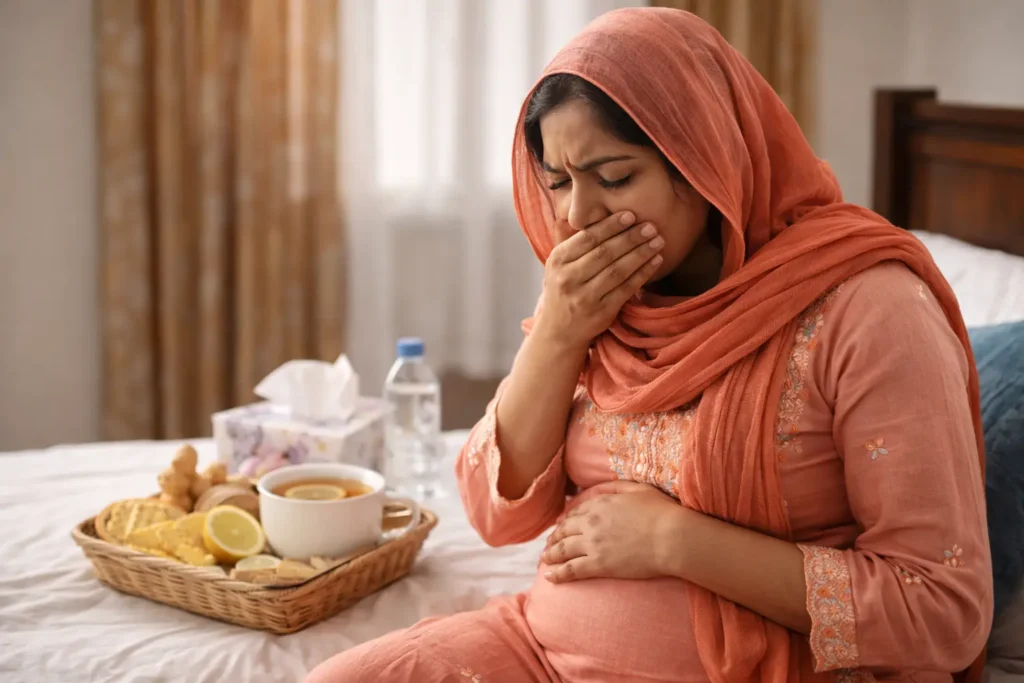
It is six in the morning in a house in Lahore’s Model Town. Amna, eight weeks pregnant with her first child, rushes to the bathroom—again. Her mother-in-law, waiting outside the door, calls through the wood: “Bahu, chai bana lo, subah ka nashta karo. Yeh sab dimagh ka waham hai.” (Make tea, eat breakfast. This is all in your head.) Meanwhile, her own mother is calling on WhatsApp from Multan, insisting she eat a raw lemon. Amna’s colleague from her government office will message at nine asking if she is coming in. Her husband, exhausted from a night shift, sleeps through all of it.
Across Pakistan—in Karachi apartments and Peshawar havelis, in rural Sindh villages and Islamabad suburbs—this scene plays out every day. Morning sickness is one of the most universally shared experiences of early pregnancy and one of the most universally misunderstood.
The good news? Relief is possible. And it does not require expensive imports, a private clinic appointment, or anyone’s dismissal of your very real discomfort. This guide brings together the best available medical evidence and practical guidance shaped for the Pakistani context—so you can feel better sooner.
70–80%
Pregnant women experience morning sickness
Week 6–10
peak symptoms for most women
Week 14–16
When symptoms typically resolve
1–3%
develop hyperemesis gravidarum (severe form)
Sources: Mayo Clinic, Cleveland Clinic, NHS (UK)
First, Let Us Clear the Air: Myth vs. Medical Reality
In many Pakistani households, morning sickness is either dismissed as weakness or treated with a cascade of well-meaning but sometimes harmful home remedies. Let us look at what the evidence actually says.
Myth: “It only happens in the morning.”
Fact: Only 13.6% of pregnant women experience nausea exclusively in the morning. For most women, it can strike at any time—day or night. The name is simply historical.
Myth: “It means something is wrong with the baby.”
Fact: Mild to moderate morning sickness does not harm your baby. Some research even suggests it is associated with a lower risk of miscarriage—possibly because it reflects a well-functioning placenta producing pregnancy hormones (hCG and estrogen) at healthy levels.
Fact: Morning Sickness Has Real, Biological Causes
Medical research points to several overlapping causes: a rapid rise in the pregnancy hormone human chorionic gonadotropin (hCG); elevated estrogen and progesterone levels that slow digestion; a heightened sense of smell; low blood sugar; and individual sensitivity that may be partly genetic. If your mother or sister had severe morning sickness, you are at higher risk.
Timeline: What to Expect and When
Understanding the typical progression helps you plan and reassures you that this period is time-limited.
Weeks 4–6
Nausea begins, often before a missed period
Weeks 6–10
Symptoms peak; hCG levels are highest
Weeks 11–13
Gradual improvement for most women
Weeks 14–16
Most women find full relief by now
Beyond 16
Persistent cases: speak with your doctor
What Actually Works: Evidence-Based Solutions
Below are strategies ranked from the simplest lifestyle changes to medical interventions. Start with what is accessible to you and build from there.
1. Eat Smart—Small, Frequent, and Strategic
An empty stomach allows stomach acid to accumulate, making nausea worse. The goal is to maintain a gentle, steady buffer of food throughout the day.
- Eat 5–6 small meals instead of 3 large ones.
- Keep plain crackers (namkeen biscuits), toast, or dry roti by your bedside and eat a few before getting out of bed. Rising slowly from bed also helps.
- Choose bland, low-fat, easily digestible foods: boiled rice (sada chawal), plain roti, khichdi, applesauce, and bananas. The BRAT diet (Bananas, Rice, Applesauce, Toast) is recommended by multiple major health bodies, including the Cleveland Clinic and the NHS.
- Avoid spicy food (masaledaar khana), greasy or fried foods, and very strong-smelling dishes. During early pregnancy, your sense of smell becomes hyperacute, and familiar cooking smells—biryani, tarka—can become triggers.
- High-protein snacks between meals are particularly effective. Boiled eggs, a small handful of nuts (moongphali), plain yogurt (dahi), or peanut butter on toast all help — protein stimulates gastrin, a hormone that aids digestion and calms nausea.
2. Hydration: The Often-Neglected Priority
Vomiting depletes your body of fluids and electrolytes such as sodium and potassium. Dehydration worsens nausea, creating a cycle that is hard to break.
- Aim for 6–8 cups of fluid per day, taken in small sips rather than large quantities at once.
- Drink between meals, not with them. Waiting 30 minutes before or after eating reduces the risk of feeling overfull.
- Good options: plain water, nimbu pani (lemon water) without excess sugar, light coconut water, herbal teas such as chamomile or peppermint, and clear soup or yakhni (bone broth).
- If plain water triggers nausea, try chilled water with a slice of lemon or a few mint leaves. Cold beverages are often better tolerated because they produce less odour than hot ones.
- Watermelon, cucumber, and celery are high in water content and make useful snacks when drinking liquids feels difficult.
3. Ginger: The Most Studied Natural Remedy
Ginger has been used in Unani and Chinese medicine for centuries — and modern clinical research confirms it works. A 2005 study published in Obstetrics & Gynecology reviewed 675 women and found that ginger significantly reduced morning sickness symptoms compared to placebo.
- Adrak wali chai (ginger tea) made with freshly grated ginger root is one of the most accessible and effective options.
- Ginger candies, ginger snaps, crystallised ginger, or ginger lollipops are easy to carry and use throughout the day.
- Add fresh ginger to soups, rice dishes, or yogurt.
- Ginger capsules and supplements are available in Pakistan at most pharmacies. Always confirm the dose with your doctor or midwife. Generally, up to 1 gram of ginger per day is considered safe in pregnancy.
4. Vitamin B6 (Pyridoxine): A Doctor-Recommended Supplement
Vitamin B6 is one of the most evidence-backed interventions for pregnancy nausea. When combined with doxylamine, research shows a 70% reduction in nausea and vomiting symptoms, with lower hospitalisation rates. Even taken alone, B6 produces meaningful relief.
- Natural food sources include avocados, bananas, salmon, chicken, sunflower seeds (surajmukhi ke beej), whole grains, and nuts — all widely available in Pakistani markets.
- A common recommended dosage is 25 mg three times a day (as suggested by various OB-GYN experts), but always confirm the right dose for you with your healthcare provider before starting any supplement.
- Check with your doctor if your prenatal vitamins already include B6 — many do.
5. Smell Therapy: Lemons, Mint, and Fresh Air
Research has shown that pleasant, sharp scents such as lemon and peppermint can signal the brain to reduce nausea. A study found that sniffing lemon-scented aromatherapy reduced nausea in pregnant women.
- Keep a cut lemon or orange in your pocket or bag — scratch the peel and inhale when nausea strikes.
- Peppermint leaves, pudina chai (mint tea), or peppermint gum offer quick on-the-go relief.
- Keep your home well-ventilated. Open windows, use a fan, and ask family members to cook dishes with strong odours away from you, or step outside during cooking times.
Note: Peppermint essential oil taken internally is not recommended in pregnancy as it may worsen acid reflux. Smelling it is fine; ingesting it is not.
6. Acupressure Wristbands: Low-Cost, Drug-Free Relief
Sea-Bands and similar acupressure wristbands apply gentle pressure to the P6 (Nei-Kuan) acupuncture point on the inner wrist. A study published in Italy found morning sickness was reduced in 70% of women using these bands. They are drug-free, reusable, and suitable for all-day wear.
- They are increasingly available in pharmacies in major Pakistani cities (Karachi, Lahore, Islamabad) and through online retailers. Search for “acupressure bands for nausea” or “sea bands” on Daraz.pk or pharmacy chains such as Fazal Din’s.
- They can be especially useful for commuting or working long hours when stopping to rest is not an option.
7. Rest, Stress Management, and Emotional Support
Stress and fatigue are well-documented triggers of nausea. In joint family settings common across Pakistan, expectant mothers may face pressure to continue normal household duties, cooking, and hosting — even when they feel unwell. This is where family communication matters.
- Aim for 8–10 hours of sleep. A good maternity pillow can improve comfort and support back and abdominal pain alongside nausea.
- Do not lie down immediately after eating. Wait at least 30–45 minutes.
- Gentle exercise — even a 20-minute evening walk (sair) — releases endorphins that counteract fatigue and reduce nausea. Walking outdoors in cooler morning or evening air is particularly helpful.
- Prenatal yoga is gaining acceptance in Pakistani urban centres. Even basic breathing exercises and gentle stretching can lower anxiety-triggered nausea.
Navigating Morning Sickness in a Joint Family
In many Pakistani households, pregnancy is a shared family affair — which can be both a great support and a source of pressure. Well-meaning relatives may minimise morning sickness (“Pehle zamane mein aurtein kaam karti thi, phir bhi bacche hote the”) or push food when eating is the last thing you can manage.
Practical steps for navigating this:
- Assign the strongest-smelling kitchen tasks (frying, making tarka) to someone else, even temporarily.
- Share information from your doctor or midwife with family — a trusted medical source often carries more weight than personal explanation.
- Ask your husband to advocate on your behalf at mealtimes or when cooking smells become intolerable.
- Keep simple snacks in your room — your bedside drawer is your safest ally.
For Working Mothers: Managing Morning Sickness at the Office
Pakistan’s workforce includes a growing number of women in government jobs, healthcare, education, and the private sector. Managing morning sickness at work adds a layer of complexity — especially when you have not yet announced your pregnancy, or when workplace facilities are limited.
Practical Workplace Toolkit for Nausea
Desk Essentials: Keep plain crackers, a small bag of nuts, ginger candies, and a water bottle at your workstation. Eating something small every two hours prevents the empty-stomach nausea cycle.
Scent Shield: Keep a cut lemon or peppermint gum in your bag. If a colleague’s lunch or the office kitchen triggers nausea, step outside briefly or open a window.
Commute Comfort: Wear an acupressure wristband during your commute. Sit near a window on public transport for fresh air. Avoid rush-hour dabaas or canteen smells during peak nausea hours.
Know Your Rights: In Pakistan, the Maternity Benefit Ordinance 1958 (and subsequent provincial amendments) provides maternity leave protections. If your morning sickness is severe and affecting attendance, consider informing your HR department and seeking a medical letter from your gynaecologist.
Flexible Scheduling: If your workplace allows flexibility, schedule demanding tasks for midday when nausea often eases. Request virtual meetings on particularly difficult mornings if your role permits.
Self-Disclosure: You are not obligated to tell colleagues you are pregnant until you are ready. A simple “I have a digestive issue I am managing” is sufficient if questions arise.
Quick Reference: What To Do and What To Avoid
 Do This Do This |  Avoid This Avoid This |
|---|---|
| Eat small, frequent meals throughout the day | Skip meals or go long periods without eating |
| Keep plain snacks by your bedside | Lie down immediately after eating |
| Stay hydrated with sips of water or herbal tea | Drink large amounts of fluid at once |
| Use fresh ginger in food, tea, or candy form | Use marijuana — it is unsafe in pregnancy |
| Take prenatal vitamins with a snack (ideally before bed) | Take iron-containing vitamins on an empty stomach |
| Rinse mouth with baking soda water after vomiting | Brush teeth immediately after vomiting (acid damage) |
| Get plenty of rest; avoid fatigue triggers | Ignore severe symptoms — dehydration is a medical emergency |
| Consult your doctor before taking any supplement | Self-prescribe herbal or alternative remedies without guidance |
When Lifestyle Changes Are Not Enough: Medical Options
If your nausea is not responding to dietary and lifestyle changes, or if you are losing weight, contact your doctor. Pakistan has qualified gynaecologists in government hospitals, Lady Health Worker programmes in rural areas, and private clinic networks across all major cities.
- Vitamin B6 (Pyridoxine) supplements — available over-the-counter at most Pakistani pharmacies.
- Doxylamine (Unisom) combined with B6 — a combination with strong clinical evidence; ask your gynaecologist.
- Prescription antiemetics such as ondansetron (Zofran) for more severe cases. These should only be used under medical supervision, particularly in the first trimester.
- In cases of hyperemesis gravidarum — characterised by vomiting more than three times a day, inability to keep food or fluid down, dark-coloured urine, or weight loss of 10 pounds or more — hospital admission for IV fluids and medication may be necessary.
Warning: Seek Medical Attention Immediately If You Experience:
- Vomiting more than 3–4 times a day with no relief
- No urination for 8+ hours, or very dark urine
- Dizziness or fainting when standing
- Blood in vomit or vomit that appears brown
- Noticeable weight loss over a short period
- Abdominal pain, high fever, or rapid heartbeat
In Pakistan, you can visit your nearest government hospital’s Gynae OPD, contact the Sehat Sahulat Programme (for registered beneficiaries), or call the 1166 health helpline for guidance.
A Final Word: You Are Not Alone
Morning sickness can make the early weeks of pregnancy feel relentless. It is isolating when those around you do not fully understand, and exhausting when daily life — work, family duties, social expectations — demands that you carry on regardless.
But the science is reassuring: this phase passes. For most women, relief comes by the end of the first trimester. The strategies in this guide are not theoretical — they are drawn from medical research, used by millions of pregnant women globally, and adapted with the realities of Pakistani life in mind.
Talk to your gynaecologist or midwife openly. Do not minimise your symptoms to appear strong. Your comfort matters, your health matters, and a well-supported pregnancy benefits both you and your child. If even one or two of these strategies bring you relief on a difficult morning, that is progress worth celebrating.
One Step to Take Today
Pack a small nausea kit for your bag or bedside: a few plain biscuits, a piece of fresh ginger or ginger candy, a cut lemon in a small container, and a bottle of water. These four items represent some of the best-studied interventions for morning sickness — and they cost less than a cup of chai from your nearest dhaba.
Resources and References
The following trusted medical sources were used to compile this guide. All are freely accessible online:
| Source | URL / Reference |
|---|---|
| Mayo Clinic — Morning Sickness | www.mayoclinic.org (search: Morning Sickness) |
| Cleveland Clinic — Morning Sickness | my.clevelandclinic.org (search: Morning Sickness) |
| NHS UK — Vomiting and Morning Sickness | www.nhs.uk/pregnancy/related-conditions/morning-sickness/ |
| The Mother Baby Center | www.allinahealth.org/motherbabycenter |
| WebMD — Remedies for Morning Sickness | www.webmd.com (search: Morning Sickness Remedies) |
| Obstetrics & Gynecology (2005) — Ginger Study | journals.lww.com/greenjournal (search: ginger nausea pregnancy 2005) |
| Pregnancy Sickness Support (UK) | www.pregnancysicknesssupport.org.uk |
| Sehat Sahulat Programme (Pakistan) | www.nhsrc.gov.pk |
| Health Helpline Pakistan | Dial 1166 (national health helpline) |
This article is for informational purposes only and does not constitute medical advice.
Always consult a qualified gynaecologist or healthcare provider for diagnosis and treatment.
Frequently Asked Questions (FAQs)
Disclaimer: This article is for informational and educational purposes only and is not intended as medical, psychological, or nutritional advice, diagnosis, or treatment. Every child, body, and pregnancy is different — please consult your pediatrician, doctor, or a qualified healthcare provider for advice specific to your situation.