

It’s 10 AM on a Tuesday. Ayesha needs to use the bathroom—just two minutes, that’s all. But the moment she takes a step away, her 18-month-old son Hamza’s face crumples. The screaming starts. Her mother-in-law sighs from the living room: “Tumne bigaar diya hai. Hamesha utha kar rakhti ho!” (You’ve spoiled him. Always picking him up!)
Sound familiar? If you’re nodding your head right now, take a deep breath. You’re not alone, you haven’t done anything wrong, and most importantly, your child isn’t spoiled.
What Is Clinginess, Really?
A clingy child experiences strong emotional reactions when separated from their parent or caregiver. This might look like
- Following you from room to room (yes, even to the bathroom)
- Constant “pick me up, pick me up!” demands
- Crying when you’re out of sight
- Physically holding onto your legs or clothes
- Refusing to go to familiar relatives like dadis or nanas
- Meltdowns during drop-offs at daycare or with the nanny
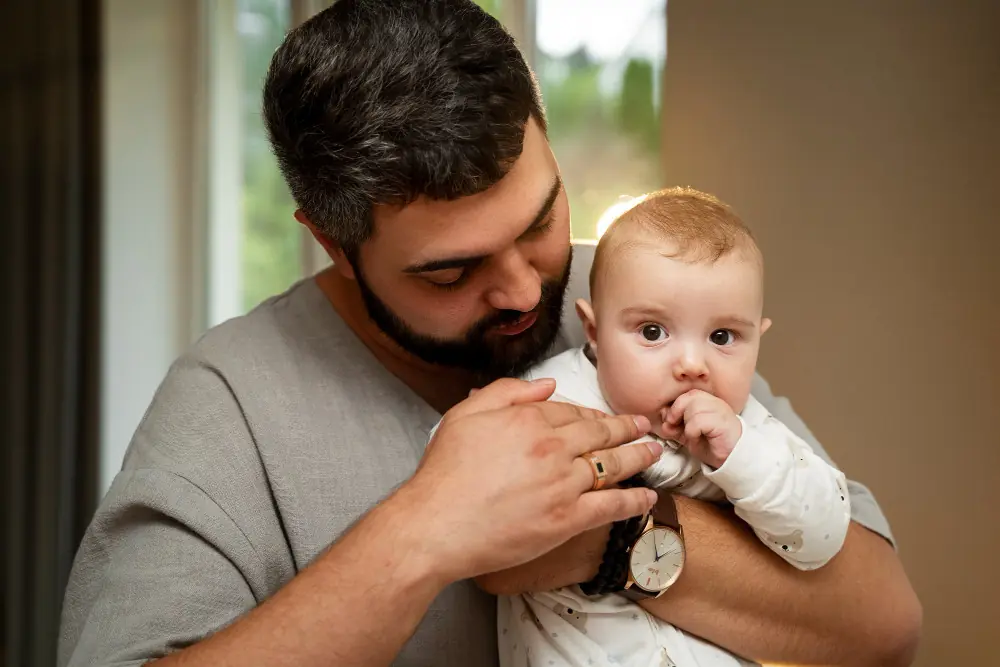
Here’s what may surprise you: clinginess isn’t bad behaviour. No, honestly, it’s the opposite of that – it’s your child trying to tell you something – “I am scared right now, mummy, and I need you to be my haven.“
Peak Clinginess Timeline
7-12 months: The attachment phase is in full swing. Suddenly, your baby is discovering that you’re always there, even when you’re not in view.
12-18 months: Peak clinginess time, and don’t expect any reprieve from “pick me up” demands.
18-24 months: Confidence starts to grow, and we start to see a bit of independence – but still clingy during stressful times
2-3 years: Most children start to become more independent, but do not be surprised if they still need a safe place to run to when they feel scared or stressed.
A Research Finding
According to attachment theory and research from the University of Washington, kids typically go through a normal “attachment phase” between 7-24 months, and this is actually normal and healthy development – your child is using you as a secure base to explore the world – it’s not dependency, it’s growth.
The Science Behind “Pick Me Up” Demands
Let’s not forget that your child’s brain isn’t fully developed – the parts that help them evaluate danger, deal with stress, and feel secure aren’t yet fully developed. It’s not until adolescence that the brain is fully mature. When your toddler sees something new or unfamiliar (be it a black cat, a stranger, a loud noise, or just you stepping out of the room), their brain will sound the alarm and ask, “Is this safe?” Your child will then instinctively turn to you – their secure base – to get the answer.
- “Children are born to be securely attached to their parents. Responding to your child’s need for closeness doesn’t spoil them; in fact, it’s exactly the opposite. It builds trust and a sense of security.”

Why Clinginess Happens
Reasons for Developmental Clinginess:
• Getting to grips with object permanence (in other words, understanding that their mum is still there even when they can’t see her)
• Brain Development (including learning to regulate their emotions and judge what is or isn’t safe)
• Building Attachment (creating a strong, secure relationship with you)
Trigger Events:
- Starting to work with a new nanny or ayah
- Going back to work after maternity leave
- Moving to a new house
- Arrival of a new sibling
- Starting nursery or daycare
- Being ill, teething, or feeling tired
- Noticing that you are stressed
- Another thing- simply sensing that you are stressed
The Pakistani Parent’s Dilemma
Alright – let’s cut through the noise. Chances are you’re hearing all sorts of useless advice like:
Common (But Unhelpfully Sucky) Advice:
“Don’t smother the kid.”
“You’re making him a pushover.”
“Let the little one cry it out, they need to toughen up a bit.”
“My kids never gave me any grief.”
“Kids from working mothers are always messed up.”
This pressure is very real, especially if you’re part of a joint family where everyone thinks they know better when it comes to raising your own kids. But here’s what the science actually has to say on the matter:
University of Minnesota Research
You know what doesn’t work? Ignoring clingy kids or pushing independence on them too early. Chances are that’ll just drag the clingy phase out even longer. On the other hand, responding to your child’s needs, especially in those attachment phases, can actually lead to more confident kids who end up being way more independent in the long run.
People say you’re creating dependency when, really, you’re building trust – a totally different thing.
And What About Working Parents?
If you’re a working mum in Pakistan, the guilt is seriously overwhelming. You leave for work, your child freaks out, and you start wondering if you’re actually damaging them for life.
The truth is, your child’s clinginess isn’t because you work; it’s because they love and miss you – which is actually a really good sign of a healthy attachment. The kids of working parents can end up being just as secure as those with stay-at-home parents.
Tips for Working Parents That Work
- Quality time beats quantity: Your focused attention when you are home is way more important than just how long you spend together.
- Routines over chaos: Consistent morning and evening routines help your child feel secure and grounded
- Don’t sneak off: Always say goodbye, even if it means letting them have a meltdown. Sneaking off breaks trust
- Connect the dots: Give your child 15 minutes of your undivided attention when you get in the door before jumping into household chores.
- Special time on the weekends: Plan some special activities where your child has you all to themselves on the weekends

How to Deal With “Pick Me Up” Demands
Right, let’s get to how you actually handle the situation when your kid wants to be carried 24/7
What to Do:
1. Respond when you can
Picking up your child when they ask isn’t spoiling them. According to University of Washington research, giving them attention actually reduces attention-seeking behavior and improves sleep.
2. Validate their feelings
Instead of saying “Stop crying, I’m right here!”
Say something like: “I see you really want some snuggles right now. I’m here for you.“
3. Let them know what’s going on
“Mama is finishing up lunch. As soon as I put the pot down, I’ll come pick you up. Would you like to sit at my feet and watch me cook?”
4. Give ’em some options
Can’t pick them up right now? Try sitting on the floor together, holding hands while you work, giving them a small task to do, or finding a special toy to keep them occupied.
5. Make it predictable
Two kisses, one hug, wave goodbye, and you’re off to work. You always come back after their nap. Say it a million times in a row, and it becomes second nature.
6. Practice little separations
Start by leaving them with your mum for half an hour while you go for a walk, and gradually extend the time as they learn you’re always coming back.
What NOT to Do:
Don’t slip away without a word – trust is broken and anxiety skyrockets.
Don’t lecture or shame your child – that “toughen up” approach damages self-esteem.
Don’t force them to separate when they’re stressed – when they’re sick, tired, or dealing with change, they need a little extra TLC
Don’t make comparisons – e.g., “Your cousin doesn’t act like that,” only makes things worse.
Please don’t show your own anxiety during goodbyes – you stay as calm as possible, even when your heart is breaking.
The Clingy Toddler Response Formula
- Acknowledge their feeling (are you scared?) + VALIDATE (it’s okay to feel scared) + Reassure (I’m here, I’ll be back) + Follow through (I really will be back)
This bit builds trust and gradually cuts down on clinginess over time.
When Should You Start Worrying?
Most clinginess is just a normal phase and will pass, but you should get a pediatrician in if:
Warning Signs:
- Extreme anxiety sticks around longer than it should (till 3 or 4)
- Clinginess prevents your child from going to school or doing normal stuff.
- They start to go backwards in other areas (e.g., talking, potty training)
- Your child can’t be comforted, no matter what
- Nightmares and sleep problems are a big deal.
- Physical symptoms like stomach aches or vomiting before separations
- Getting significantly worse over time instead of better
Those could be warning signs of Separation Anxiety Disorder, which might need some professional help from a child psychologist or counselor.
The Good News: This Too Shall Pass
I know it feels like the end of the world right now – when you’re running on no sleep and can’t even use the bathroom without losing it. But the truth (backed up by research and loads of parent experiences) is this:
- “Most kids naturally outgrow clinginess by age 3. Those clingy toddlers who get responsive, patient care often grow up to be the most confident, independent, and emotionally secure kids”.
Your child won’t be clinging to your legs when they’re 10 years old. They won’t need to be carried everywhere when they’re in school. This intense attachment phase might be a real challenge, but the trust you build during it lasts a lifetime.
What You’re Actually Teaching Them:
- You’re reliable – When they need you, you’re there
- Their feelings matter – You take their emotions seriously
- The world’s a pretty safe place – They’ve got a safe base to come back to
- They’re loved, Unconditionally, even when they’re difficult
Trusted Resources & Further Reading
- American Academy of Pediatrics (AAP) – child development guidelines and separation anxiety.
- Stanford Medicine Children’s Health – some clinical info on attachment phases
- University of Washington Study (Monica Oxford, Ph.D.) – research on parenting and child outcomes.
- University of Minnesota Research (Alan Sroufe) – some big, long-term studies on attachment theory.
- Children’s Hospital of Philadelphia – when to seek help for anxiety
YOU’RE NOT ALONE IN THIS JOURNEY
Thousands of Pakistani parents are going through the same clingy phase right now. The late-night tears, the constant “pick me up”, the criticism from family members… we feel you.
That’s why we made Momistan.
Join our community of Pakistani parents who get what you’re going through. Share your experiences, get some real support without judgment, and find a trusted pediatrician when you need some reassurance.
Final Thoughts: Trust Your Gut
You know your kid inside out – their quirks, their routines, their moods. When you get that nagging feeling to pick them up when they’re reaching up for you, or to give them a little extra comfort when they need it, just do it. Don’t worry about what others are saying, just listen to that whisper in your ear.
Everyone & their cousin is going to tell you that you’re spoiling them, but the truth is that from all the science and from thousands of parents who’ve been through this, you’re actually building a confident little person who knows they can rely on you.
So go ahead and choose to trust in that science, trust in yourself – and most importantly, trust that this crazy phase will come & go just like every other one in parenting.
- “Letting your kid get their needs met when they’re going through a clingy phase isn’t creating a needy kid – it’s showing them that the world is a pretty safe place to take a chance in, because they know you’ve got their back.”
Frequently Asked Questions (FAQs)
Disclaimer: This article is for informational and educational purposes only and is not intended as medical, psychological, or nutritional advice, diagnosis, or treatment. Every child, body, and pregnancy is different — please consult your pediatrician, doctor, or a qualified healthcare provider for advice specific to your situation.


I have read so many articles on the topic of the blogger
lovers however this piece of writing is in fact a nice
article, keep it up.