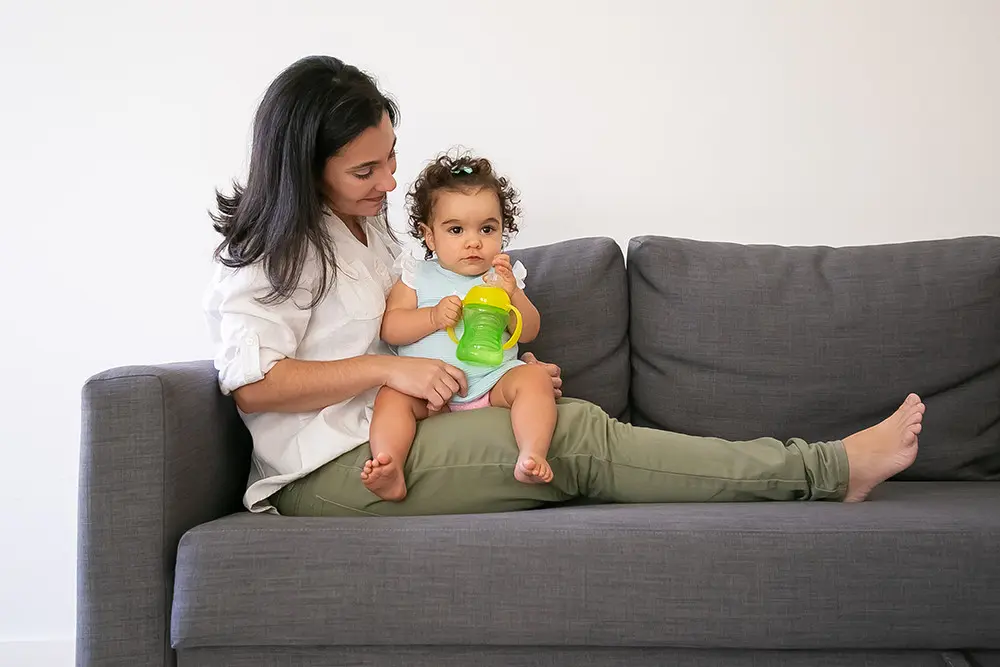

The age of 12–15 months is one of the most exciting—yet challenging—stages in a toddler’s life. They’re learning to walk, developing language skills, and exploring everything around them… but these big changes also cause constant shifts in sleep.
That’s why parents often search for answers like:
- “toddler sleep routine 12 months”
- “toddler sleep schedule 12–15 months”
- “how to help toddler sleep through the night”
- “toddler sleep regression 1 year”
- “how to reduce toddler night wakings”
This complete guide covers the science, routine building, gentle fixes, sleep charts, and a sample sleep schedule—everything you need to create peaceful days and nights.
1. Understanding Toddler Sleep Needs (12–15 Months)
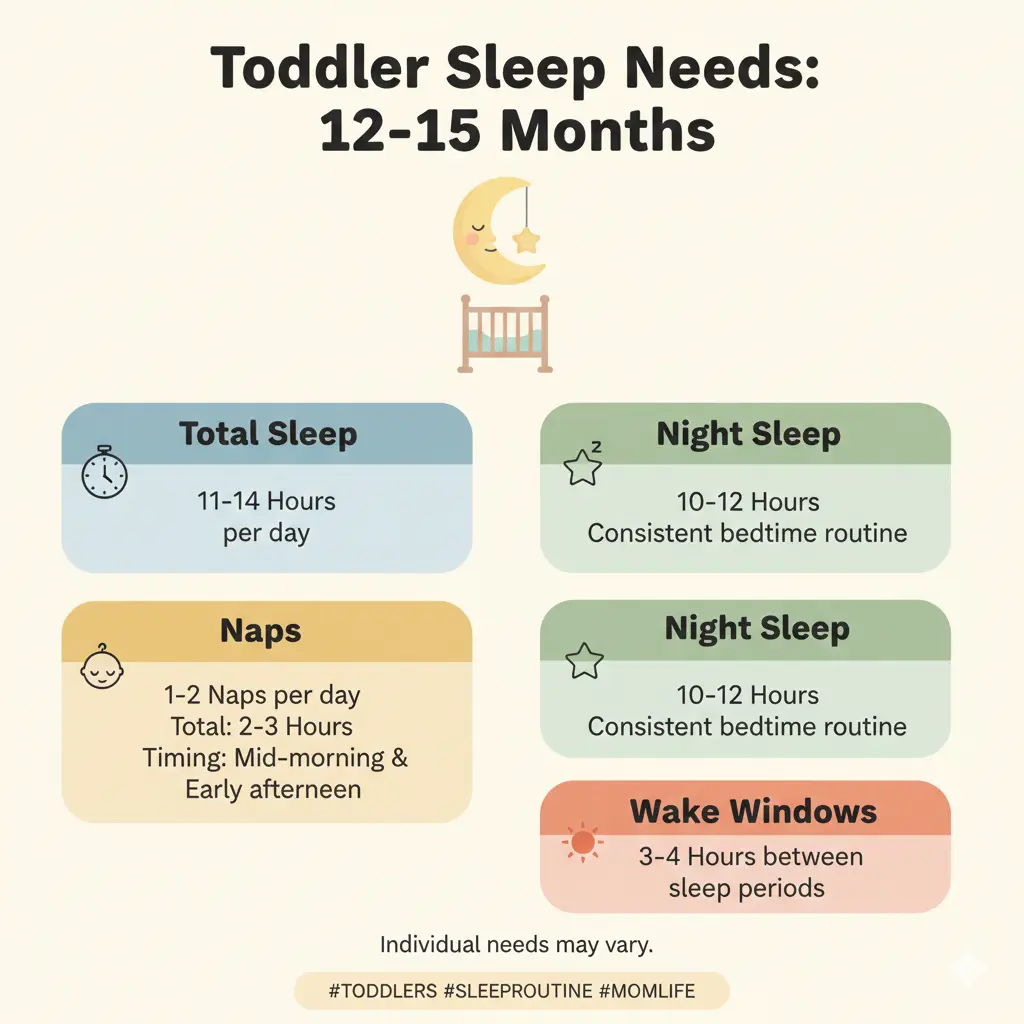
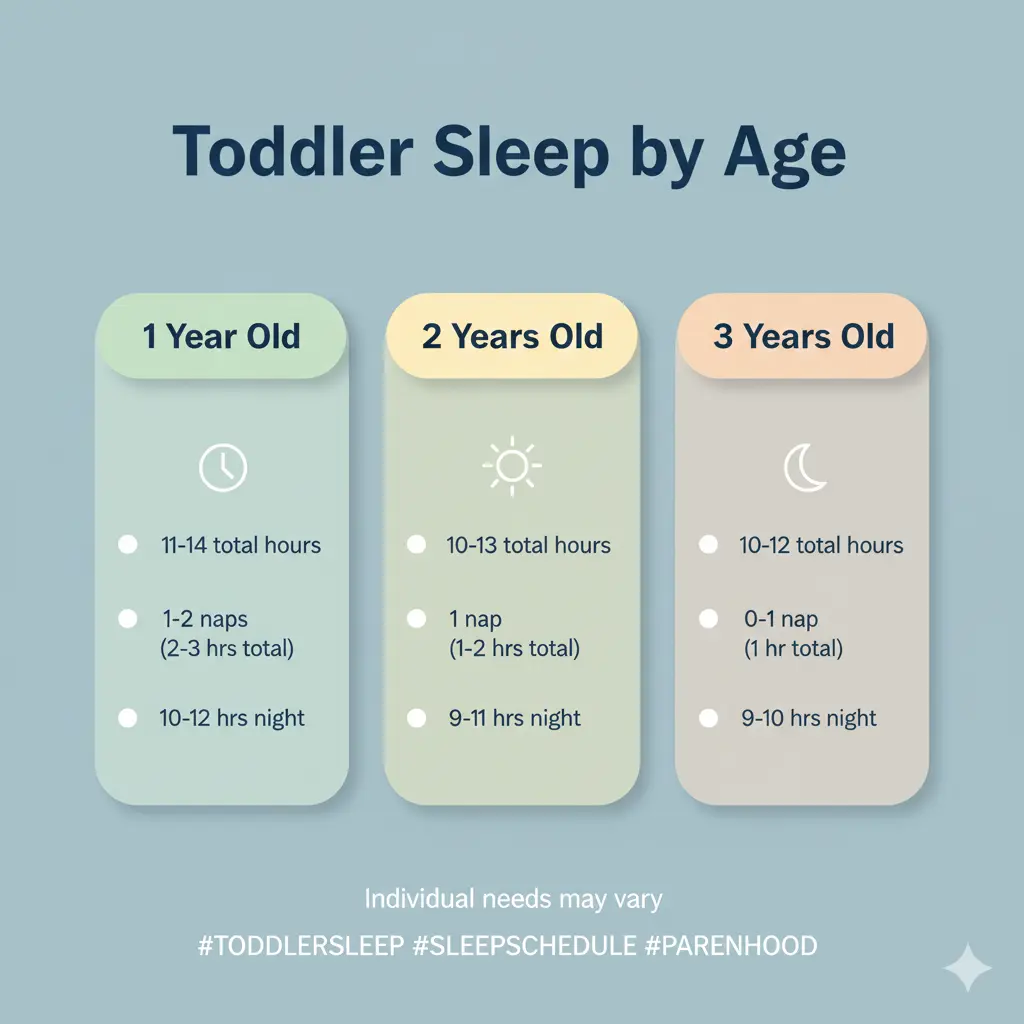
A toddler between 12 and 15 months typically needs:
Total Sleep: 12–14 hours in 24 hours
Breakdown:
- Night sleep: 10–12 hours
- Day naps: 2–3 hours
- Naps: 1–2 naps depending on transition
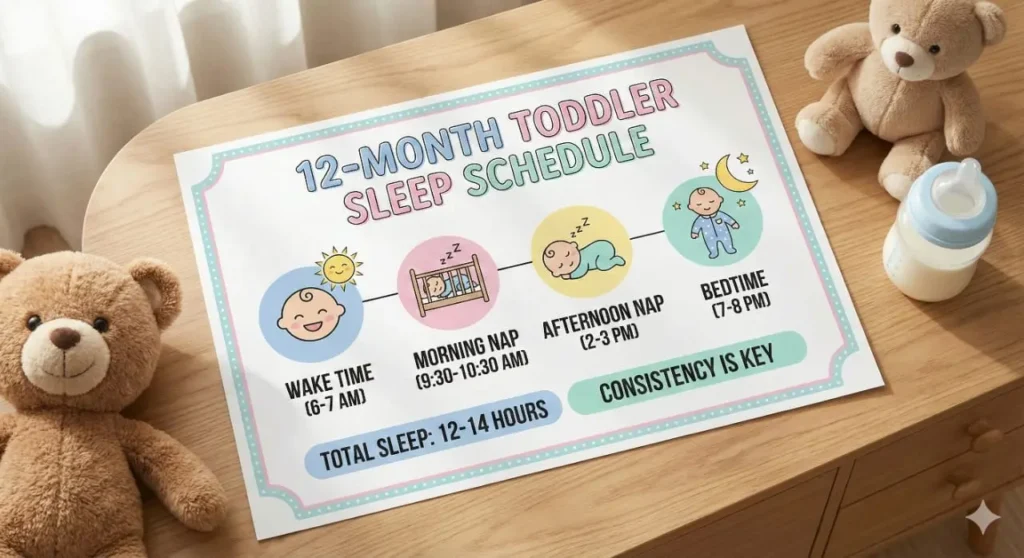
- Bedtime: 7:00–8:00 PM
- Wake-up time: 6:00–7:00 AM
This is also when many toddlers begin transitioning from two naps to one nap.
2. The Best Toddler Sleep Schedule (12–15 Months)
A predictable schedule helps your toddler sleep longer, wake less at night, and feel calmer throughout the day.
Sample Toddler Sleep Schedule (12 Months – Two Nap Routine)
| Time | Routine |
| 7:00 AM | Wake Up |
| 10:00–11:00 AM | Nap 1 |
| 2:30–3:30 PM | Nap 2 |
| 7:00–8:00 PM | Bedtime |
12–15 Months (Transition to One Nap)
| Time | Routine |
| 7:00 AM | Wake Up |
| 12:00–1:30 PM | Long Nap |
| 7:00–7:30 PM | Bedtime |
This flexible toddler sleep schedule 12–15 months adapts to your child’s natural sleep cues
3. Toddler Bedtime Routine (Simple, Calming & Effective)
A bedtime routine doesn’t need to be long—just consistent.
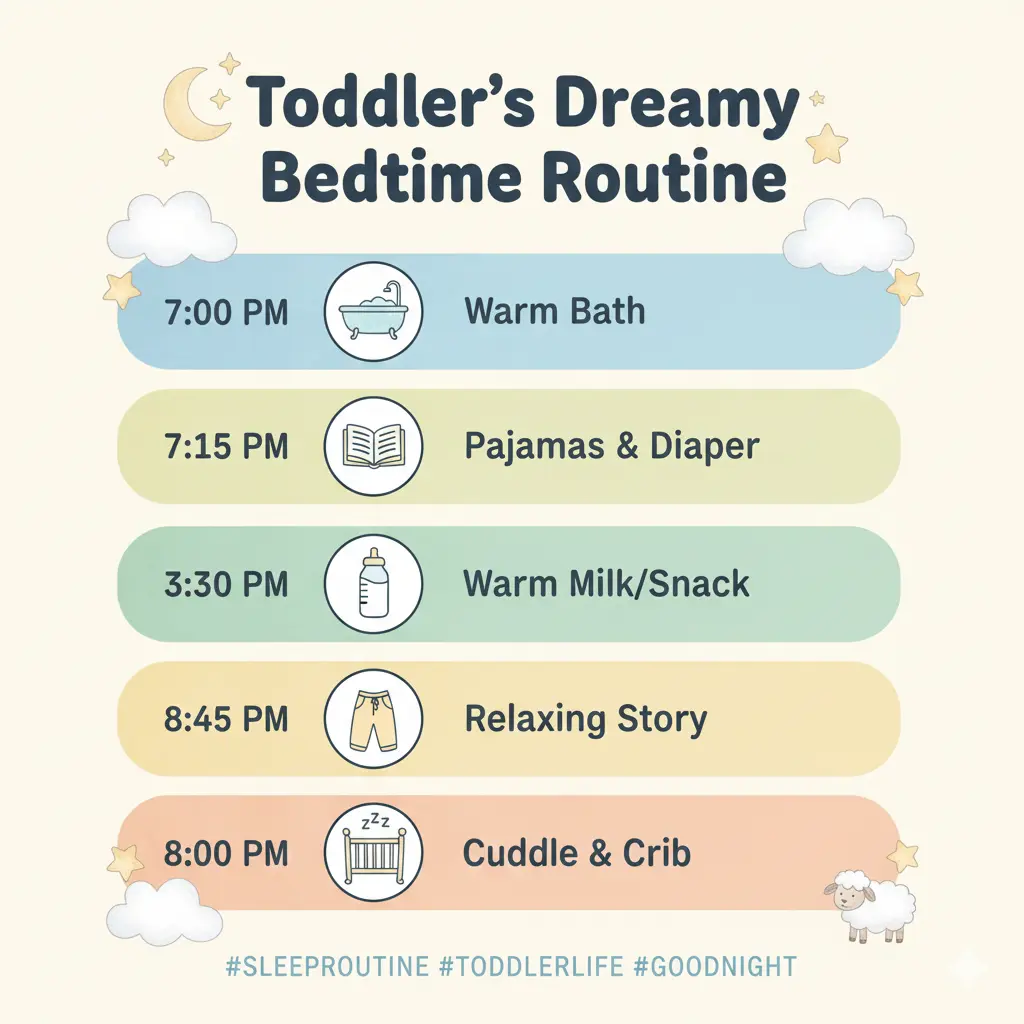
Best bedtime routine for 12–15 months:
- Warm bath
- Gentle massage
- Dim lights
- Short bedtime story
- Soft lullaby
- Put toddler down drowsy but awake
A predictable routine helps toddlers sleep through the night and reduces bedtime battles.
4. Common Toddler Sleep Mistakes (And How to Avoid Them)
Many sleep problems are caused by small things we don’t even notice.
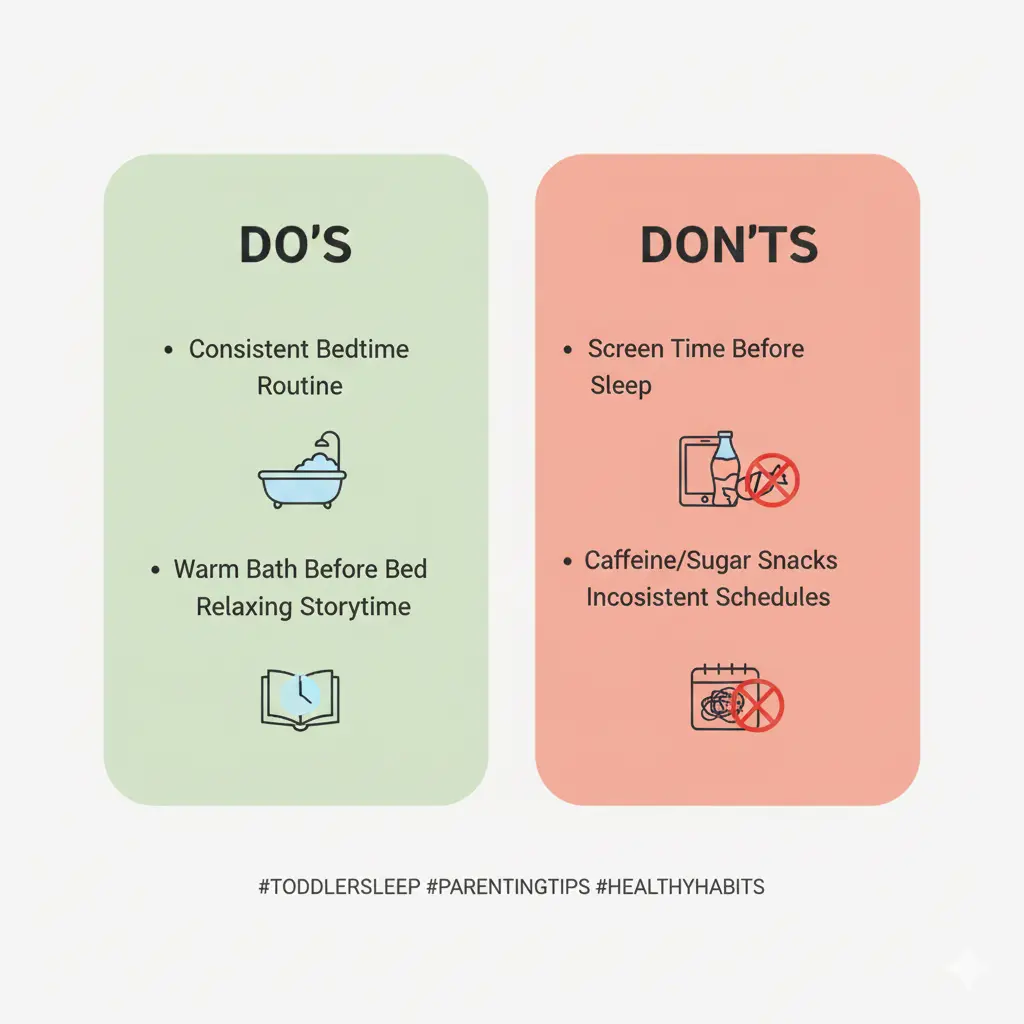
Avoid these mistakes:
- Letting toddler nap too late
- Screens before bedtime
- Sugary evening snacks
- Changing bedtime daily
- Overstimulation before sleep
Fixing these helps toddlers settle faster and stay asleep longer.
5. Diet & Sleep: How Food Impacts Toddler Sleep
Foods that promote sleep
- Bananas
- Warm milk
- Eggs
- Oatmeal
- Sweet potatoes
- Rice porridge
Foods that disrupt sleep
- Sugar
- Chocolate
- Spicy snacks
- Caffeinated drinks
- Packaged junk foods
Diet affects melatonin, digestion, and nighttime comfort.

6. Toddler Sleep Regression (12–15 Months)
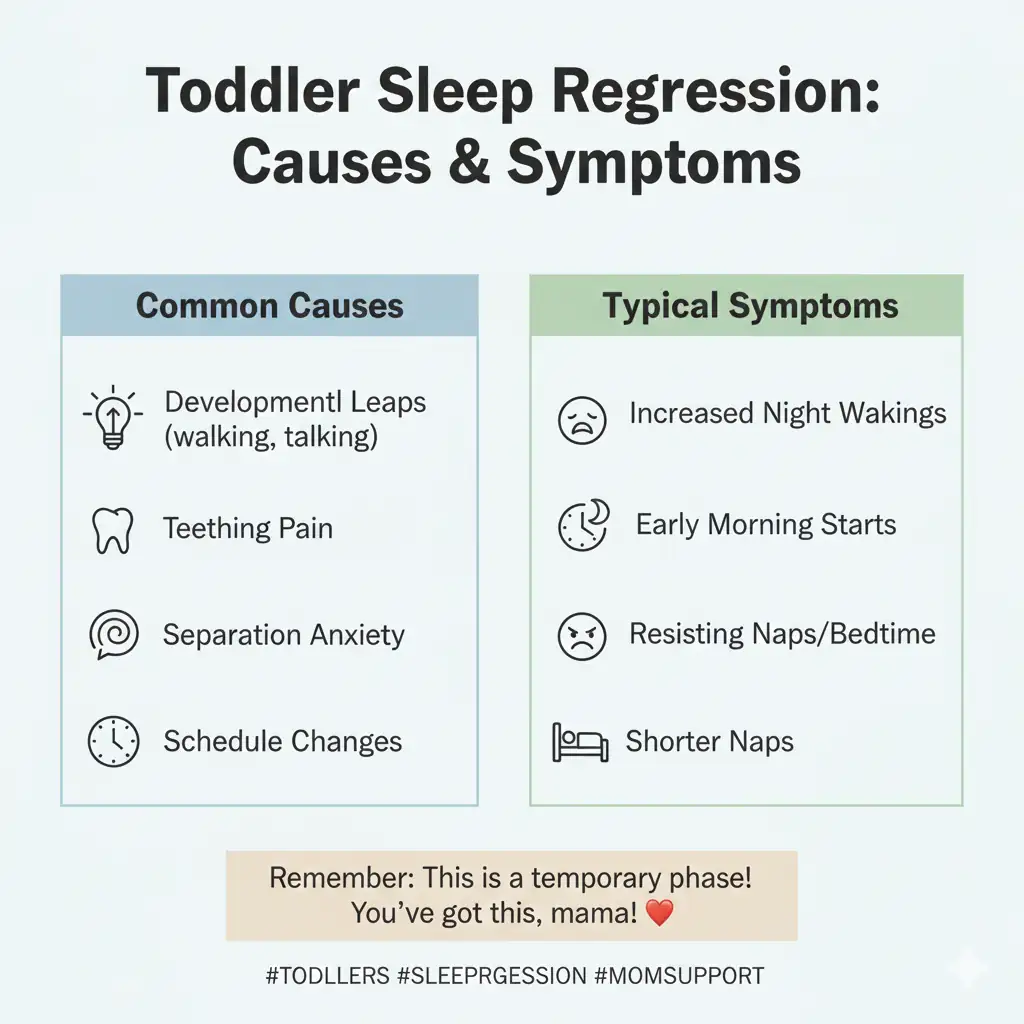
The 12-month sleep regression is very common and usually lasts 2–6 weeks.
Causes:
- Learning to walk
- Language development
- Separation anxiety
- Transition from 2 naps to 1
- Overstimulation
Signs:
- Sudden night wakings
- Nap refusal
- Clinginess
- Fighting bedtime
The good news: It’s temporary.
7. How to Reduce Toddler Night Wakings
If your toddler isn’t sleeping through the night, try these:
Reduce Night Wakings With:
- Early bedtime
- White noise
- Light dinner
- Dark room
- Calm bedtime routine
Night-Time Response:
- Gentle back rub
- Don’t turn on bright lights
- No talking or playing
- Offer water only
- Let them settle with a comfort toy
Most night wakings come from overtiredness or nap transitions.

8. The Ideal Sleep Environment
Toddlers sleep best in a safe, calm, cozy room.
Optimal Setup:
- Room temperature: 20–22°C
- Total darkness or soft night light
- White noise machine
- Safe crib layout
- Breathable cotton sleepwear
Safe Natural Sleep Aids:
- Lavender mist
- Warm bath
- Cuddle toy
- Gentle massage
- White noise
Avoid melatonin unless a doctor recommends it.

9. Nap Issues: Transitioning & Resistance
Most toddlers transition from 2 naps to 1 nap between 12–15 months.
Signs it’s time to drop to one nap:
- Long time to fall asleep
- Short naps
- Early morning waking
- Bedtime struggles
Fix Nap Resistance:
- Keep naps consistent
- Darken the room
- Avoid screens before nap
- Offer a light snack beforehand
Good naps = better nighttime sleep.

10. Gentle Sleep Training Methods (12–15 Months)
No harsh crying methods needed.
Best Gentle Methods:
- Chair method: Sit near crib; move away gradually.
- Pick-Up Put-Down: Comfort, put back down.
- Gradual retreat: Reduce involvement slowly.
- Routine reinforcement: Consistency builds sleep independence.
These methods help toddlers sleep independently with minimal stress.

11. Complete Toddler Sleep Chart (12–15 Months)
| Age | Total Sleep | Night Sleep | Day Sleep | Naps |
| 12 months | 13–14 hours | 10–12 hours | 2–3 hours | 2 naps |
| 13–15 months | 12–14 hours | 10–12 hours | 1.5–3 hours | 1–2 naps |
Conclusion: Building Lifelong Healthy Sleep Habits
Toddler sleep isn’t luck — it’s routine, environment, and consistency.
To help your toddler sleep through the night, focus on:
✔ Consistent bedtime
✔ A stable toddler sleep routine (12 months and beyond)
✔ Age-appropriate sleep schedule
✔ Balanced diet
✔ Calm, dark environment
✔ Gentle sleep training
✔ Predictable daytime rhythm
With patience, your toddler will sleep longer, wake less, and enjoy peaceful nights — and so will you.
Frequently Asked Questions (FAQs)
Disclaimer: This article is for informational and educational purposes only and is not intended as medical, psychological, or nutritional advice, diagnosis, or treatment. Every child, body, and pregnancy is different — please consult your pediatrician, doctor, or a qualified healthcare provider for advice specific to your situation.